
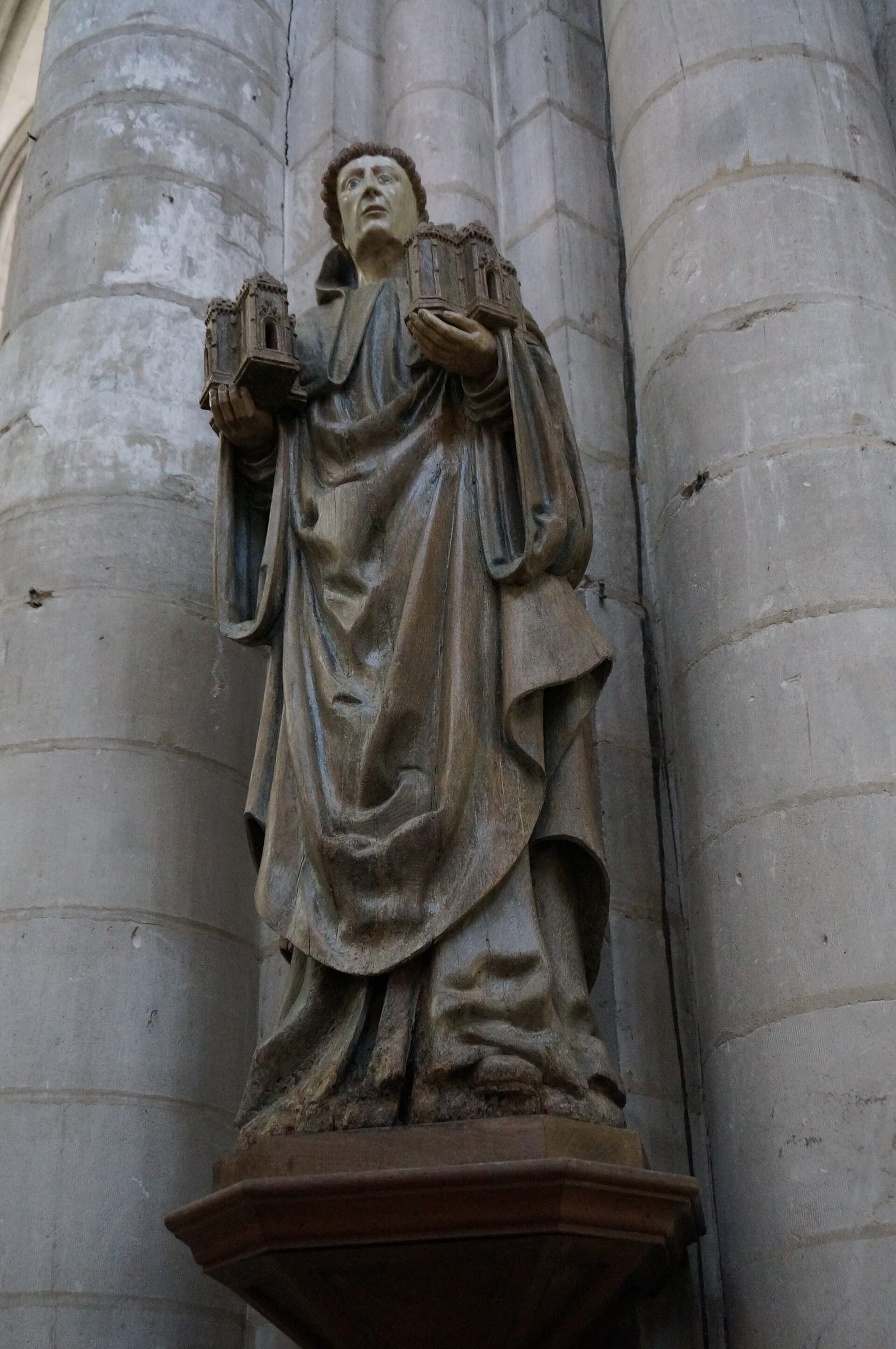
Robert entered the Benedictine abbey of Moutier-la-Celle as a boy of fifteen, became prior, and was successively abbot or hermit at several houses while searching for a stricter observance of the Rule of St. Benedict than the wealthy Cluniac houses then practiced. In 1075 he founded the abbey of Molesme, which itself grew prosperous and lax — a pattern he could not break.
On March 21, 1098 (Palm Sunday), Robert and twenty-one companions — including Alberic and the English monk Stephen Harding — left Molesme for a wild marshland south of Dijon called Cîteaux (Cistercium in Latin), where they founded a new community to keep the Benedictine Rule in its primitive austerity: manual labor, simple liturgy, no income from feudal estates, white wool habits, simple Romanesque churches without ornament. Pope Urban II commanded Robert to return to Molesme as abbot in 1099, but the seed of Cîteaux had taken root.
Alberic succeeded him as abbot of Cîteaux, and after Alberic, Stephen Harding — and in 1112 a young Burgundian named Bernard arrived with thirty companions, beginning the explosive expansion that gave Western monasticism its second-most-influential order. By Bernard's death in 1153 there were already 350 Cistercian monasteries across Europe. Robert was canonized by Honorius III in 1222.