
Robert Southwell was born to a recusant Catholic family in Norfolk, sent at fifteen to the English seminary at Douai, and from there to Paris and Rome where he entered the Society of Jesus on October 17, 1578 at seventeen. He was educated at the Roman College under Robert Bellarmine and became prefect of studies at the English College in Rome by 1585.
He returned to England in July 1586 with Henry Garnet as part of the Jesuit mission re-established after the deaths of Campion and Persons's withdrawal. He served as chaplain to Anne Howard, Countess of Arundel (whose husband Philip Howard was already imprisoned in the Tower), and from London moved through the recusant great houses of southern England, ministering and writing. His prose work The Triumphs over Death (1591) and his volumes of poetry — most famously the meditative The Burning Babe and the long Saint Peter's Complaint — circulated in manuscript and in clandestine printed editions across the recusant networks. Ben Jonson said he would gladly have given many of his own works to have written The Burning Babe.
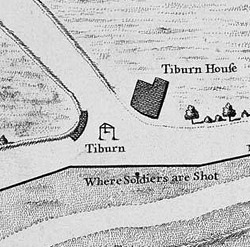
Betrayed by the apostate Anne Bellamy at the Bellamy family's house at Uxendon, he was arrested on June 25, 1592, racked in the Tower thirteen times (a contemporary horror), imprisoned for two and a half years in the Tower under conditions that destroyed his health, and finally tried at the King's Bench on February 20, 1595. The next morning he was dragged on a hurdle from Newgate to Tyburn, hanged, cut down alive, disembowelled, and quartered. His final words on the gallows became the standard formula for English Catholic martyrs thereafter: 'Into thy hands I commend my spirit.' Canonized 1970.