
MIRACULOUS MIRACLES™

Saint — Roch (San Rocco)

St. Roch (San Rocco)
c. 1348, Montpellier — August 16, 1379 (traditional), Voghera, Lombardy
Pilgrim of Montpellier — Patron Against Plague
Scuola Grande di San Rocco, Venice, Italy
Feast
August 16
Canonized
Cult inserted in the Roman Martyrology in 1629; never formally canonized by individual decree
Life

Roch (Rocco in Italian, Rock in English, Roque in Iberian usage) was born in Montpellier to a wealthy family — his father was governor of the city — and is said to have been marked from birth with a red cross on his breast. Orphaned at twenty, he distributed his fortune to the poor and set out as a pilgrim for Rome dressed in the simple grey-and-black tabard of a medieval pilgrim with the scallop-shell badge.

Reaching Italy at the beginning of the second great wave of the Black Death, he stopped at every plague-stricken town along the road — Acquapendente, Cesena, Mantua, Modena, Parma — and worked in the lazarettos curing the sick by the sign of the cross. He fell ill himself at Piacenza with a buboe on his thigh, crawled into the woods to die, and was kept alive (the central legend) by a dog named Rocchino belonging to a nobleman of Sarmato; the dog brought him bread daily from his master's table and licked his wound until it healed.

Returning to Montpellier in poverty, gaunt, and unrecognizable, he was arrested as a spy and imprisoned by his own uncle (the new governor). He died in prison — variously dated 1378 or 1379 — and was identified only at his death by the cross-shaped birthmark on his chest. His cult exploded throughout fourteenth-century Italy as plague waves followed plague waves; the Scuola Grande di San Rocco in Venice (founded 1478) commissioned Tintoretto to fresco the entire chapter-house cycle on his life in 1564–87, one of the supreme cycles of European religious painting. He is the chief lay patron against plague and pestilence in the Latin tradition.

Miracles & Phenomena
  • The dog of Sarmato

    Lying in the woods near Piacenza with a plague-buboe on his thigh, Roch was kept alive by a dog who carried him bread daily and licked his wound until it healed — the iconographic emblem of his cult.

  • Healings of the plague-sick

    The medieval and early-modern dossier of cures of plague at his shrines (especially Venice and Arles) is among the largest in late medieval Catholicism.

Relics
  • Body
    Body of St. Roch
    Scuola Grande di San Rocco, Venice (translated from Voghera 1485)

    Venice stole his body from Voghera in 1485 (the relic-theft was officially deplored but never reversed) and translated it to the magnificent Scuola Grande di San Rocco, where it remains. The Confraternity of San Rocco has been one of the wealthiest and most active lay confraternities in Catholic Christianity for over five centuries.

Iconography
  • Roch with dog and bared thigh

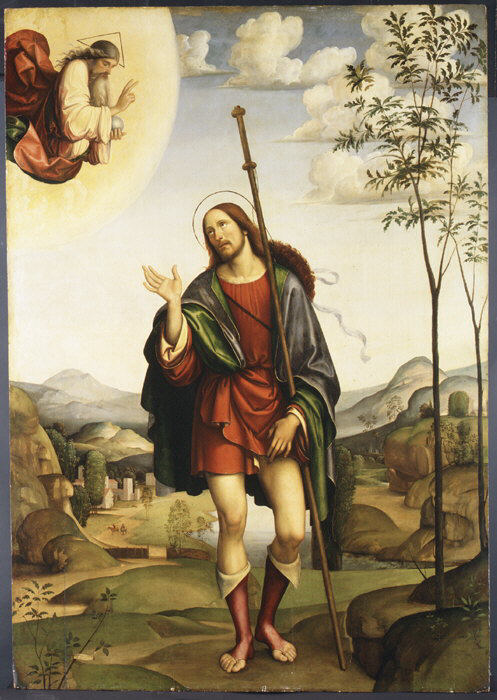
    The pilgrim in grey-brown tabard and broad pilgrim's hat, leaning on a staff, the dog beside him with a loaf in his mouth, raising the hem of his tunic to display the plague-wound on his thigh — the most distinctive emblem of any pilgrim saint in Christianity.

Patronages
Plague and contagious diseasesSurgeons and the sickDogsBachelorsPilgrimsVenice (joint patron)Falsely imprisonedTile-makers