
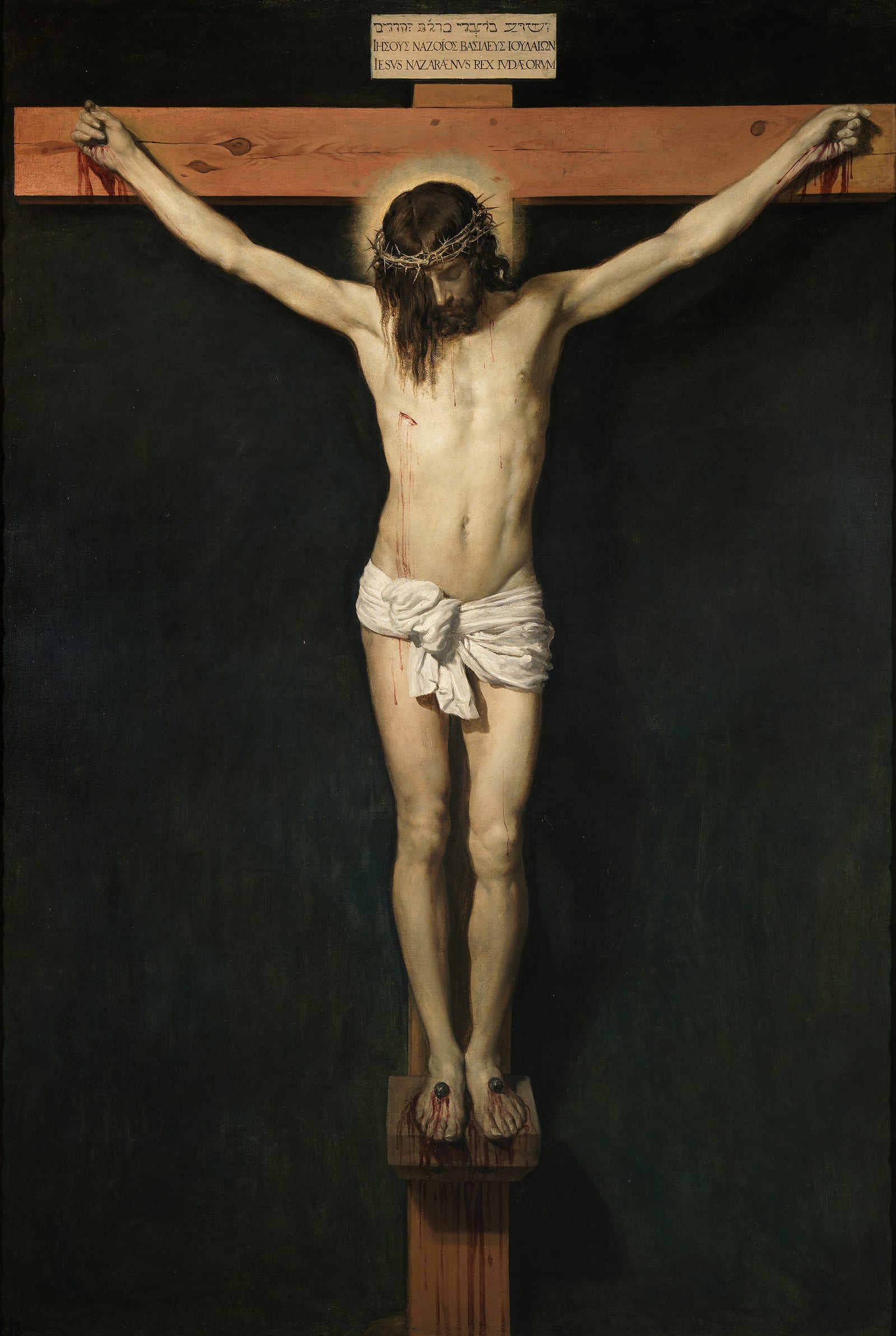
Two thieves were crucified with Christ on Calvary, one on His right and one on His left (Lk 23:32–43). One blasphemed Him; the other rebuked his companion: 'Neither dost thou fear God, seeing thou art under the same condemnation? And we indeed justly, for we receive the due reward of our deeds; but this man hath done no evil.' Then, turning to Christ: 'Lord, remember me when thou shalt come into thy kingdom.'
Christ answered: 'Amen I say to thee, this day thou shalt be with me in paradise.' These were among the last words of the Lord. The Good Thief is the only person in the New Testament canonized by Christ Himself, by name, with the time and place of his salvation explicit.
Tradition (preserved in the Gospel of Nicodemus and many medieval sources) gave the two thieves names — Dismas (the Good) and Gestas (the Bad). The name Dismas, possibly from Greek dysme ('sunset' — the death of the Sun of Justice), entered the Roman Martyrology by the early medieval period.