
MIRACULOUS MIRACLES™

Saint — Bl. Salomea of Poland

Bl. Salomea of Poland
1211 AD, Kraków, Kingdom of Poland (royal Piast family — daughter of Leszek I the White, High Duke of Poland) — November 17, 1268 AD, Skała, Kraków region, Kingdom of Poland
Polish princess-queen; Poor Clare abbess; royal Franciscan-Poor-Clare Polish tradition
Poor Clare Monastery of the Holy Trinity, Kraków, Poland — her relics translated there; principal Polish Catholic Poor Clare pilgrim destination, Poland
Feast
November 17
Canonized
Beatified May 17, 1673 by Pope Clement X
Life

Salomea was born in 1211 to Leszek I the White, High Duke of Poland (Piast dynasty), and his wife Grzymisława of Rus' (Kievan-Rus' royal princess).

At the age of 3 (1214), Salomea was betrothed to Coloman of Galicia (Hungarian Kálmán) — the younger son of King Andrew II of Hungary and younger brother of St. Elizabeth of Hungary (1207–1231, sister-in-law of Salomea). The marriage was a dynastic settlement of the contested Galician-Volhynian succession, in which the Hungarian and Polish crowns shared the contested Ruthenian territory.

Salomea and Coloman were crowned King and Queen of Galicia in 1219 — under the Hungarian-Polish shared suzerainty. Salomea became the first recorded medieval Hungarian queen to publicly wear the royal crown.

The royal marriage remained unconsummated by mutual agreement (in the medieval Catholic tradition of virginity-in-marriage that had been established by Sts. Henry II and Cunigunde of Germany, Edward the Confessor and Edith of Wessex, and other medieval Catholic royal couples).

In 1241, King Coloman died at the Battle of Mohi in April 1241 — the catastrophic Mongol invasion of Hungary that had destroyed the Hungarian royal army. Salomea survived and returned to Poland.

In 1245, Salomea undertook the Poor Clare monastic vocation at the Poor Clare monastery at Zawichost (later transferred to Skała and then to Kraków) — becoming the foundress of the Polish Poor Clare tradition. She served as abbess and established the Polish Poor Clare institutional network.

Her sister-in-law St. Kinga of Poland (1234–1292, wife of Bolesław V the Chaste, younger brother of Salomea) followed Salomea into the Poor Clare life (after her widowhood in 1279); the other sister-in-law Bl. Yolanda of Poland (Jolenta, 1235–1298, Kinga's younger sister) also followed the Poor Clare vocation. The three Polish royal Poor Clare saints (Salomea, Kinga, Yolanda) institutionally established the Polish Poor Clare tradition of the royal-Piast-dynasty women's-monastic culture that would extend through the medieval Polish Catholic centuries.

Salomea died at Skała on November 17, 1268.

Miracles & Phenomena
  • The Polish royal-Piast-dynasty Poor Clare tradition

    Bl. Salomea's Poor Clare vocation from 1245 — and the Poor Clare vocations of her sister-in-law St. Kinga (1279) and her sister-in-law's sister Bl. Yolanda (1279) — instituted the Polish royal-Piast-dynasty Poor Clare tradition. The three Polish royal Poor Clare saints institutionally established the Polish Catholic-women's-monastic culture of the royal-lay-becoming-monastic tradition that would extend through the medieval Polish Catholic centuries and underpins the continuing Polish Catholic identity.

Relics
  • Body
    Tomb of Bl. Salomea of Poland
    Church of St. Francis, Kraków, Poland (Polish royal Franciscan foundation) — the relics; the continuing Polish Catholic pilgrim destination

    Her principal relics rest at the Church of St. Francis (Kościół św. Franciszka z Asyżu) in Kraków, one of the principal Polish Catholic pilgrim destinations.

Iconography
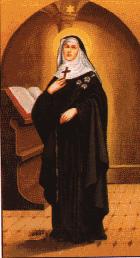
  • Salomea as Poor Clare abbess

    The mid-13th-century Polish royal Piast princess in Poor Clare habit, holding the royal Hungarian-Galician crown in one hand (sign of her royal renunciation) and the Rule of St. Clare in the other, the Poor Clare monastery of Skała visible behind — the iconography of Catholic Polish royal-Poor-Clare tradition.

Patronages
Kraków and the Lesser Poland (Małopolska) Catholic traditionCatholic Polish royal Piast-dynasty traditionCatholic Poor Clare Polish tradition (with St. Kinga, sister-in-law, and St. Salomea's sister-in-law's sister Bl. Yolanda of Poland)