
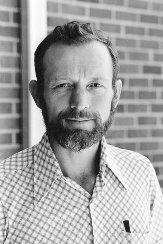
Stanley Francis Rother was born to a German-American Catholic farming family in the small town of Okarche on the Oklahoma plains, the eldest of four children. He nearly failed seminary studies in Latin at the diocesan seminary of San Antonio — was dismissed from the seminary in 1959 — but was given a second chance by Bishop Victor Reed of Oklahoma City and was ordained priest at the Cathedral of Our Lady of Perpetual Help in Oklahoma City in May 1963 at twenty-eight.
After five years of pastoral work in rural Oklahoma parishes, in June 1968 he volunteered for the Oklahoma diocesan mission at Santiago Atitlán on Lake Atitlán in the Guatemalan Highlands — a mission to the indigenous Tz'utujil Maya people, established in 1964 as one of the first U.S. diocesan missions in Latin America. Rother — who had failed Latin in seminary — became remarkably fluent in Tz'utujil over the next several years, learned to celebrate the Mass in the Tz'utujil language (the first ever to do so), and translated the Catholic lectionary and substantial portions of the Bible into Tz'utujil. The Tz'utujil community called him 'Padre Aplas' — a Tz'utujil rendering of his name.
By the late 1970s the Guatemalan Civil War (1960–96) had reached the Highlands. The Lake Atitlán region became a focal point of the army-led death squads' campaign against indigenous Catholic catechists and pastoral workers, who were systematically targeted under the assumption that their organizational structures supported leftist guerrilla movements. By 1981 Rother's name appeared on a published death-squad target list. Against diocesan advice he returned from a brief 1981 furlough in Oklahoma to Santiago Atitlán in April 1981, saying simply that 'a shepherd cannot run from his sheep.'
On the night of July 28, 1981, three masked Guatemalan army-aligned death-squad members broke into his rectory at the parish house behind the Santiago Atitlán church. They demanded he go with them; he refused, knowing they intended a public assassination of someone they would publicly identify as a guerrilla; he resisted. He was shot in the head at point-blank range in his own kitchen at forty-six. His body was returned to Oklahoma for burial, but his heart — at the request of the Tz'utujil community — was buried under the altar of the Santiago Atitlán parish church, where it remains. Beatified September 23, 2017 at Oklahoma City — the first beatification ever held in the United States, and the first beatification of a U.S.-born martyr.