
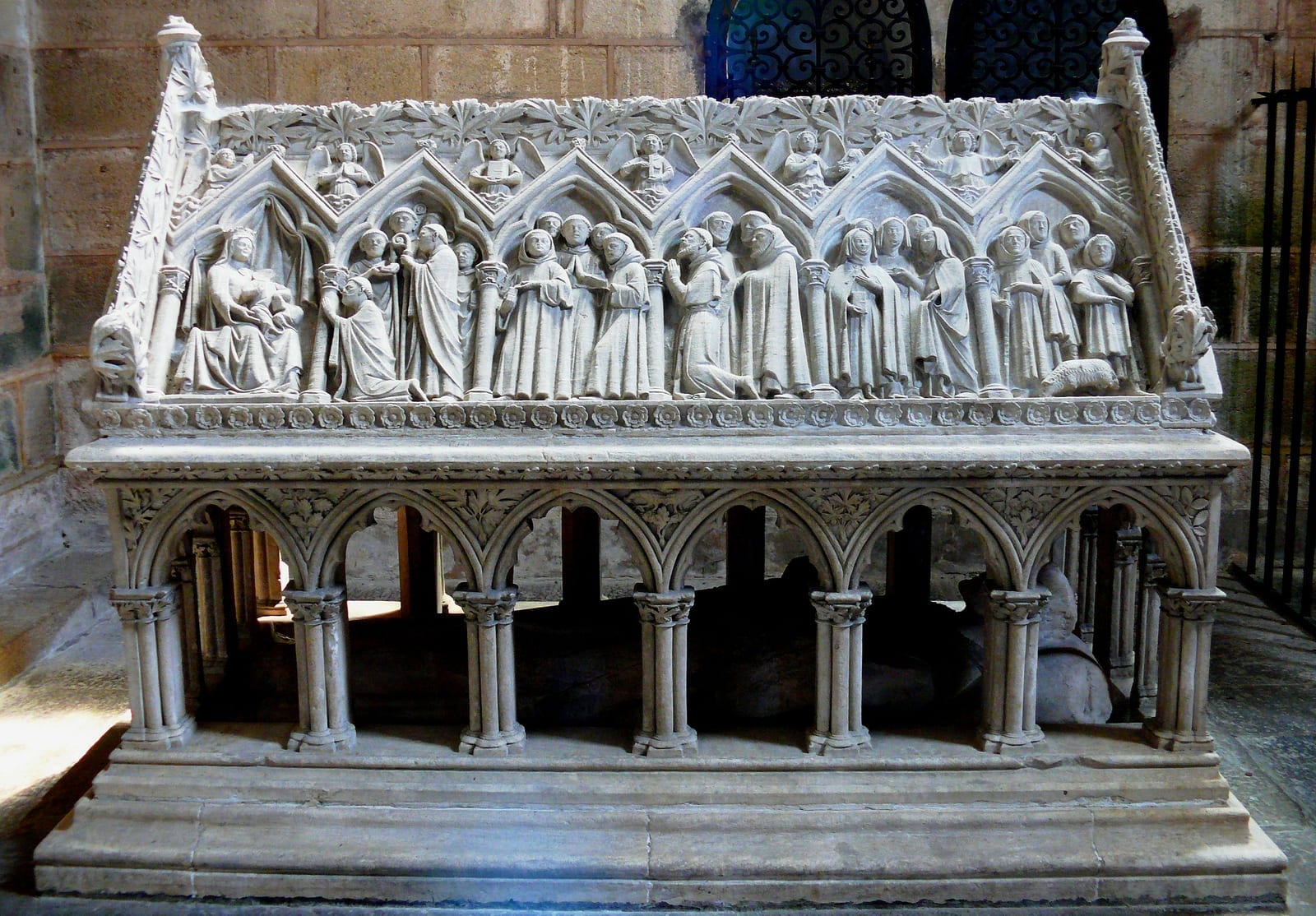
Stephen was a hermit-priest in the wild Corrèze country of the Limousin when, around 1124, he gathered a small community of like-minded hermits at the site of Obazine. The community grew rapidly and, in 1142, after seeking advice from Bernard of Clairvaux and the abbot of Cîteaux, formally adopted the Cistercian observance and was incorporated into the order.
Stephen also founded a parallel community of nuns at Coyroux, a few hundred yards from Obazine, separated by a stream and a wall — one of the earliest 'double monasteries' in the new Cistercian movement, with shared liturgy and economy but strict physical enclosure. The Obazine–Coyroux model became influential for the integration of women into Cistercian life.
He died at the abbey of Bonnaigues, one of his foundations, in 1159. The great Romanesque abbey church at Obazine, with its luminous unornamented Cistercian severity, survives and remains a pilgrimage site; his tomb, with its sculpted recumbent figure, is one of the finest twelfth-century funerary sculptures in France.