
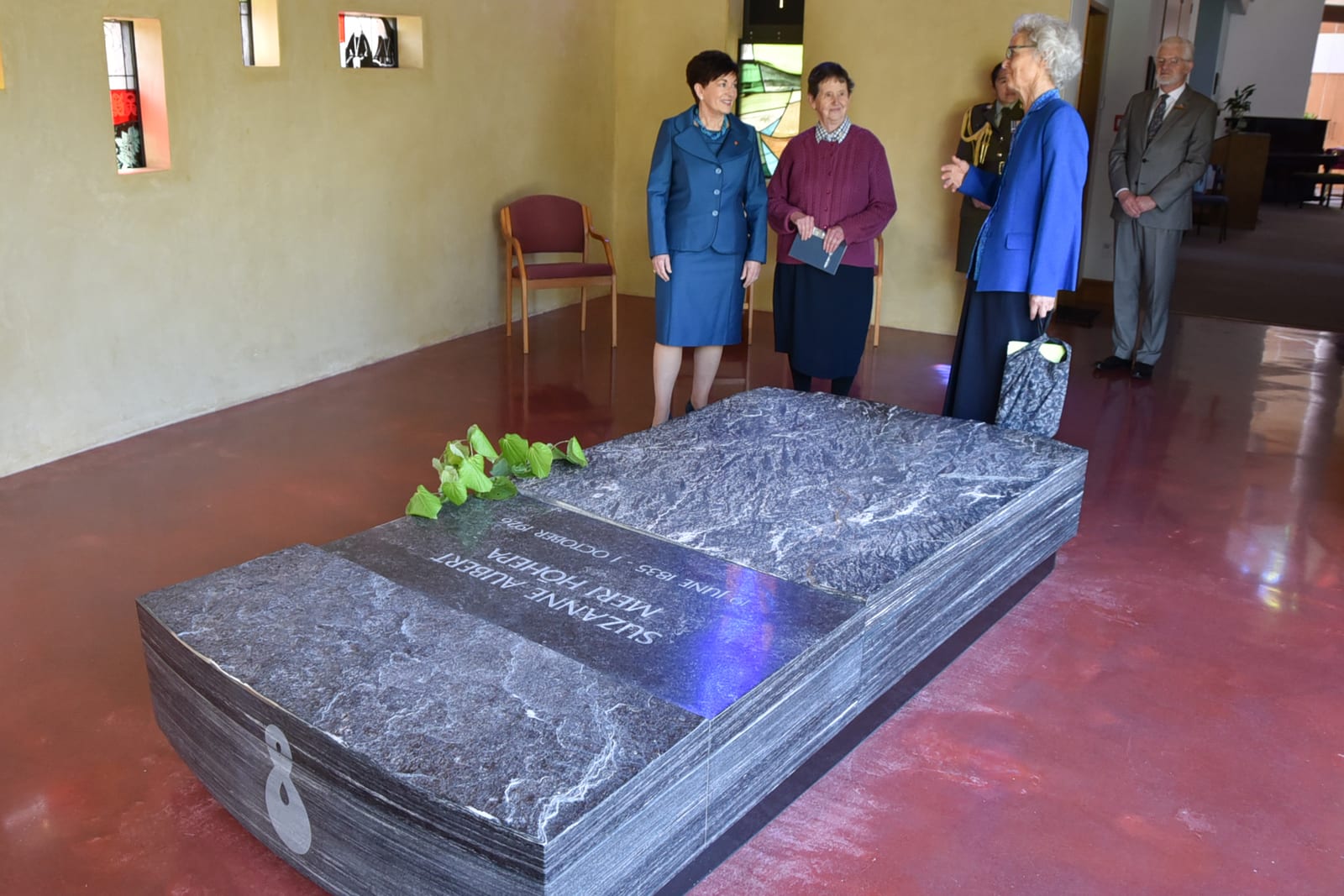
Suzanne Aubert was born in France on 19 June 1835 and grew up in Lyon. At twenty-five she answered Bishop Pompallier's call for helpers in his diocese of Auckland, and in December 1860 she landed in New Zealand. She taught at the Nazareth Institute, a boarding school in Auckland, then worked with the Marist mission in Hawke's Bay, where she became known for nursing Māori and Pākehā, Catholic and not. By 1871 she spoke te reo Māori fluently and had compiled a Māori–English phrasebook, and from a Māori healer, Peata Hoki, she learned the native plant medicines that she later made and sold to support her work.
In 1883, at the invitation of the Māori of the place, she went sixty-four kilometres up the Whanganui River to Hiruhārama — Jerusalem — and there in 1892 founded the Daughters of Our Lady of Compassion. She took in abandoned and sick children. In 1899 she moved to Wellington, where she opened a soup kitchen and a crèche, and in 1907 Our Lady's Home of Compassion at Island Bay, for the incurably ill and for children.
In 1913, aged seventy-eight, she went to Rome to secure her congregation's future, and four years later Pope Benedict XV granted it a decree of praise. She died in Wellington on 1 October 1926, aged ninety-one; the sisters describe her funeral as the largest ever given to a woman in New Zealand. Her remains were moved from Karori Cemetery to Island Bay at mid-century and again in 2017, and the chapel and resting place were added to New Zealand's heritage list in 2025.
Pope Francis declared her Venerable on 2 December 2016. One proposed miracle has been examined in Rome and set aside by the medical board, so the cause waits for another.