
MIRACULOUS MIRACLES™

Saint — Swithun Wells

St. Swithun Wells
1536 AD, Bambridge, Hampshire, Kingdom of England — December 10, 1591 AD, Gray's Inn Fields, London — hanged alongside Edmund Gennings for providing his London house as the secret Mass site
English Catholic layman-schoolmaster; lay-martyr for providing the Mass site (December 10, 1591)
Tyburn Convent, Marble Arch, London, England — Catholic shrine at the Tyburn Tree execution site, United Kingdom
Feast
December 10 (martyrdom); October 25 (Forty Martyrs of England and Wales)
Canonized
Canonized October 25, 1970 by Pope St. Paul VI (one of the Forty Martyrs of England and Wales)
✠ MartyrHanged at Gray's Inn Fields, London, for providing his house as a secret Mass site, 1591 → The Martyrs
Life

Swithun Wells was born in 1536 at Bambridge in Hampshire to a Catholic recusant family. Trained as a schoolmaster, Swithun served as tutor to noble English Catholic recusant families.

Around 1585 Swithun and his wife Alice established their London house at Gray's Inn Fields — as a systematic Mass-house for the London Catholic recusant community, hosting secret Catholic Masses celebrated by continental-Douai-Rheims priests.

On November 8, 1591, during a secret Mass at the Wells London house, the priest St. Edmund Gennings was arrested along with the congregation. Swithun himself was away at the time of the arrest but was subsequently arrested.

Swithun and his wife Alice were imprisoned. Alice was sentenced to death but reprieved — she died in prison years later. Swithun was condemned to death for the treason of providing the Mass house.

On December 10, 1591, Swithun was hanged at Gray's Inn Fields — the execution site deliberately chosen outside his own London house — alongside Edmund Gennings. Swithun's famous last words at the scaffold: 'Farewell, dear London! Farewell, thou noble land! Farewell, my Alice!'

Canonized on October 25, 1970 by Pope St. Paul VI.

Miracles & Phenomena
  • The Mass-house-provider lay-martyr tradition

    St. Swithun Wells's martyrdom on December 10, 1591 for providing his London house as the secret Mass site — alongside the conjoint martyrdom of priest St. Edmund Gennings — establishes the English Catholic recusant lay-Mass-host martyr tradition. The Wells-Gennings conjoint martyrdom represents the priest-and-Mass-host relationship of the Elizabethan Catholic recusant community.

Relics
  • Body
    Relics of St. Swithun Wells
    Tyburn Convent, London, England — shrine at the Tyburn Tree execution site

    Fragmentary relics at the Tyburn Convent.

Iconography
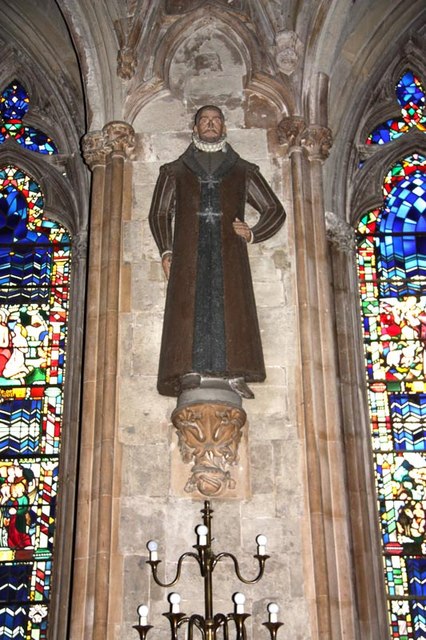
  • Swithun Wells at Gray's Inn Fields

    The late-16th-century English Catholic layman-schoolmaster being hanged outside his own London house on December 10, 1591 — the iconography of English Catholic recusant lay-Mass-host tradition.

Patronages
Catholic English recusant lay-martyr traditionCatholic teachers and schoolmastersCatholic Mass-hosts (lay Catholics providing house-Mass locations during persecution)