
MIRACULOUS MIRACLES™

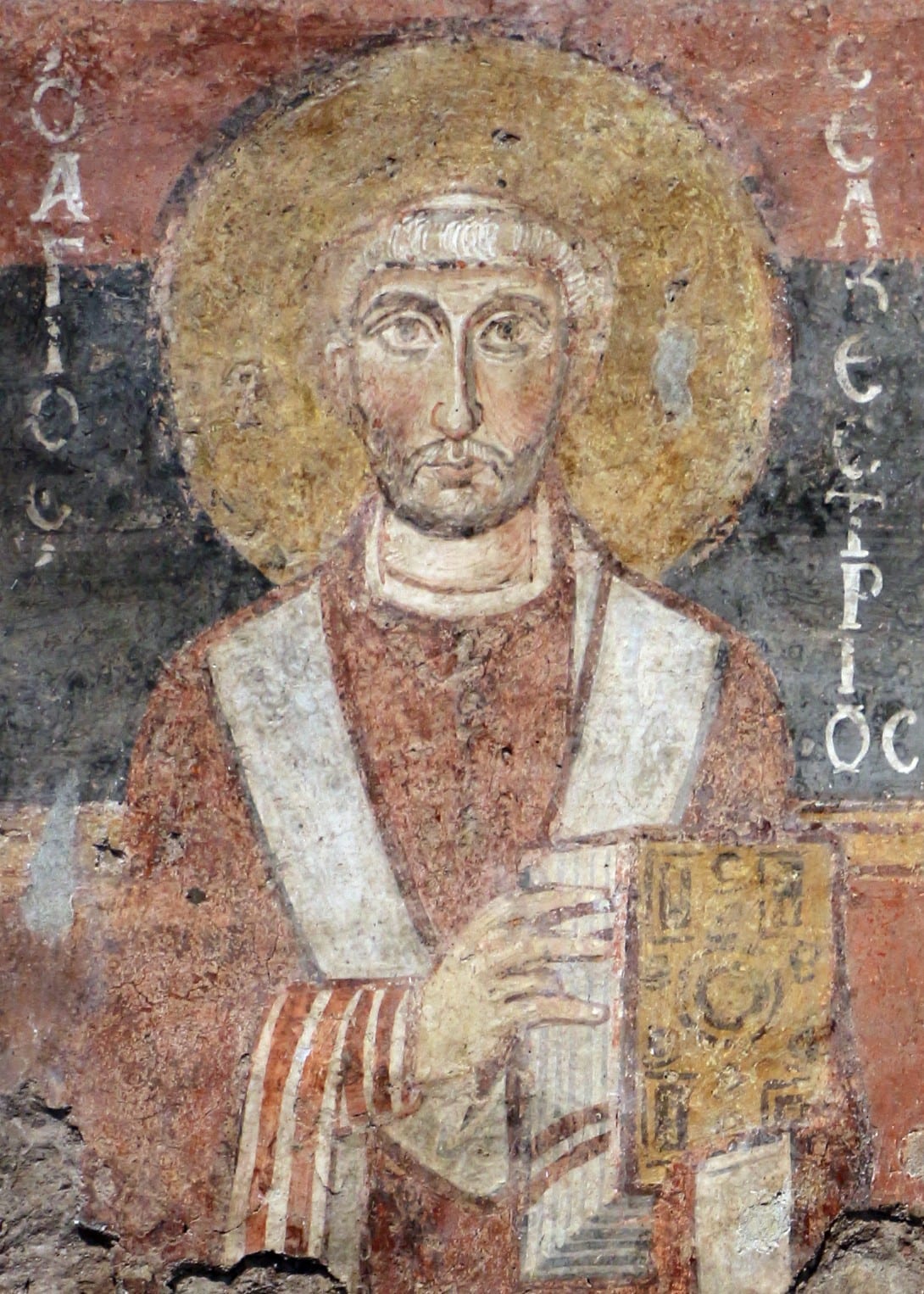
Saint — Sylvester I

St. Sylvester I
before AD 285, Rome — December 31, 335, Rome
Pope of the peace of Constantine
San Silvestro in Capite, Rome, Italy
♕ The 33rd Bishop of RomeReign: January 31, 314 — December 31, 335
Feast
December 31
Life

Sylvester ascended the throne of Peter eleven months after Constantine's Edict of Milan (313) had ended the persecution of the Church. His pontificate of nearly twenty-two years is one of the longest of the early papacy and one of the most consequential — although the early sources for it are thin, much obscured by later legend.

Under his reign the great Roman churches that still anchor the Christian topography of the city were built by imperial patronage: the Lateran Basilica (the cathedral of Rome, dedicated November 9, 324, the 'mother and head of all churches'), Old St. Peter's, and Holy Cross in Jerusalem. The First Council of Nicaea met in 325 — though Sylvester himself was represented by legates rather than presiding in person — and produced the Nicene Creed.

Medieval tradition surrounded him with luxuriant legends: the Donation of Constantine (a 9th-century forgery) purported to make him the recipient of Constantine's transfer of Western imperial authority; the Acta Silvestri described him baptising the emperor on a sickbed (modern scholarship locates Constantine's deathbed baptism much later, by Eusebius of Nicomedia). Sylvester himself remains a quiet figure behind these stories — the bishop in whose see a persecuted Church became, in less than fifteen years, the imperial Church.

Miracles & Phenomena
  • Dedication of the Lateran Basilica

    November 9, 324

    On November 9, 324, Sylvester consecrated the great basilica that Constantine had built on the Caelian Hill — the cathedral of Rome and 'mother and head of all the churches of the city and of the world,' as its façade still proclaims. The feast of the Dedication is still kept by the universal Church.

  • The Conversion of Constantine (legend)

    The Acta Silvestri describe Constantine, struck with leprosy, being told in a vision by Sts. Peter and Paul to find Sylvester. The pope baptised him and the disease was washed away. Modern scholarship treats this as a 5th-century legend — but it dominated medieval iconography for a thousand years.

Relics
  • Body
    Relics of St. Sylvester
    San Silvestro in Capite, Rome

    First buried in the catacomb of Priscilla. His relics were translated by Pope Paul I (757–767) to a church the latter built in central Rome, today's San Silvestro in Capite — which also famously houses what tradition holds is the head of St. John the Baptist.

Iconography
  • Sylvester Baptising Constantine
    Raphael's workshop (Giulio Romano) · 1520–1524 · Sala di Costantino, Vatican Palace

    The most frequent depiction — the seated emperor in a basin of water, Sylvester pouring, the dove descending. Painted by Raphael and his school in the Stanze of the Vatican Palace (Sala di Costantino).

  • Sylvester with the Bull and the Dragon

    From the Donation legend: Sylvester subdues a dragon devouring the people of Rome (a stand-in for paganism), and tames a bull brought by a Jewish opponent. Both attributes appear in early Renaissance frescoes.

Patronages
Domestic animalsStonemasonsA good year (in folk tradition — New Year's Eve)
Sources & Further Reading