
Takashi Nagai was born on February 3, 1908 at Matsue, Shimane to a Shinto Nagai family. Educated at the Nagasaki Medical University, Takashi became one of the leading Japanese radiologists of the 1930s and 1940s.
In 1934, Takashi converted to Catholicism under the influence of the Nagasaki Catholic community and the Nagai family in whose lodging he lived. In 1934, Takashi married Midori Moriyama, a Catholic descendant of the Nagasaki Hidden Christians (Kakure Kirishitan, who had maintained the secret Catholic faith during the 250-year Tokugawa suppression of Catholicism).
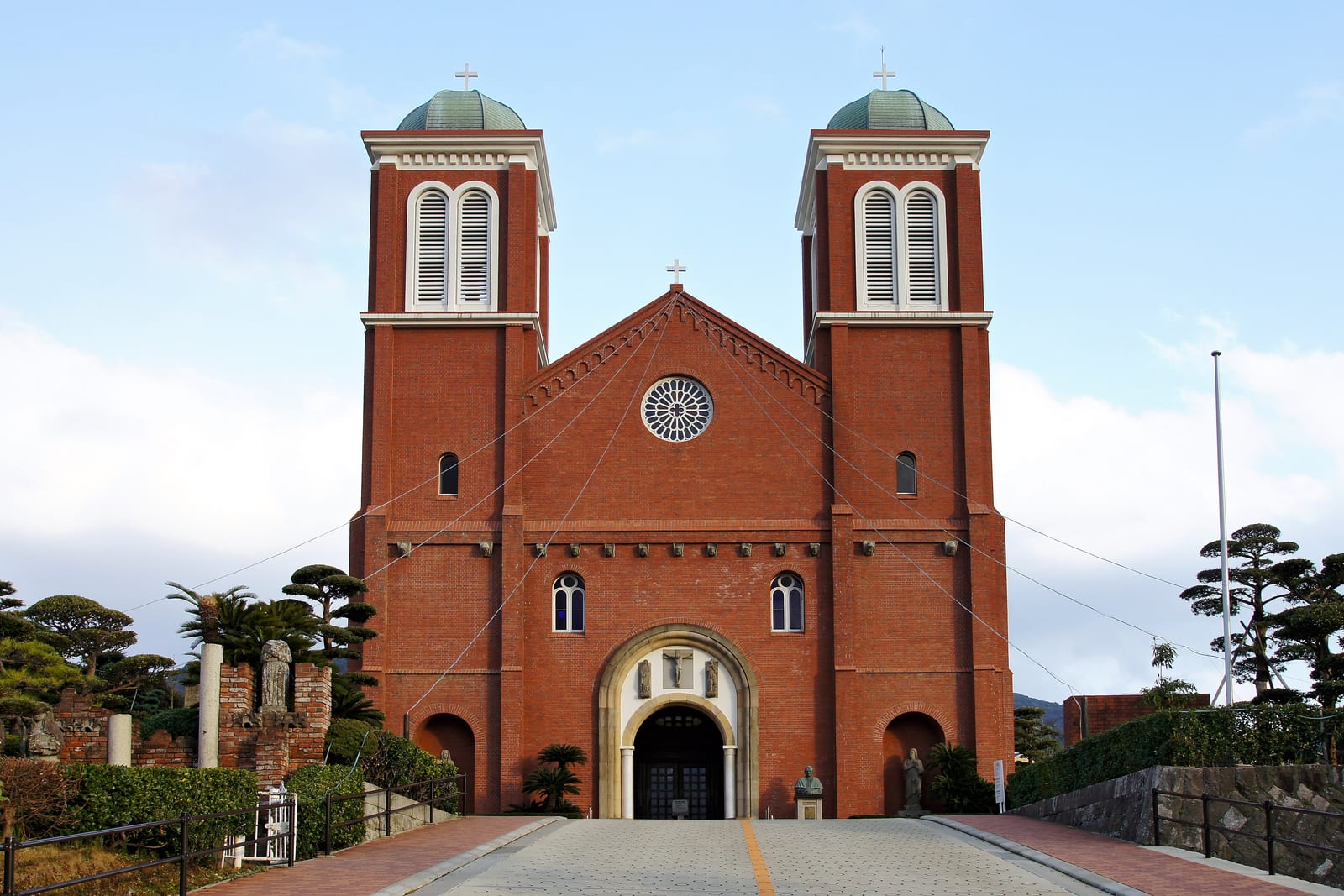
On August 9, 1945, at 11:02 AM, the US atomic bomb 'Fat Man' detonated over Nagasaki — directly above the Urakami Cathedral. The atomic-bomb killed 74,000 people including 8,500 of the 12,000 Urakami Catholics — producing the catastrophic decimation of the world's oldest Catholic community outside Europe.
Takashi's wife Midori was killed in the atomic bombing — holding her rosary. Takashi survived — severely injured and suffering the leukemia from the radiation exposure.
During the post-atomic-bomb years (1945–1951), Takashi undertook the literary vocation — composing 'The Bells of Nagasaki' (Nagasaki no Kane, 1949), 'Leaving My Beloved Children Behind' (Kono Ko o Nokoshite, 1948), and multiple other spiritual reflections on the atomic bombing.
Takashi's theological reflection — the famous 'Hansai-setsu' ('holocaust theology'), that the Nagasaki Urakami Catholics were offered by God as the holocaust-sacrifice ending the World War II — became the institutional Japanese Catholic interpretation of the Nagasaki atomic bombing.
Takashi lived his final years in the tiny 2-tatami-mat hermitage at Nagasaki called 'Nyokodo' ('Hermitage of the Neighbor's Love' — from the Great Commandment: 'love your neighbor as yourself').
He died at Nagasaki on May 1, 1951 at the age of 43.
The cause of canonization was opened November 8, 2021 by the Archdiocese of Nagasaki.