
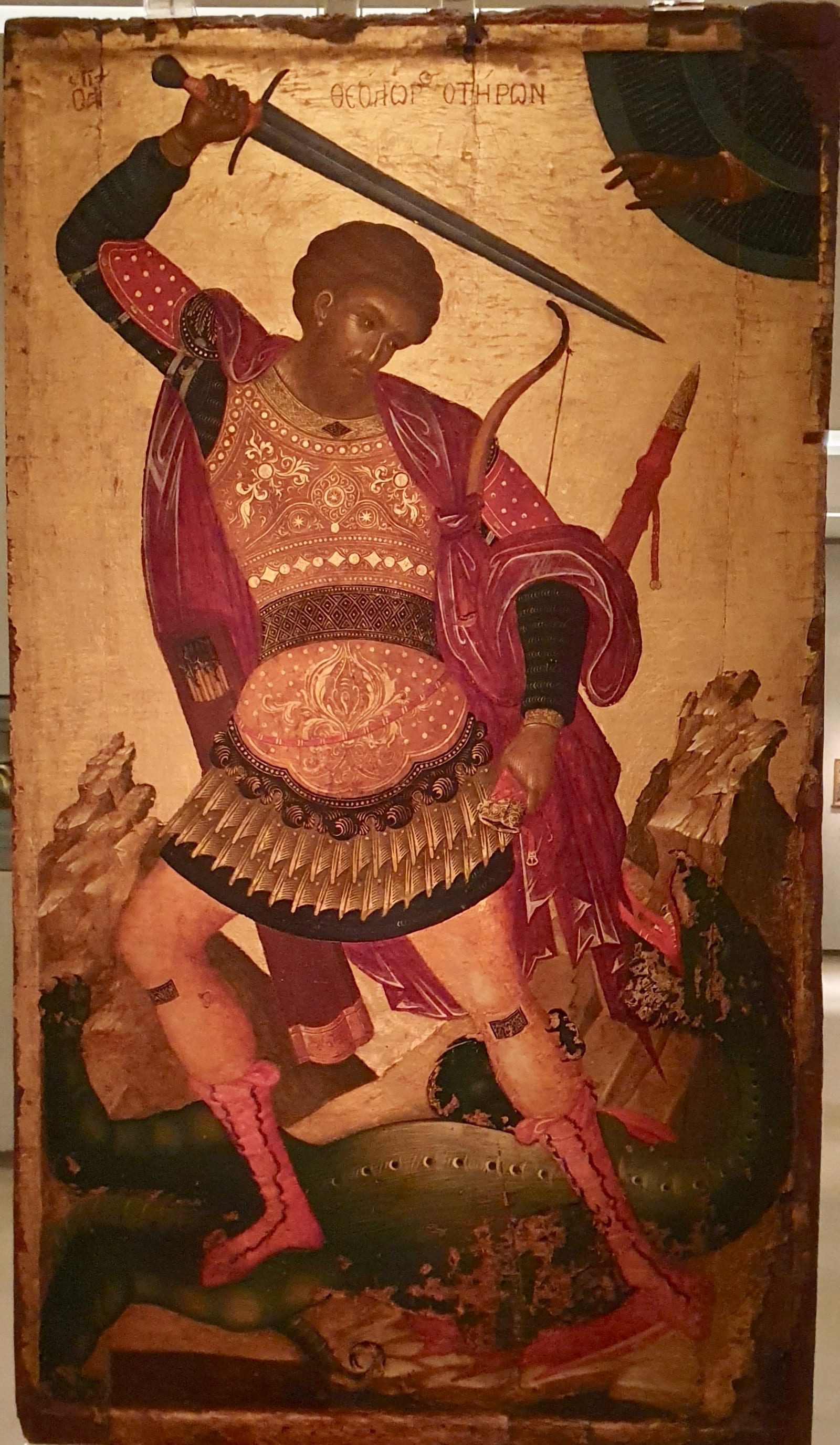
Theodore (Greek Theodoros, 'gift of God'; the epithet Tyron — 'the Recruit' — distinguishes him from the slightly later Theodore Stratelates 'the General') was a young Pontic Roman soldier of the legio called the Cohors Tironum (the Recruit Cohort), stationed at Amasea in Pontus during the Diocletianic persecution.
Per the foundational Greek Acts of his martyrdom (preserved in part by Gregory of Nyssa in his 4th-century encomium of Theodore, one of the earliest extensive Christian rhetorical praise-discourses of a martyr), Theodore — refusing to participate in the public pagan sacrifices required of his cohort — set fire to the great temple of Cybele at Amasea in protest. He was arrested, refused to recant, and was tortured at length before being executed by being burned alive in a great public furnace.
His cult became universal in the Byzantine tradition and one of the principal soldier-martyr cults of the Eastern Roman Empire. Venice — before the 828 translation of the body of St. Mark from Alexandria that made Mark the city's principal patron — had Theodore as its original patron saint (the small Byzantine-era statue of St. Theodore on the second of the two great columns of the Piazzetta San Marco at Venice is the foundational Venetian civic monument). The post-resurrection-of-the-Theotokos First Saturday of Great Lent in the Byzantine tradition is dedicated to Theodore Tyron in commemoration of his miraculous warning to the Christians of Constantinople in 362 against the pollution of food at the markets by the apostate Emperor Julian (the Tyron's-koliva tradition — the small dish of wheat eaten on the Sabbath in his honour — preserves the memory).