
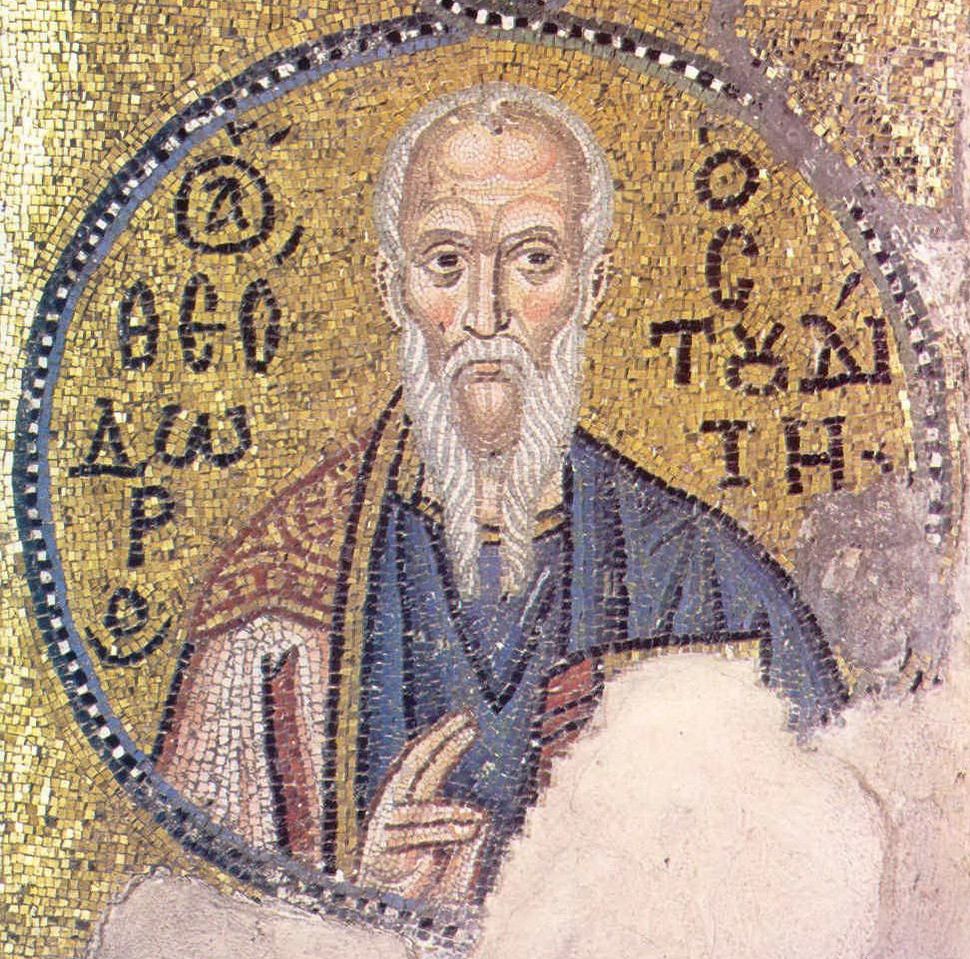
Theodore was born to a noble Constantinople family and entered monastic life at his uncle's monastery of Sakkudion in Bithynia. Around 798 he and his community were invited by Empress Irene to take over the small monastery of Stoudios in the capital, which Theodore developed into the great Stoudios — the most important monastery of medieval Byzantium and the heart of the Byzantine monastic-liturgical tradition.
He governed a community that grew to over a thousand monks, organizing every aspect of their life by a detailed Rule that became the foundational typikon for all later Byzantine cenobitic monasteries, on Mt. Athos and beyond.
Three times exiled for his fearless opposition to imperial interference in the Church — first under Emperor Constantine VI for his adulterous remarriage, twice under Emperor Leo V the Armenian for renewed iconoclasm — he died in his final exile in 826 on the Bithynian coast. His role in the Iconodule resistance was decisive; his theological writings on icons (Antirrhetici Tres) are among the most important defenses of the orthodox doctrine ever composed.