
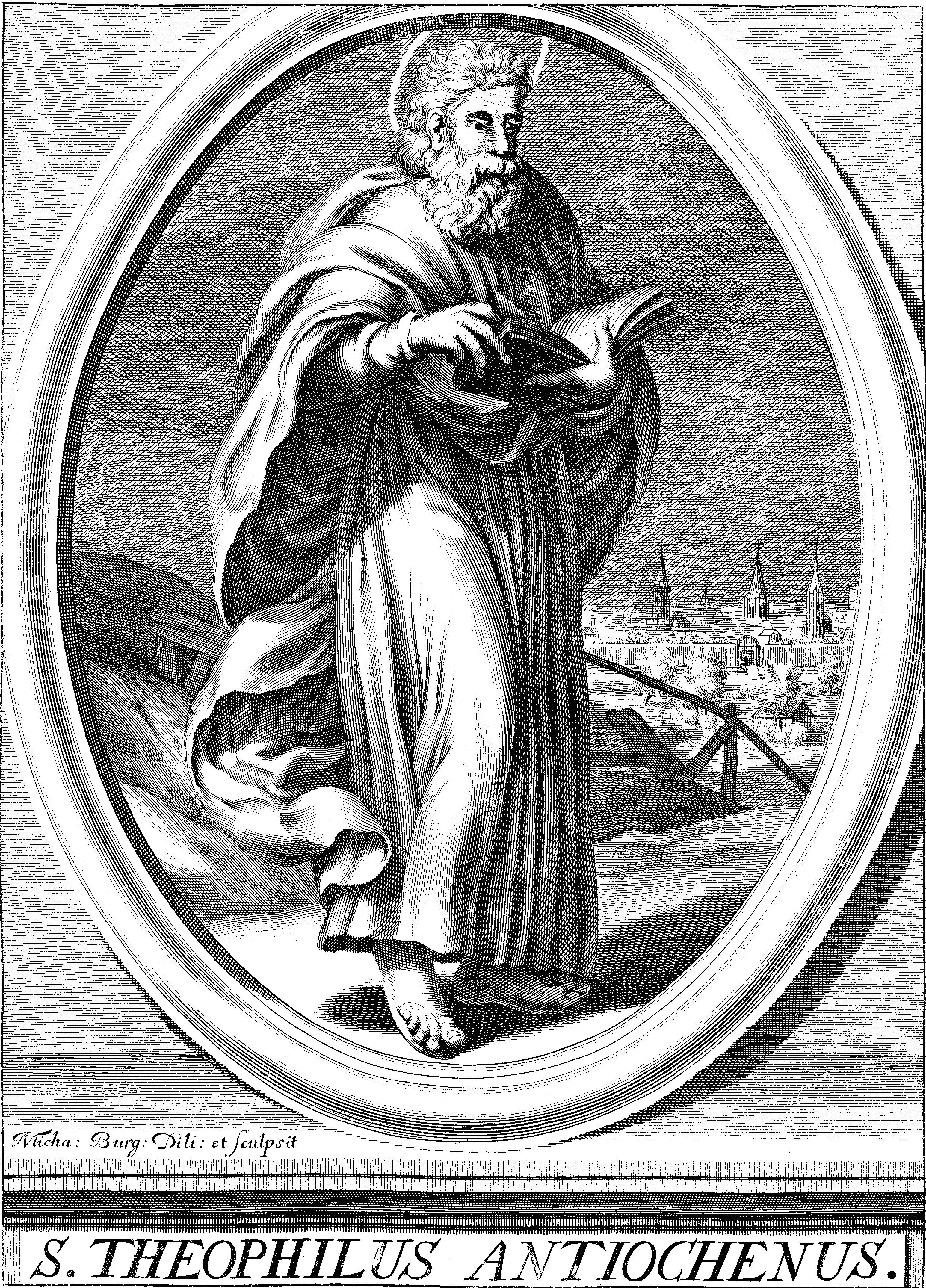
Theophilus (Greek Theophilos, 'lover of God') was the sixth Bishop of Antioch after Peter — Antioch being the third great see of the apostolic age (after Jerusalem and Rome) — succeeding to the see around AD 169 and governing it until his death around AD 183.
His three-book Apology to Autolycus (Ad Autolycum) — composed around AD 180 in response to a pagan friend Autolycus who had asked Theophilus to defend Christianity to him — survives intact and is one of the most theologically rich 2nd-century Christian apologetic works. The work systematically argues for the Christian doctrine of God against pagan polytheism, defends the truth of the Old Testament against pagan philosophical objections, and gives the first systematic Christian universal chronology from Adam to the contemporary period.
The work's foundational doctrinal contribution: in book 2 chapter 15, Theophilus becomes the first extant Christian author to use the Greek word triados (Trinity) to describe God — three centuries before the technical-theological elaboration of Trinitarian doctrine at the Council of Nicaea. His exact phrase: 'In like manner also the three days which were before the luminaries, are types of the Trinity, of God, and his Word, and his Wisdom.' The terminological breakthrough was foundational; the development of the theological doctrine of the Trinity from the late 2nd century onward proceeds in a direct line from Theophilus's coinage.