
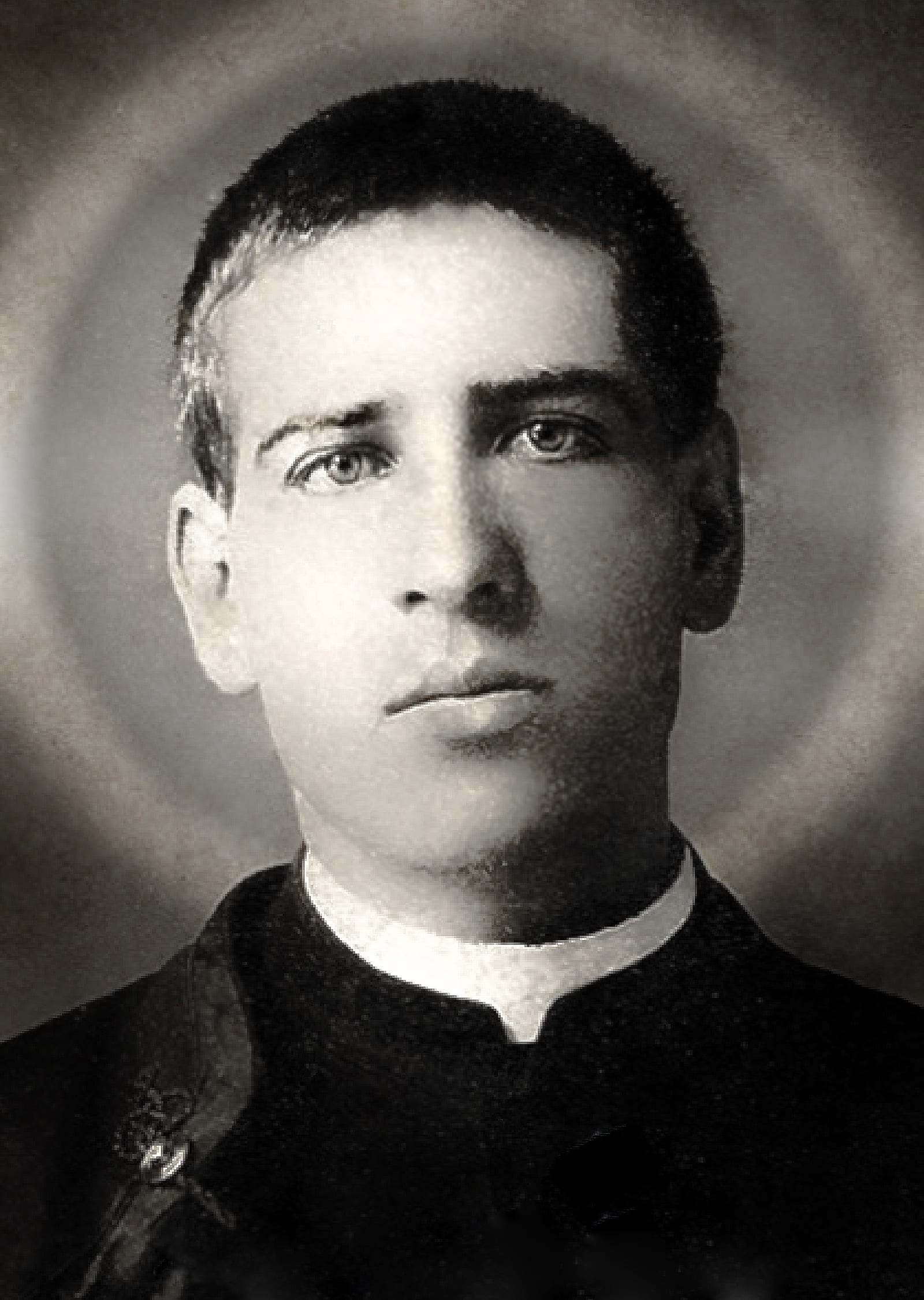
Toribio Romo González was the third of seven children of a poor Jalisco rural family at Santa Ana de Guadalupe in the Highlands of Los Altos de Jalisco. He entered the diocesan seminary of Guadalajara at thirteen in 1913 and was ordained priest in 1922 at twenty-two, on the eve of the Calles persecution. He served briefly as parish priest of Sayula and was on the eve of the Cristero outbreak assigned as parish priest of the small Jaliscan village of Tequila — the village from which Mexico's national alcoholic drink takes its name.
Through the Cristero War (1926–29) Father Toribio served the small Tequila Catholic community clandestinely, hearing confessions, distributing the Eucharist, baptizing, and supporting the local Cristero fighters spiritually. He continued his clandestine ministry through 1927 and the early weeks of 1928. On the night of February 24–25, 1928, the Federales raided the small two-room shack where he was sleeping. He was shot in his bed early on the morning of February 25, 1928 at twenty-seven. Beatified 1992, canonized 2000 as one of the 25 Cristero Martyrs.
After his canonization in 2000 a remarkable popular devotion developed in the Mexican migrant communities crossing the U.S.-Mexico border: stories spread across Mexican migrant networks in Texas, Arizona, and California of a young priest who appeared physically to migrants crossing the dangerous Sonoran or Chihuahuan desert — giving them water, pointing them toward safe routes, and providing money to pay coyote smugglers — only to be identified later by the migrant from a photograph as Santo Toribio Romo. The reports — independently attested across hundreds of cases — established him from around 2002 onward as the unofficial popular patron of Mexican migrants to the United States, and his sanctuary at Santa Ana de Guadalupe has become one of the most-visited 21st-century Catholic shrines in the Americas.