
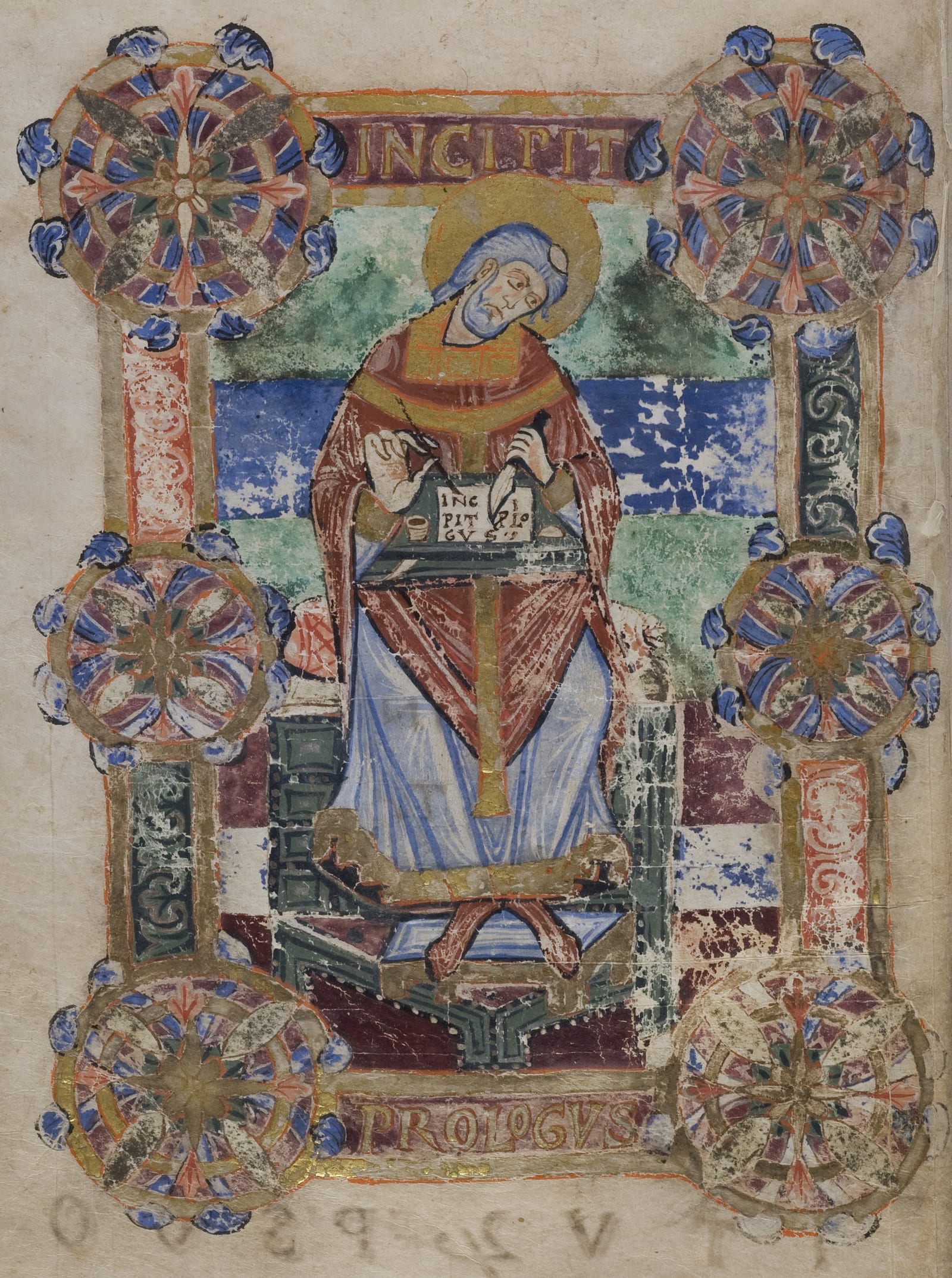
Venantius was an Italian, born near Treviso, educated in the rhetorical schools of Ravenna. After a healing of his eye at the tomb of St. Martin at Tours, he came to Gaul and entered the circle of Queen Radegund and her abbess-daughter Agnes at the new monastery of the Holy Cross in Poitiers, where he became their court poet and chaplain.
He composed two great processional hymns for the arrival of the relic of the True Cross at Poitiers in 569 — Vexilla Regis Prodeunt ('The Royal Banners Forward Go') and Pange Lingua Gloriosi Lauream Certaminis ('Sing, My Tongue, the Glorious Battle') — and a third, the magnificent Easter sequence Salve Festa Dies ('Hail Thee, Festival Day'). These three hymns have been sung at the Roman Holy Week and Easter liturgies for fifteen hundred years.
He was ordained priest, and in old age was elected bishop of Poitiers around 600. He was the last great Latin poet of late antiquity — the bridge between the classical world of Virgil and Horace and the medieval hymnody of Aquinas. With him the long autumn of classical Latin literature comes to its quiet end.