
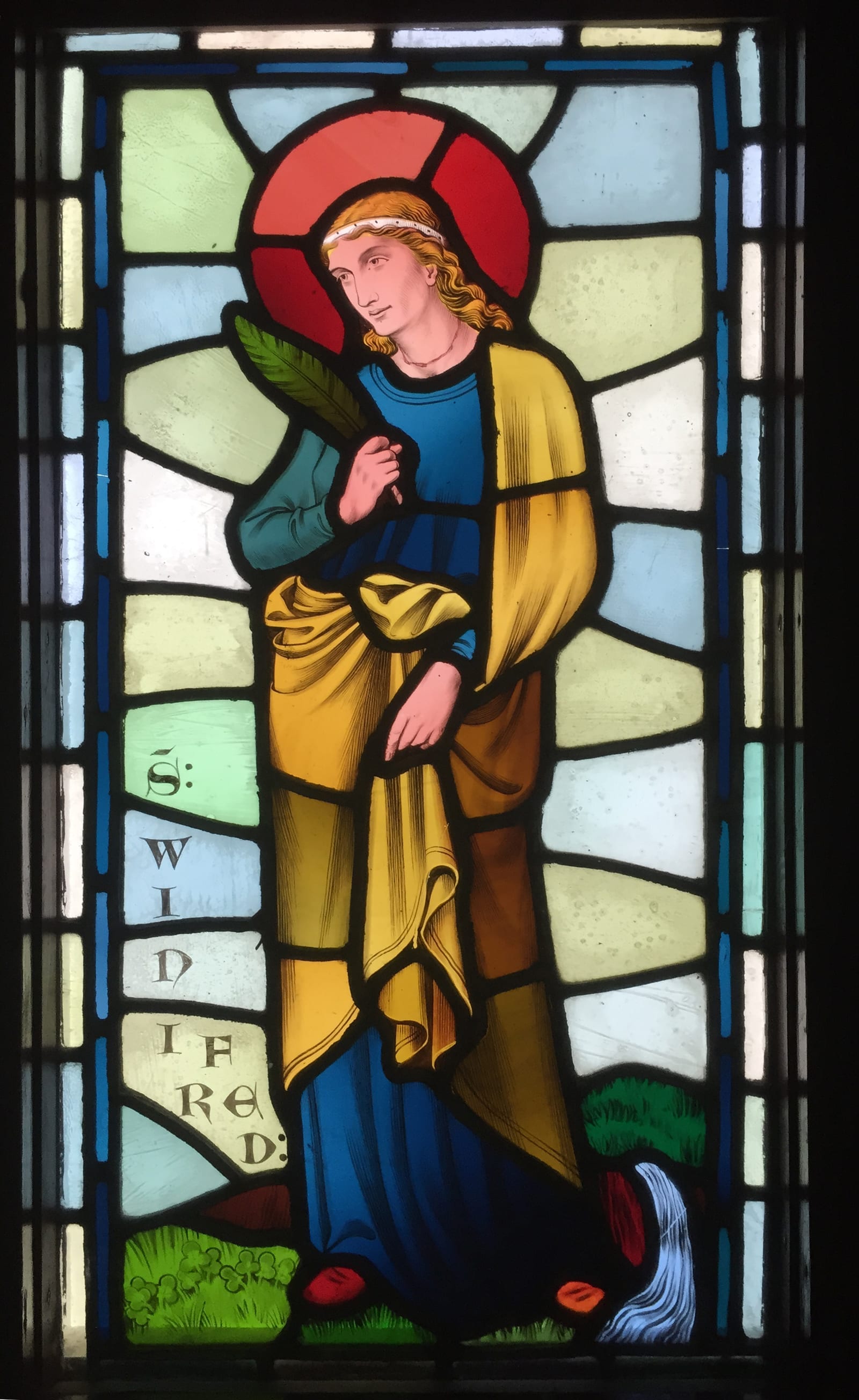
MIRACULOUS MIRACLES™

Saint — Wenefride

St. Wenefride
c. 630 AD, Tegeingl, North Wales — c. 660 AD, Gwytherin, North Wales (per tradition; her cult is principally focused on the 'first death' of c. 660 AD when she was decapitated and then restored)
Gwenfrewi — Welsh Virgin-Martyr — Patroness of the Holywell Healing Spring
St. Winefride's Well (Treffynnon Gwenfrewi), Holywell, Flintshire, North Wales (the continuous Catholic-Welsh pilgrim healing spring — the only Catholic pilgrim shrine in the entire United Kingdom that has been in continuous use since the medieval period without interruption through the Reformation), United Kingdom
Feast
November 3 (Welsh-Catholic local feast); June 22 (translation of relics)
Canonized
Cult of ancient antiquity
✠ MartyrBeheaded at Holywell by the nobleman Caradoc for refusing his advances, c. 660 (per tradition restored to life by St. Beuno, dying finally c. 682) → The Martyrs
Life

Wenefride (Welsh Gwenfrewi; Latin Wenefreda) was — per the substantial Welsh hagiographic tradition (the 12th-century Vita Sanctae Wenefredae composed by Robert of Shrewsbury preserves the developed tradition) — a young Welsh-Catholic noble of the small North Welsh kingdom of Tegeingl in Flintshire, the niece and personal disciple of St. Beuno of Clynnog Fawr.

Around 660 AD — when Wenefride was approximately 30 years old — she was attacked at the small Welsh village of Holywell by Caradoc, a substantial regional Welsh noble who had been pursuing her for marriage and whose advances she had publicly refused. When Caradoc — provoked by her refusal — chased her with his sword toward the small chapel where she had taken refuge, he caught her at the chapel door and decapitated her with a sword blow.

Per the Welsh hagiographic tradition: at the place where Wenefride's head fell, a sudden small healing spring burst forth from the ground — the Holywell healing spring that has been in continuous Welsh-Catholic pilgrim veneration ever since. Her uncle St. Beuno arrived almost immediately at the martyrdom site, restored Wenefride's head to her body through prayer, and successfully restored her to life. Wenefride lived an additional 22 years as a Welsh-Catholic religious — eventually as abbess of the small Welsh women's monastic foundation at Gwytherin — before her final 'second death' around 682 AD.

The Holywell spring (Welsh Treffynnon Gwenfrewi, 'Wenefride's town of the spring') is the only Catholic pilgrim healing shrine in the entire United Kingdom that has been in continuous Catholic pilgrim use since the medieval period without interruption through the entire 16th–19th-century period of English-Welsh Catholic suppression. The Welsh-Catholic identification of Wenefride and her healing spring through the substantial Reformation period was preserved through the continuous use of the spring by Welsh Catholic recusant communities. The substantial medieval Gothic Holywell shrine — substantially preserved despite the 16th-century Reformation — is the continuous Welsh-Catholic medieval-architectural object of the entire United Kingdom.

Miracles & Phenomena
  • The restoration after decapitation

    The Welsh hagiographic miracle: Wenefride's restoration to life after decapitation through the prayer of her uncle St. Beuno, and the simultaneous emergence of the Holywell healing spring at the place where her head fell. The healing spring has continued in continuous Welsh-Catholic pilgrim use for nearly 1,400 years and is the continuous Catholic-pilgrim healing-spring shrine of the British Isles.

  • Substantial continuous medieval healing dossier

    The substantial medieval dossier of healings at the Holywell shrine — substantially preserved despite the 16th-century English-Welsh Reformation — is the continuous Catholic healing-shrine dossier of the British Isles. Substantial medieval and modern Welsh-Catholic pilgrim devotion at the Holywell shrine remains continuously documented.

Relics
  • Body
    Relics of St. Wenefride
    St. Winefride's Well, Holywell, Flintshire, North Wales — substantial continuous medieval shrine; continuous Catholic-pilgrim site through the Reformation

    Her relics were originally translated from Gwytherin to Shrewsbury Abbey in 1138 (the Robert of Shrewsbury translation that produced the 12th-century Vita); the Shrewsbury relics were substantially destroyed at the 16th-century Reformation. The Holywell shrine itself — the medieval Gothic chapel-and-well complex — has been preserved substantially intact and remains the continuous Catholic-pilgrim shrine.

Iconography
  • Wenefride at the Holywell spring

    The young Welsh-Catholic virgin in long Welsh medieval dress kneeling at the Holywell spring with the substantial small chapel behind, her uncle St. Beuno standing at the spring's edge in long Welsh monastic tunic, the small severed-and-restored head visible at the substantial restored neckline — the iconography of Welsh-Catholic continuous pilgrim-healing tradition.

Patronages
Wales (popular)Catholic Welsh pilgrim healing traditionDiocese of WrexhamHolywellCatholic women refusing forced marriageCatholic-Welsh identity through the ReformationCatholic healing springs