
MIRACULOUS MIRACLES™

Saint — Werburgh of Chester

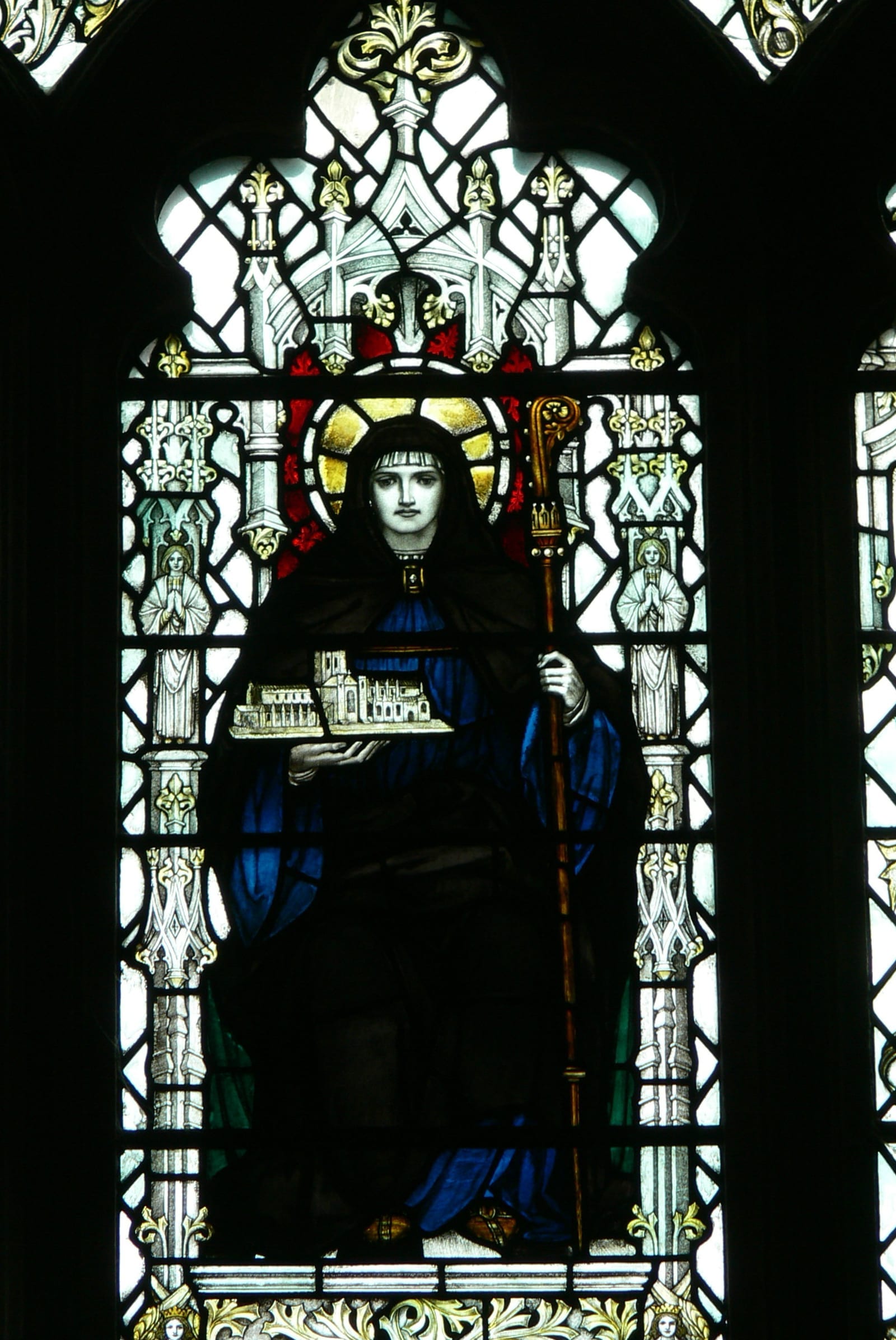
St. Werburgh of Chester
c. 650 AD, Stone, Staffordshire (royal household of Mercia) — February 3, c. 700 AD, Trentham, Staffordshire
Anglo-Saxon abbess; patron of Chester
Chester Cathedral (former Abbey of St. Werburgh) — translated shrine since 875 AD, United Kingdom
Feast
February 3
Canonized
Pre-congregation cult; relics translated 875 AD
Life

Werburgh (Old English Wǣrburh) was a daughter of King Wulfhere of Mercia and St. Ermenilda, granddaughter of St. Sexburga of Ely, and great-granddaughter of King Anna of East Anglia — placing her in the most extensive 7th-century English royal-saint dynasty.

Refusing the marriage proposal of Werbod, a Mercian noble, she took the veil at Ely under her great-aunt St. Etheldreda. After Wulfhere's death in 675, her uncle King Æthelred of Mercia appointed her supervising abbess over all the women's monasteries of Mercia — a unique appointment combining royal patronage with monastic governance.

She founded or reformed the convents of Trentham, Hanbury, and Weedon, and died at Trentham around 700. Her body was translated to Hanbury per her own request, and remained there until 875 when, threatened by Danish raids, her remains were taken to the safer walled town of Chester, where the Anglo-Saxon minster (later the great Norman Benedictine abbey, today's Anglican Chester Cathedral) became her permanent shrine.

Miracles & Phenomena
  • The incorrupt translation at Hanbury

    When her body was translated from Trentham to Hanbury nine years after burial, contemporary witnesses reported finding her remains incorrupt — a powerful sign for the surrounding Mercian Christian community and the foundation of her cult.

  • Resurrection of the wild geese of Weedon

    Bede-tradition hagiography records that wild geese ravaging the crops at Weedon were rounded up by Werburgh, scolded, and released — and that when her steward secretly killed one for dinner, Werburgh restored it to life and the flock returned. The miracle became the standard medieval iconographic attribute of the saint.

Relics
  • Body
    Shrine of St. Werburgh
    Chester Cathedral (Lady Chapel) — 14th-century stone shrine base survives, the original feretory destroyed in 1538 under Henry VIII

    Her shrine in Chester was one of the principal pilgrim destinations of medieval north-west England. The 14th-century carved stone shrine base, painstakingly reassembled by Victorian antiquarians from fragments used as scaffolding-rubble during the Reformation, survives in the cathedral's Lady Chapel.

Iconography
  • Werburgh with the resurrected goose

    The 7th-century Anglo-Saxon abbess in Benedictine habit and crowned coronet, the resurrected goose at her feet — the standard medieval English iconography, surviving in numerous Chester misericords and the cathedral's carved Lady Chapel.

Patronages
City of ChesterDiocese of Shrewsbury (Catholic)Diocese of Chester (Anglican)Mercian Catholic royal monastic tradition