
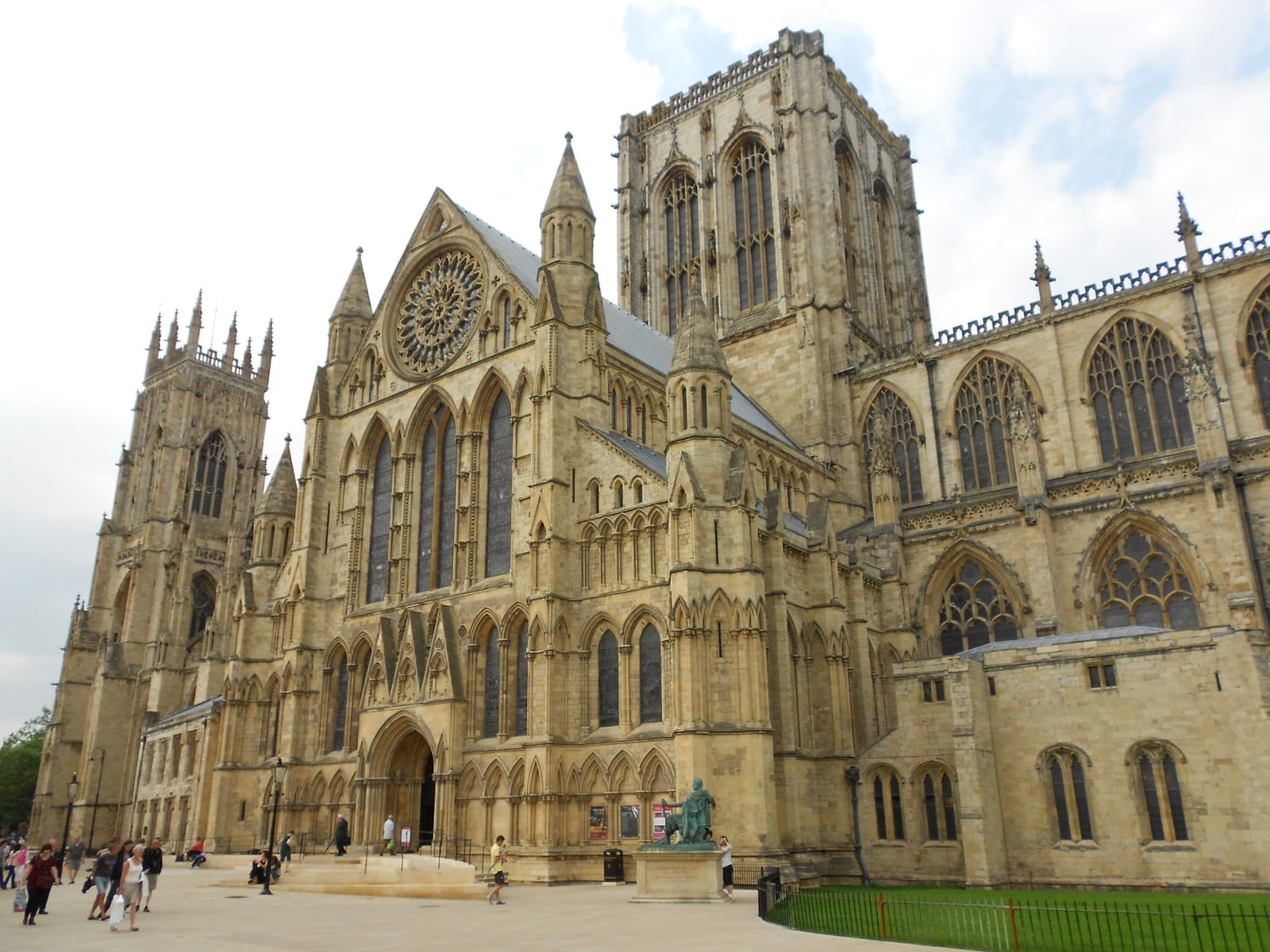
William Fitzherbert, son of a Norman knight and nephew of King Stephen, was treasurer of York Minster when he was elected Archbishop of York in 1141. His election was bitterly contested by the Cistercian faction (including Bernard of Clairvaux, who wrote scathing letters against him), and after a long canonical struggle Pope Eugene III deposed him in 1147.
He withdrew to Winchester and lived for six years as a simple monk in the household of Bishop Henry of Blois, accepting the deposition without complaint — a humility that turned the perception of his case around. When the Cistercian-installed archbishop Henry Murdac died in 1153, William was restored to York by Pope Anastasius IV. He returned to the city in May 1154 in a famous triumphal procession.
As he crossed the wooden Ouse bridge into the city the bridge collapsed under the weight of the crowd, but tradition records that not a single life was lost — the bridge collapse miracle that became the central image of his cult. He died a month later under suspicion of poisoning (his archdeacon was implicated; the cause was never proven). Canonised by Honorius III in 1226, his shrine became the principal pilgrimage site of medieval York. The Great East Window of York Minster, completed 1408 by John Thornton of Coventry, narrates his life in over a hundred panels.