
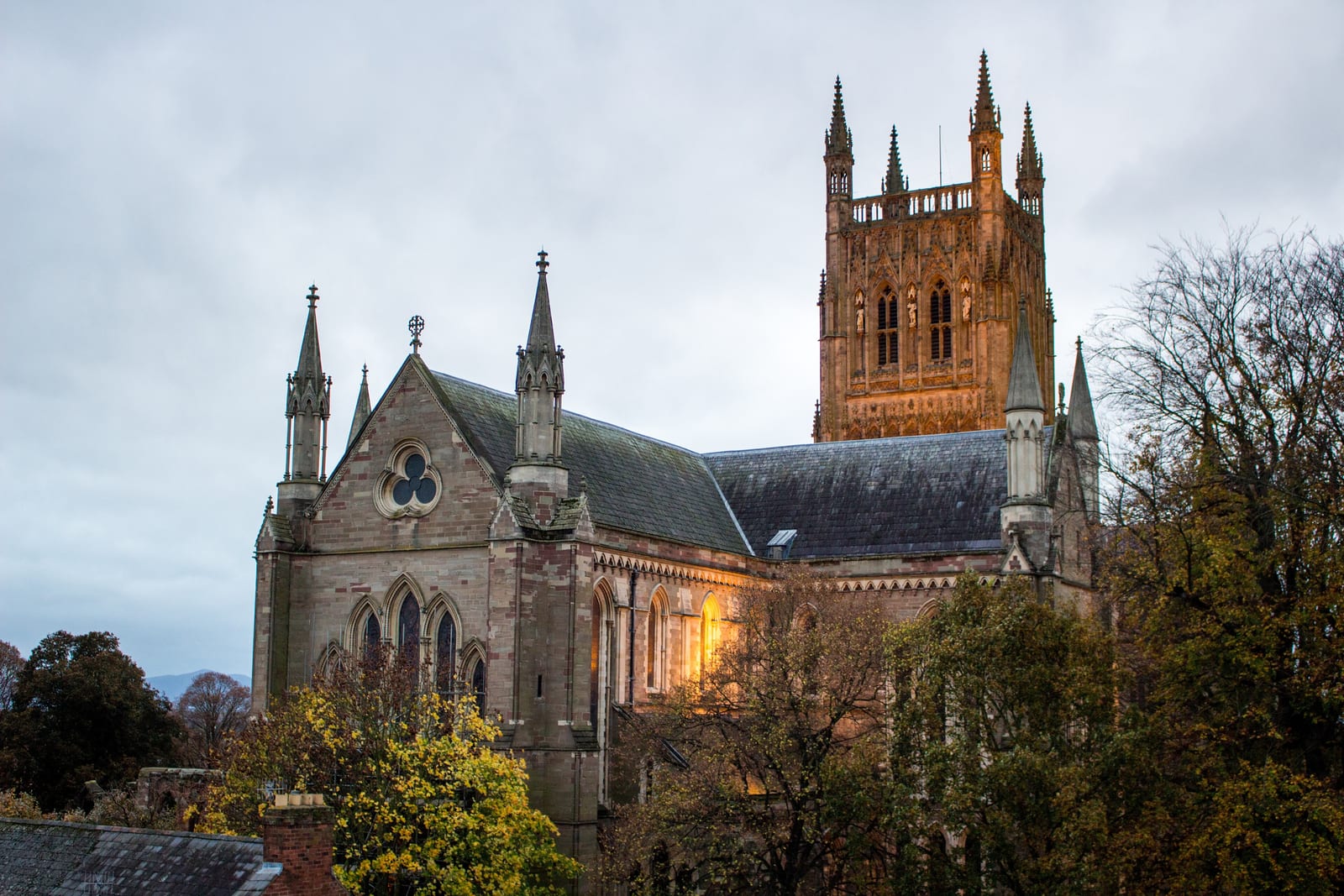
Wulfstan was educated at the Benedictine abbeys of Evesham and Peterborough, took monastic vows at Worcester around 1038, and rose through every office of the cathedral priory before being elected Bishop of Worcester in 1062 — the last of the Anglo-Saxon bishops to be appointed before the Norman Conquest. He alone among the Anglo-Saxon episcopate retained his see continuously under William the Conqueror, William Rufus, and into the reign of Henry I.
He is famous above all for his successful campaign — together with Archbishop Lanfranc — to suppress the centuries-old English slave trade that operated through the Bristol port, sending captured English peasants to Viking Ireland. He preached at Bristol for two months until the merchants and citizens agreed to renounce it. He also tirelessly toured the diocese on horseback to preach and to confirm — a practice almost lost in late Anglo-Saxon England.
Personally austere — he wore lambskin instead of fine fur because 'a true bishop should be clothed in the fleece of the Lamb' — and never ate meat after a vision of a roast goose distracted him at Mass. He died at Worcester in 1095 and was canonized by Innocent III in 1203. King John was devoted to him and chose to be buried beside his shrine at Worcester.