
MIRACULOUS MIRACLES™

Saint — Zdislava of Lemberk

St. Zdislava of Lemberk
c. 1220 AD, Křižanov Castle, Moravia (noble Moravian family) — January 1, 1252 AD, Jablonné v Podještědí, Bohemia (modern Czech Republic)
Bohemian noble laywoman; Dominican Tertiary; patron of families and Bohemian Catholic-Czech tradition
Basilica of St. Lawrence and St. Zdislava, Jablonné v Podještědí, Czech Republic — the basilica built over her tomb (rebuilt in baroque style 1699–1729); pilgrim destination of the Bohemian Catholic-Czech tradition, Czech Republic
Feast
January 4
Canonized
Canonized May 21, 1995 by Pope St. John Paul II at Olomouc, Czech Republic (during his apostolic visit to the Czech Republic)
Life

Zdislava (Czech Zdislava) was born around 1220 at Křižanov Castle in Moravia to Přibyslav of Křižanov, a noble Moravian family of the Přemyslid-royal-affiliation. Educated at the family castle in Catholic piety and royal-aristocratic formation, she was married around 1237 to Havel of Lemberk — a young noble Bohemian knight, royal seneschal to King Wenceslas I of Bohemia (1230–1253).

Zdislava and Havel established their household at the Lemberk Castle in northern Bohemia (near modern Jablonné v Podještědí) — the royal Bohemian estate that they received as the royal dowry.

Zdislava and Havel became the patrons of the Dominican Order in Bohemia — accompanying the entry of the Order into the Bohemian kingdom, founding two Dominican convents at Jablonné (near Lemberk) and at Turnov, and entering the Dominican Third Order (Tertiary) as lay affiliates.

Zdislava became famous during her lifetime for her ministry to the poor, sick, and dying of northern Bohemia: personally caring for the sick at the household hospice of the Lemberk Castle, providing food and shelter to the Mongol-invasion refugees during the 1241 Mongol invasion of Bohemia and Moravia (the Battle of Legnica of April 9, 1241, where the Polish-German-Bohemian Catholic army lost to the Mongol invaders), and undertaking the personal charity of the nursing of the sick.

She and Havel had four children (Havel the Younger, Margaret, Jaroslav, Zdislav) — producing the noble Bohemian family that would continue in the medieval Czech aristocratic history. She died at Lemberk on January 1, 1252 at the young age of about 32, after a brief illness.

Her cult was immediately recognized at Lemberk-Jablonné; the canonization process was begun in the medieval period but suspended during the Hussite Wars (1420s) and the Reformation. She was beatified by Pope Pius X in 1907 and finally canonized by Pope St. John Paul II on May 21, 1995 at Olomouc during his apostolic visit to the Czech Republic — the papal recognition of the continuing Czech Catholic devotion to Zdislava as the patron of families.

Miracles & Phenomena
  • The 1995 canonization by St. John Paul II at Olomouc

    St. Zdislava's 1995 canonization by Pope St. John Paul II at Olomouc during his apostolic visit to the Czech Republic — the papal recognition of the continuing 743-year Czech Catholic devotion to Zdislava as the patron of families — institutionally underscored the specifically Catholic Central European continuity of the 13th-century royal-aristocratic-lay-Dominican-tertiary tradition. The simultaneous canonization of Sts. Zdislava and John Sarkander institutionally re-affirmed the Czech Catholic identity after the 1989 Velvet Revolution restoration of religious freedom.

  • The Dominican Third Order (Tertiary) tradition

    Zdislava's entry (with her husband Havel) into the Dominican Third Order (Tertiary) as lay affiliates — accompanied by the patronage of the entry of the Dominican Order into the Bohemian kingdom and the founding of Dominican convents at Jablonné and Turnov — institutionally exemplifies the specifically Catholic 13th-century development of the lay-religious-tertiary tradition. The Dominican Third Order extends to the present day as one of the principal Catholic lay-religious-affiliation traditions.

Relics
  • Body
    Tomb of St. Zdislava of Lemberk
    Basilica of St. Lawrence and St. Zdislava, Jablonné v Podještědí, Czech Republic — the basilica built over her tomb (rebuilt in baroque style 1699–1729); the tomb-crypt is a principal Bohemian Catholic-Czech pilgrim destination

    Her tomb at the Basilica of St. Lawrence and St. Zdislava at Jablonné v Podještědí — the baroque basilica built 1699–1729 over her medieval tomb — survives in continuous Catholic liturgical use as the principal Bohemian Catholic-Czech pilgrim destination associated with St. Zdislava.

Iconography
  • Zdislava caring for the sick at Lemberk

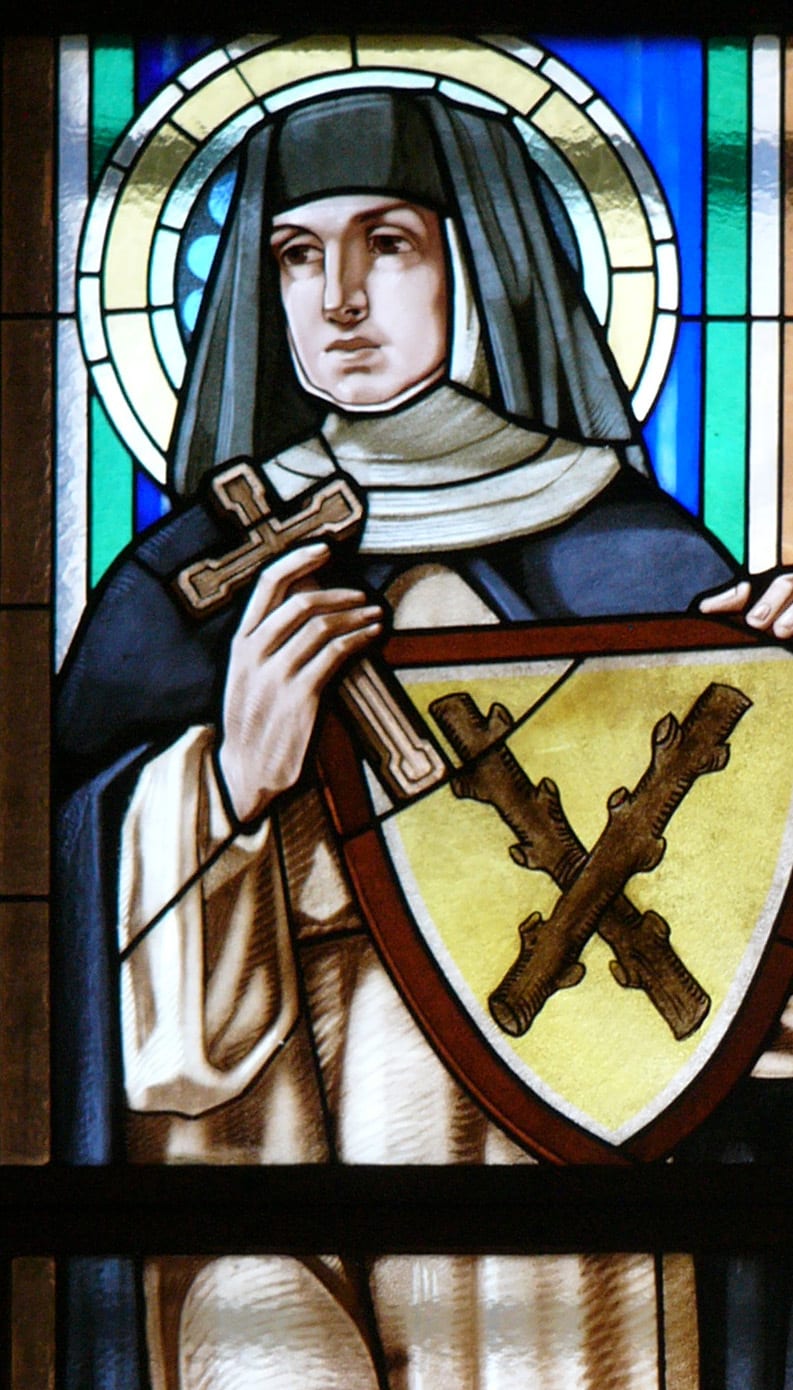
    The mid-13th-century Bohemian noblewoman in medieval aristocratic dress with the Dominican Third Order white-scapular over her courtly attire, caring for the sick at the household hospice of the Lemberk Castle, the Mongol-invasion refugees receiving the household charity — the iconography of Catholic Bohemian aristocratic-lay-religious tradition.

Patronages
Diocese of Litoměřice (Czech Republic)Catholic Bohemia and the Czech Catholic traditionCatholic families (the patron of Catholic married women, mothers, and families)Catholic lay-Dominican-tertiary tradition