
Reparation to the Immaculate Heart — what Our Lady asked for at Pontevedra
Confession, Communion, five decades of the Rosary and fifteen minutes' meditation on its mysteries, on the first Saturday of five consecutive months, with the intention of making reparation to the Immaculate Heart of Mary — the request Sister Lúcia received at Pontevedra in 1925, promised at Fátima eight years earlier.
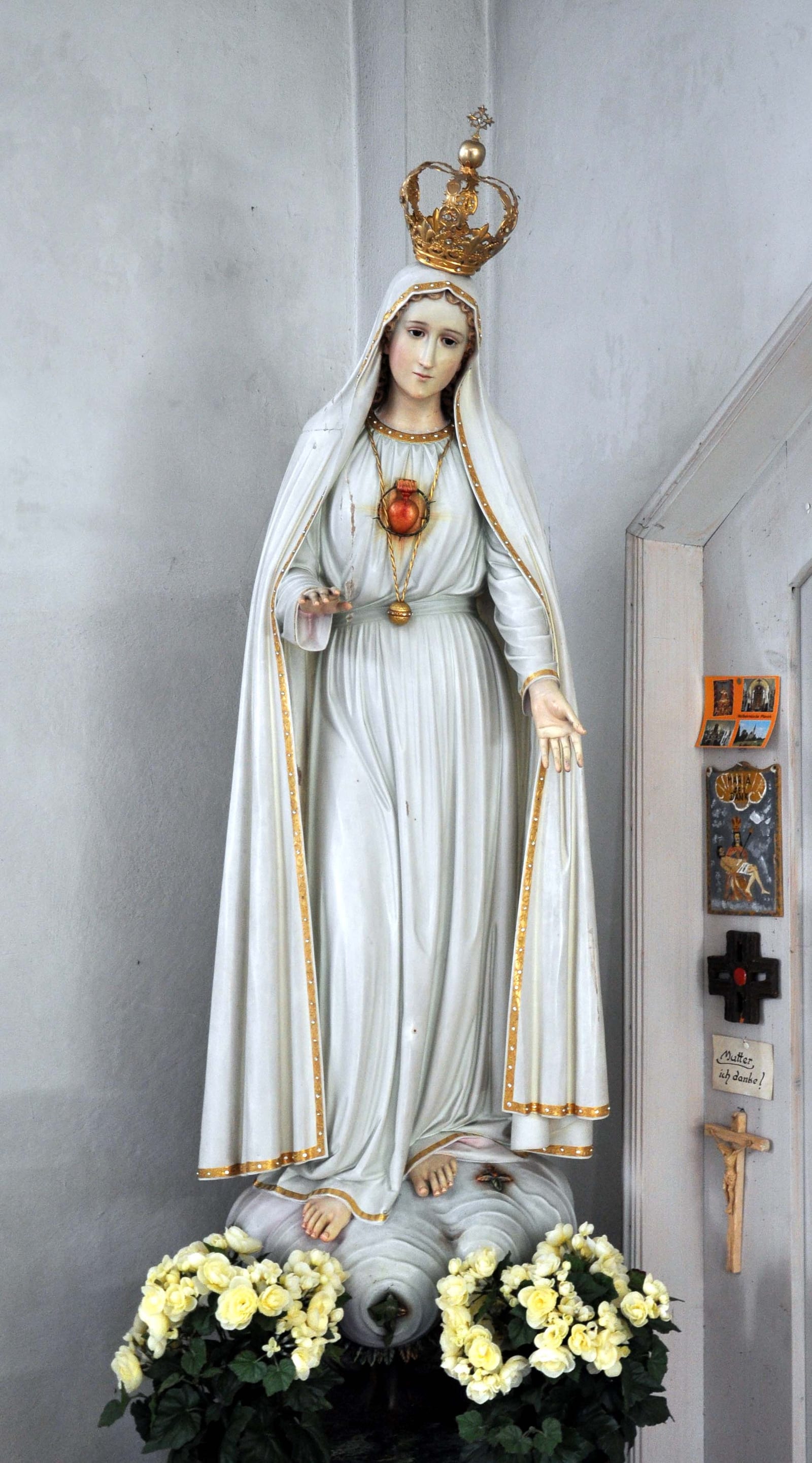
The promise at Fátima
On July 13, 1917, in the third of the six apparitions at the Cova da Iria, the three shepherd children were shown the vision of hell and given the words that frame everything that follows: 'You have seen hell, where the souls of poor sinners go. To save them, God wishes to establish in the world devotion to my Immaculate Heart.' Our Lady added that she would come again to ask for the consecration of Russia and for the Communion of reparation on the First Saturdays.
That is the key to the devotion's shape: it was announced at Fátima, but not yet asked for. The asking came eight years later, to one of the three children — by then a religious sister.
Pontevedra, December 10, 1925
Lúcia dos Santos, the only one of the three seers to survive childhood, was a postulant with the Dorothean Sisters at Pontevedra in Spain. On December 10, 1925, she recorded that Our Lady appeared to her with the Child Jesus, and that Our Lady showed her heart encircled with thorns.
The request, as Lúcia recorded it, was precise: to those who on the first Saturday of five consecutive months go to confession, receive Holy Communion, pray five decades of the Rosary, and keep her company for fifteen minutes meditating on the fifteen mysteries — all with the intention of making reparation to her — she promised to assist at the hour of death with all the graces necessary for salvation.
Confession may be made within eight days before or after, provided the person is in the state of grace when receiving Communion; and the intention of reparation is what makes the five Saturdays this devotion rather than five ordinary ones.
Why five, and what reparation means
Lúcia later recorded an explanation for the number five: the five kinds of offence against the Immaculate Heart — blasphemies against her Immaculate Conception, against her perpetual virginity, against her divine maternity and her motherhood of all men, the sowing in children's hearts of indifference or contempt toward her, and outrages against her sacred images.
Reparation is the part modern readers stumble over, and it is simpler than it sounds. It does not mean paying God back, as though grace had a price. It means standing where an insult has fallen and offering love in its place — the way a friend answers a slander against someone he loves. Christ's satisfaction is infinite and complete; reparation is the Church joining herself to it.
The Promises
One promise, and the honest account of what stands behind it.
"I promise to assist at the hour of death, with all the graces necessary for salvation, all those who on the first Saturday of five consecutive months go to confession, receive Holy Communion, recite five decades of the Rosary, and keep me company for a quarter of an hour meditating on the mysteries, with the intention of making reparation to me."
Fátima itself — the 1917 apparitions — was formally approved in 1930. Pontevedra was a distinct, later apparition to one seer alone, and has never received a separate formal decree of its own; what it has is the acceptance of Lúcia's bishop and confessors, the endorsement of the Bishop of Leiria who authorized the devotion in his diocese in 1939, and the steady encouragement of the popes for a century. Take the promise, then, as the Church takes it: not as a defined article, but as a request from heaven the Church has been content to see her children answer. And note what is actually being asked — confession, Communion, the Rosary, and a quarter of an hour of meditation, five times. There is nothing in it that could harm a soul if the apparition were never mentioned again.
Living the Devotion
- 1.On the first Saturday of five consecutive months: sacramental confession (within eight days before or after), Holy Communion, five decades of the Rosary, and fifteen minutes of meditation on the mysteries.
- 2.Form the intention of reparation to the Immaculate Heart — it may be made once at the start and renewed, and it is what distinguishes the devotion.
- 3.The fifteen minutes are meditation, not another five decades: sit with one or more mysteries and keep Our Lady company in them.
- 4.If a month is missed, the tradition is simply to begin again; nothing is lost that a fresh start does not recover.
In the Words of the Popes
"To you, to your Immaculate Heart, we entrust and consecrate ourselves, the Church, and the whole world, that they may find peace in you."
"The call to repentance is a motherly one, and at the same time it is strong and decisive. The love of the Mother is turned towards the salvation of her children."