
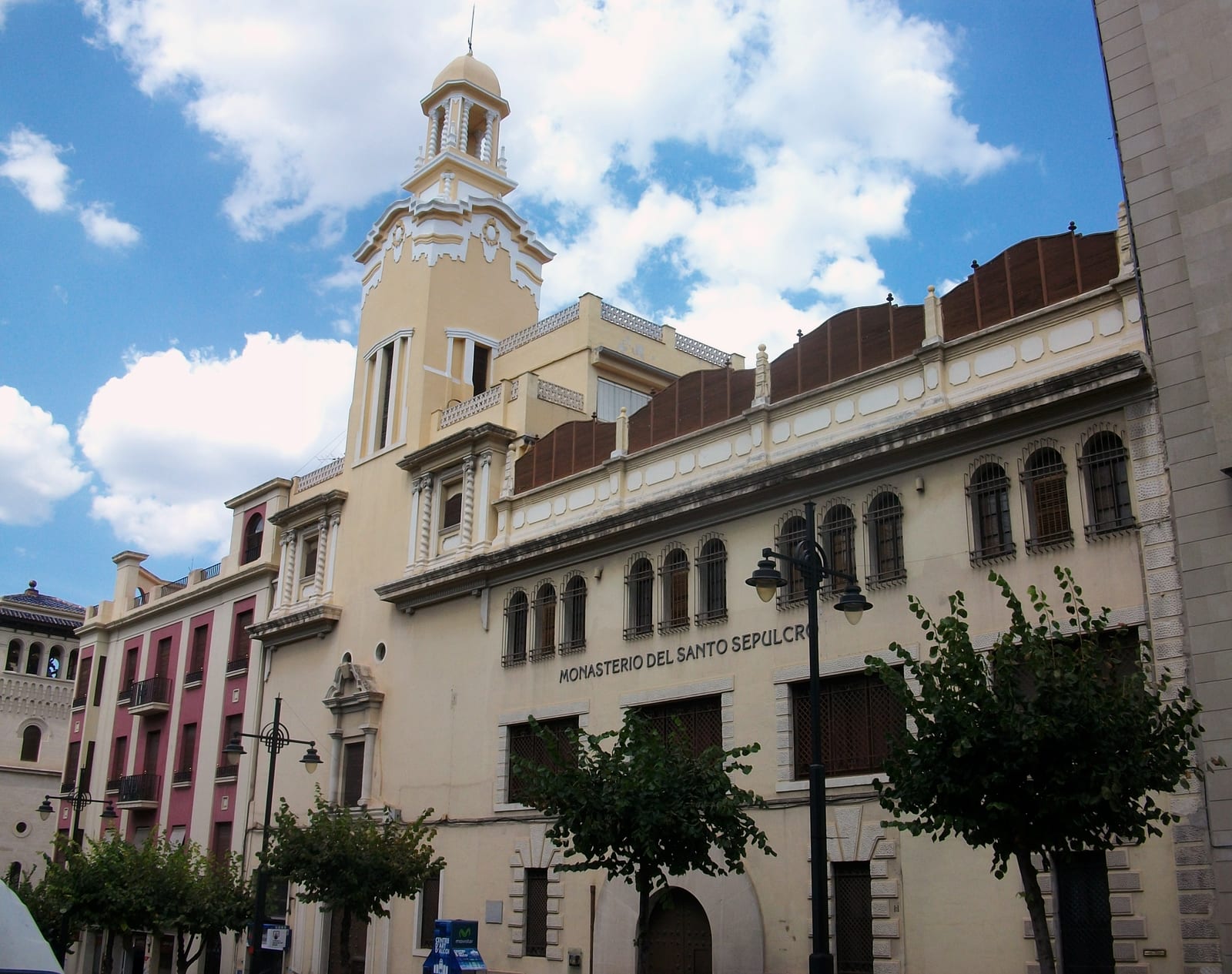
On 29 January 1568 Juan (Joan) Prats, a cloth-worker of French origin living in Alcoy who needed money, broke into the parish church of Santa María and stole a number of sacred objects from the main altar, among them reliquaries and a small silver box containing consecrated Hosts. He consumed the Hosts and hid the box in his stable under a pile of firewood. The next morning the parish priest discovered the sacrilege and rang the church bells; the whole town gathered in prayer before the church and searches began at once, but in vain. Near Prats's house lived a pious widow, María Miralles, who kept a small statue of the Child Jesus in her home and began to pray before it with intensity that the Hosts be found.
According to the tradition preserved in Alcoy, within hours of the widow's vigil the little statue's hand moved and its finger pointed toward the house of her neighbour Juan Prats. Suspicious, María Miralles went to the authorities. The priest, who felt himself drawn as if by a mysterious force, went to Prats's garden, entered the stable, searched through the wood and straw and found the silver box with three consecrated Hosts inside. The town's archival tradition names the farmer Joan Esteve, known as Joan l'Aixà, as the man who dug the box out on 31 January. Prats, who could not understand how Hosts remained in the box when he remembered consuming them, repented and confessed the theft.
The townspeople took a solemn vow in 1569 to honour the Blessed Sacrament, a vow still read aloud each year. In 1596 the Archbishop of Valencia, St. Juan de Ribera, founded on the very site of Prats's house the Monastery of the Holy Sepulchre for the Discalced Augustinian nuns, blessed on 25 January that year and built between 1596 and 1598; it remains the only surviving piece of Alcoy's old religious architecture. The statue, the Jesuset del Miracle, is venerated in a chapel there together with the documents of the event and the relics, and is patron of the town's children. The feast is kept on 31 January with Mass, procession and the dance of the Paloteig, and the miracle is also recalled at Corpus Christi.
The sources differ on details. The exhibition panel speaks of three Hosts stolen and three found, and calls the priest Don Antonio; Alcoy's own historical accounts say the box held about forty Hosts, that the priest was Miguel Soler, and that three remained. All agree on the dates, the thief, the widow and the finding, and on the archbishop's decision to consecrate the place. The approval here is that of St. Juan de Ribera's foundation and the town's public vow, rather than a formal decree.