
On 1 May 1429 a newly ordained priest named Folkert celebrated his first Mass in the church of St. Lawrence in Alkmaar, assisted by the pastor, Father Volpert Schult. Dutch sources add that Folkert had fought as a soldier in the Hook and Cod wars, including the battle of Hoorn in 1426, and had concealed the killings at his ordination in Utrecht; whether from nerves or guilt, his hands shook. Shortly after pronouncing the words of consecration he knocked over the chalice, and the consecrated wine spilled on the altar and on his chasuble. According to the account on the exhibition panel, in its place appeared living Blood.
After Mass, in a panic, Folkert cut the stained piece from the chasuble and burned it, then began to sew up what remained. As soon as he finished, the Blood spots reappeared on the vestment; the Dutch tradition speaks of three red drops. The two priests, not knowing what to do, took the chasuble at once to the Bishop of Utrecht. Local chroniclers, among them Johannes a Leydis, later recorded a second sign: in 1430 a Zeeland sea captain in distress saw an angel holding the cloth and was told to have the Alkmaar clergy seek episcopal approval for its veneration. In 1433, after canonical investigations, the bishop officially approved the devotion surrounding the miracle, and Alkmaar became a place of pilgrimage.
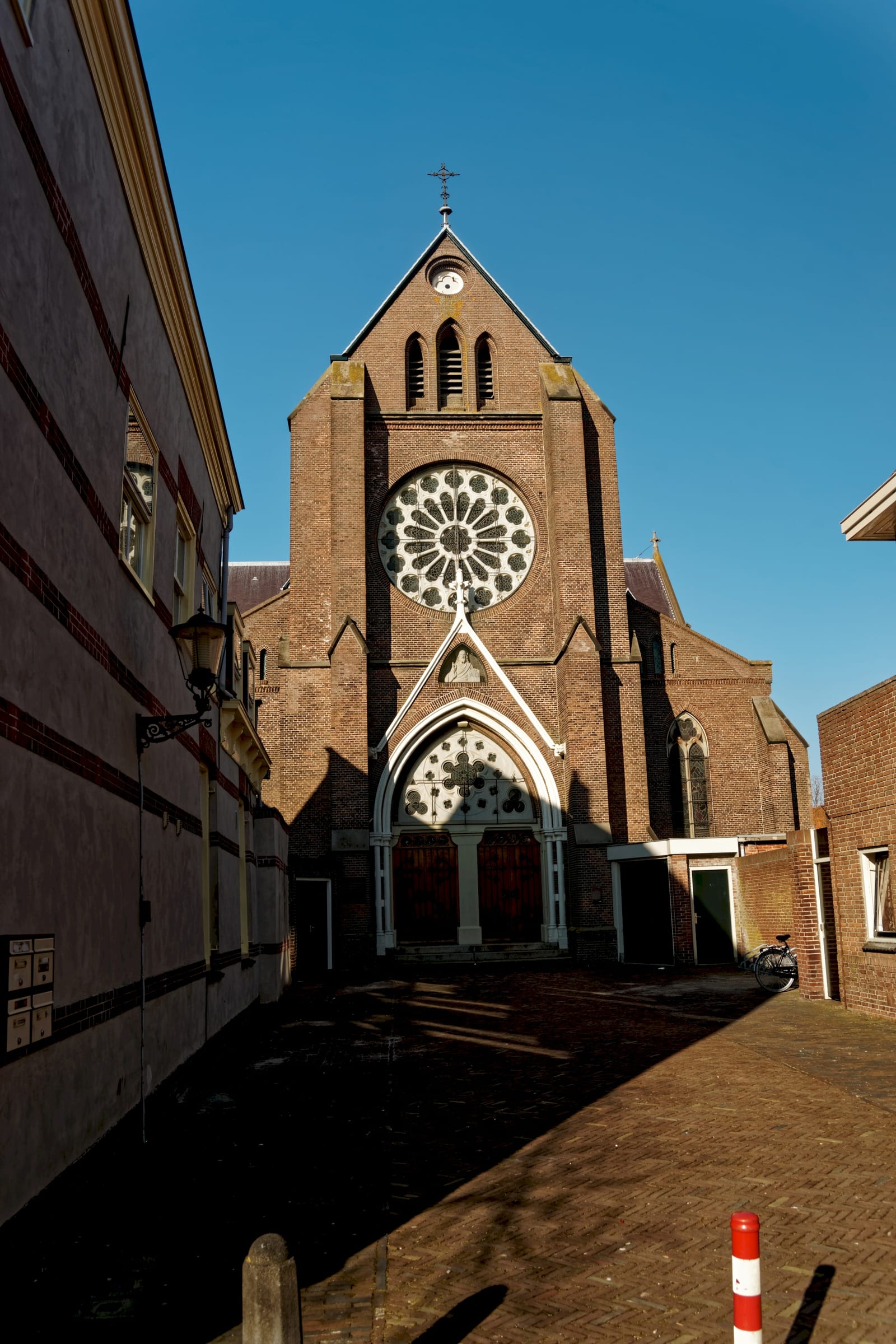
The Reformation reached Alkmaar in 1572, and the great church of St. Lawrence, rebuilt between 1470 and 1518 on the site of the miracle, passed to Protestant use. The relic went underground, protected for nearly three centuries in the town's clandestine Catholic chapels. When Catholics regained freedom of worship, the new St. Lawrence church designed by Pierre Cuypers on the Verdronkenoord (1859–61) received the relic, and the 1 May procession was restored. In 1897 the Bishop of Haarlem formally recognised the relic's authenticity and had it set in a gold case with twenty-four diamonds, which since 1902 has been carried by a silver angel-shaped reliquary. The relic is shown every Sunday, and the Mirakeldagen around 1 May still include a silent procession.
The exhibition panel calls the church a cathedral, which Alkmaar's St. Lawrence never was; the miracle happened in the medieval church now known as the Grote Sint-Laurenskerk, while the relic is venerated a few streets away in the Catholic Cuyperskerk. Both buildings still stand, a short walk apart, and the annual procession passes between the two.