
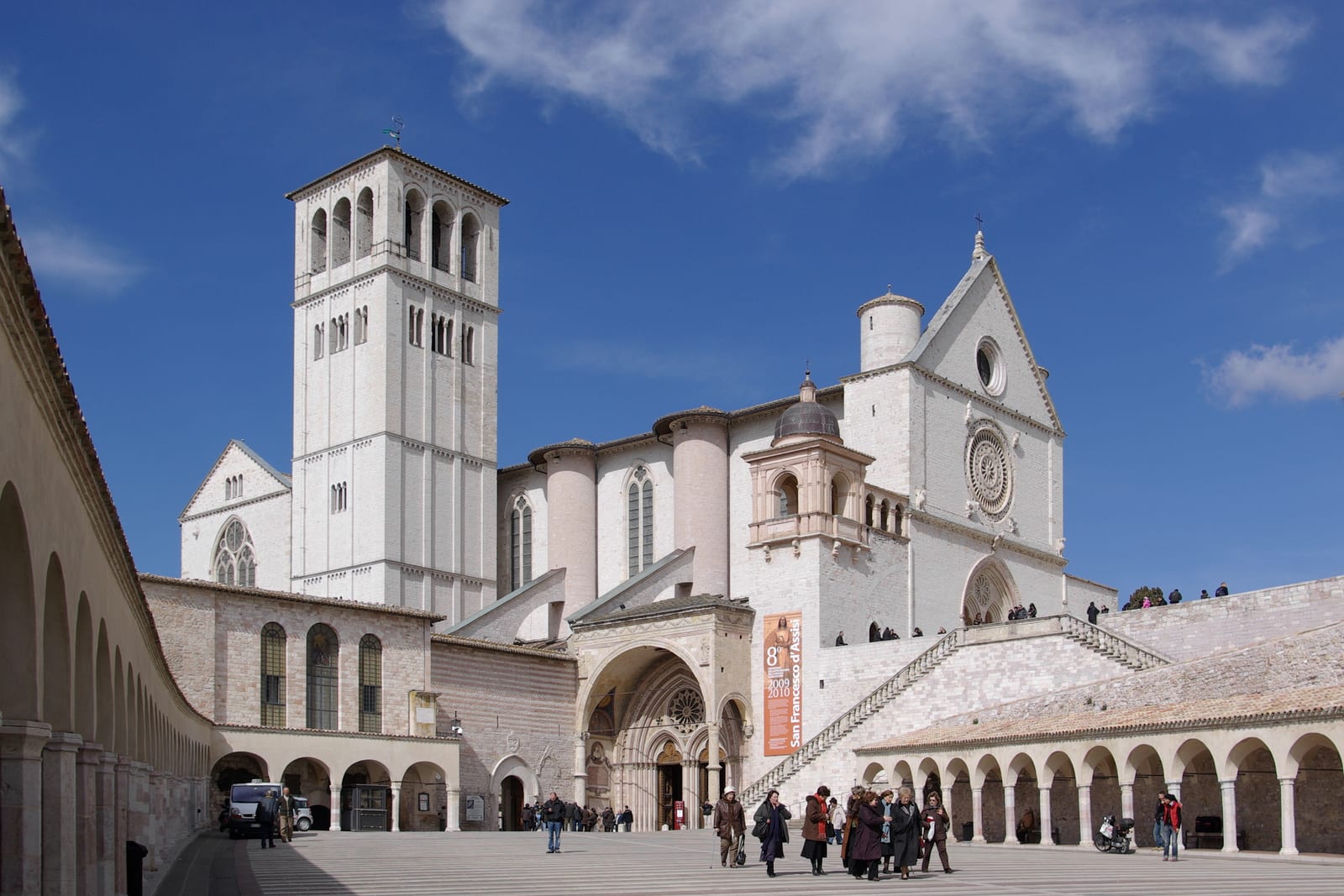
At 02:33 UTC on September 26, 1997, an earthquake of magnitude 5.7 struck Umbria. Four hours later, at 09:42 UTC, an aftershock of magnitude 6.1 followed. The upper basilica of St. Francis at Assisi suffered the collapse of two vaults of the nave — including sections of the Cimabue Crucifixion and part of the Giotto Legend of St. Francis cycle. Four people were killed in the collapse: Franciscan friars Zdzislaw Borowiec and Angelo Api, and Italian State cultural heritage engineers Bruno Brunacci and Claudio Bugiantella, who were surveying the damage from the first quake.
The lower basilica — the older thirteenth-century church directly beneath the upper — was undamaged. The tomb of St. Francis in the crypt below the lower basilica, containing his remains rediscovered by Pope Pius VII in 1818, was untouched: the four twelfth-century stone piers that support the entire double basilica bore the shocks without fissuring.
Restoration of the upper basilica took two years; the frescoes were reconstructed from over 120,000 fragments through digital photography and were rededicated by Pope John Paul II on November 28, 1999. The crypt of St. Francis was formally reopened the following day. The Basilica of Santa Chiara, containing the tomb of St. Clare, also survived both quakes without structural damage.