
Urakami Cathedral, in the historically Catholic district of Urakami in Nagasaki, was the largest cathedral in East Asia when the atomic bomb 'Fat Man' detonated 500 metres above the city on the morning of August 9, 1945. The cathedral lay directly beneath the path of the explosion; it was completely destroyed. Most of those at prayer inside — preparing for the Solemnity of the Assumption six days later — were killed instantly.
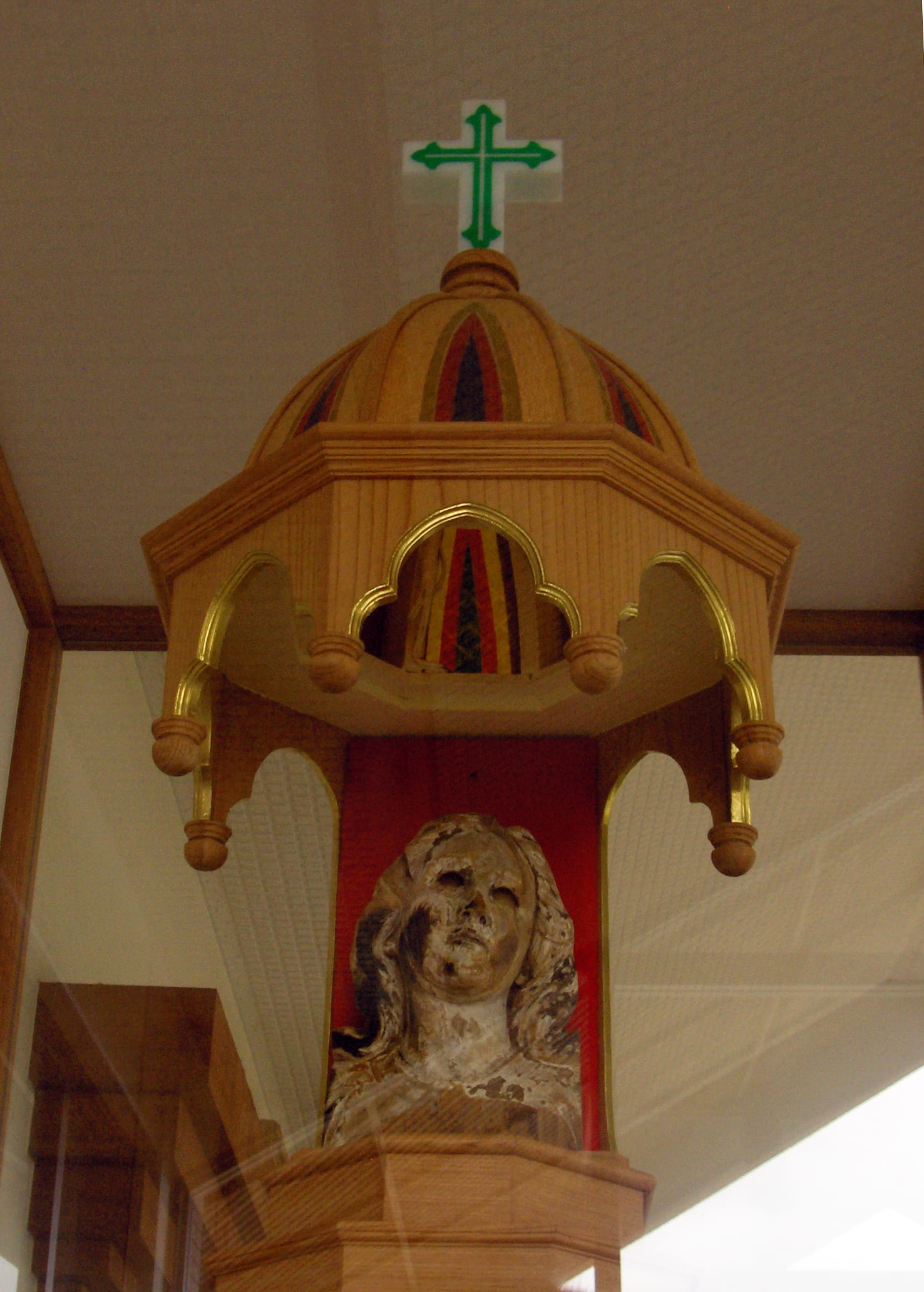
Among the few objects recovered from the ruins was the wooden head of a statue of the Blessed Virgin Mary from the cathedral's altarpiece, modelled on Murillo's Immaculate Conception. The face was cracked, the eyes burned out, the rest of the statue obliterated. The Trappist monk Kaemon Noguchi found the head in the rubble and carried it to his monastery in Hokkaido, where it remained for thirty years.
In 1975 the head was returned to Nagasaki. It was displayed at the Nagasaki Atomic Bomb Museum until 2005, when it was enshrined in the rebuilt Urakami Cathedral. On November 24, 2019, Pope Francis prayed before the head during his pastoral visit and called for the abolition of nuclear weapons in its presence. The 'Atom-bombed Mary' is now one of the principal symbols of the Catholic peace movement.