
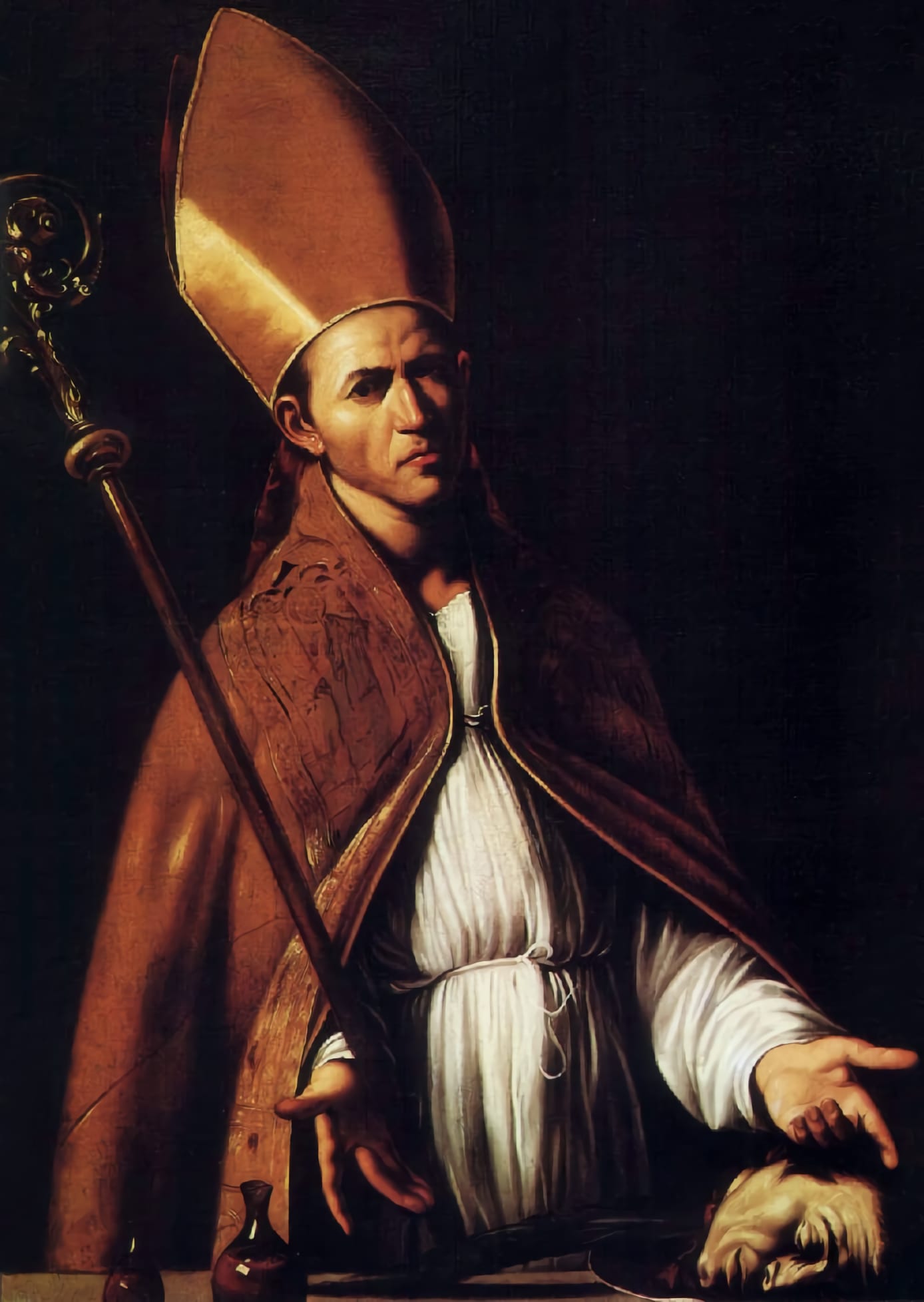
St. Januarius (San Gennaro) was the bishop of Benevento, beheaded near the Solfatara of Pozzuoli during the Diocletian persecution of 305. Two small glass vials containing what is reported to be portions of his blood — gathered at the time of his martyrdom by a Neapolitan woman — were translated to Naples in the 5th century and have been kept in the Cathedral of Naples ever since.
The phenomenon is continuously documented from 1389: on three specific dates each year (the Saturday before the first Sunday of May, September 19 — Januarius's feast — and December 16, the anniversary of the 1631 Vesuvius eruption from which the saint reportedly saved Naples) the Archbishop of Naples removes the ampoules from the silver tabernacle, holds them before the assembled congregation, and after a period of public prayer the dark, dried, solid blood within visibly liquefies, bubbles, and becomes bright red. The phenomenon may take from minutes to hours; on rare occasions it does not occur at all (notably in 1939 before WWII, 1943, 1973 before the cholera outbreak, 1980 before the Irpinia earthquake, 2016 before COVID; in 2020 it failed to liquefy on December 16 for the first time in decades).
Scientific examinations by the University of Naples (1900s) and a major 1989 study published in Nature attempted to explain the phenomenon but found no fully satisfactory natural explanation; the substance has been confirmed as biological blood, and the dark solid form does not respond to handling alone, but only to the public ritual setting. The Cathedral of Naples is one of the most visited religious sites in Italy.