
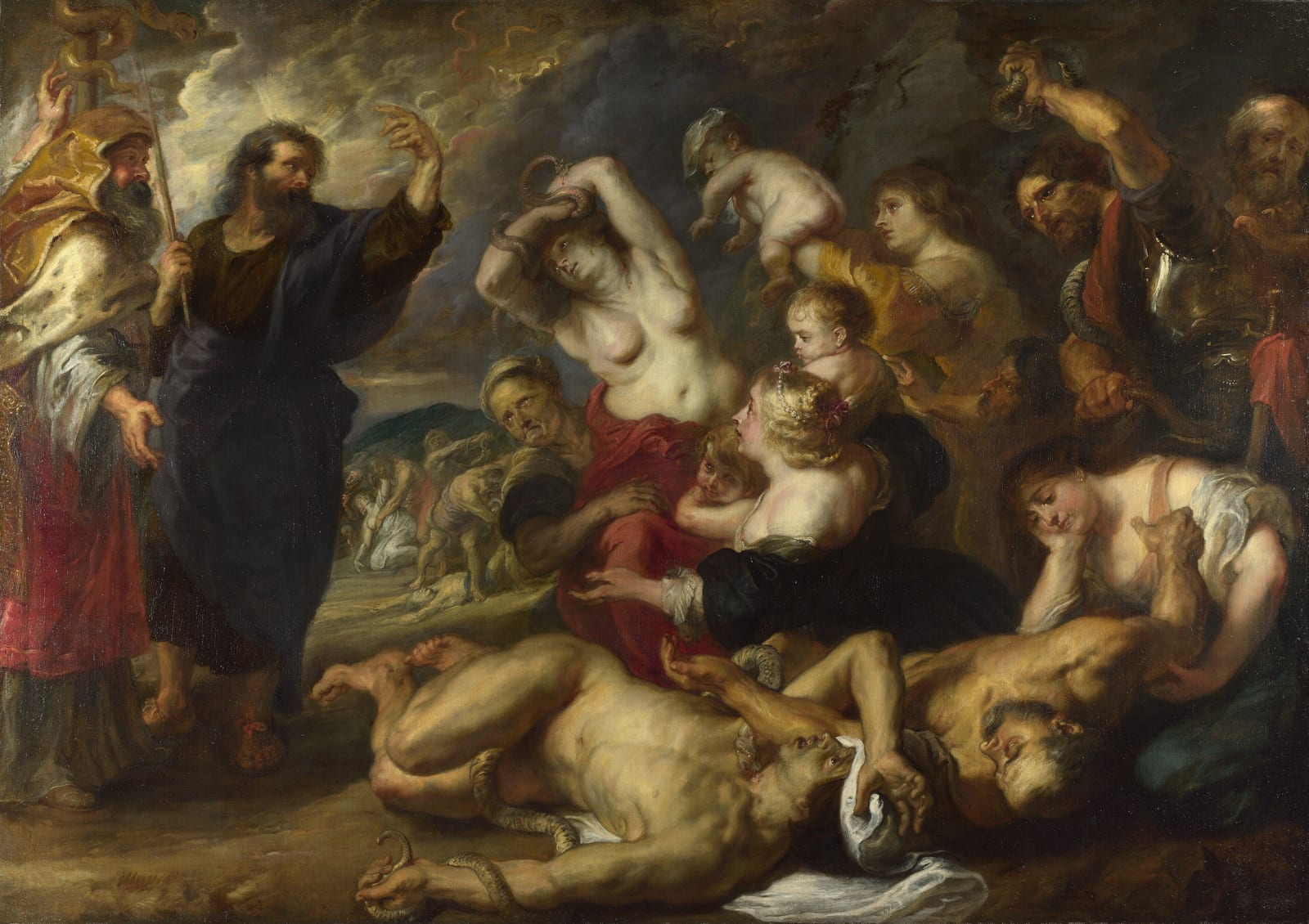
In the wilderness wandering, the Israelites complained against God and against Moses for the hardships of the journey. The Lord sent fiery (seraph) serpents among the people; many died. The people repented; Moses interceded. The Lord told Moses: 'Make a fiery serpent and set it on a pole; and every one who is bitten, when he sees it, shall live' (Numbers 21:8).
Moses made a bronze serpent (Hebrew nehushtan) and set it on a pole. All who looked upon it were healed. The episode is cited by Christ Himself in His night discourse with Nicodemus: 'As Moses lifted up the serpent in the wilderness, so must the Son of Man be lifted up, that whoever believes in him may have eternal life' (John 3:14–15). The bronze serpent of Moses is preserved, according to Eastern Christian tradition, as the original of the great medieval bronze serpent on the column at the Church of Sant'Ambrogio in Milan (a 4th-century Byzantine work; whether actually the Mosaic original remains debated).