
From the parting of the Red Sea to fire on Mount Carmel, the Old Testament records the works by which God prepared a people for the coming of His Son.
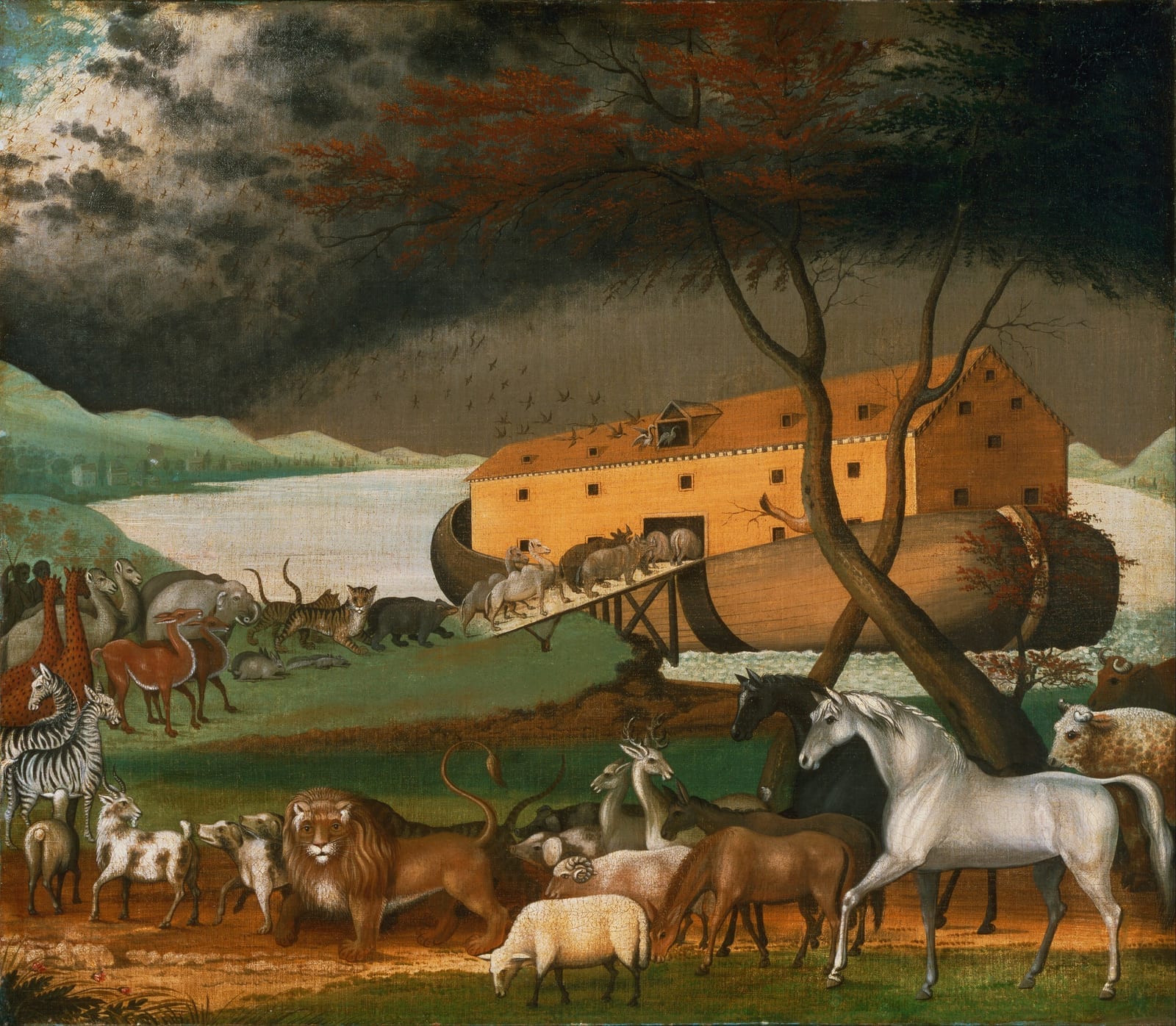
Noah's Ark and the Flood
Forty days and nights of rain destroyed the corrupted earth; Noah, his family, and pairs of every living kind were preserved in an ark that came to rest 'on the mountains of Ararat' (Gen 8:4).
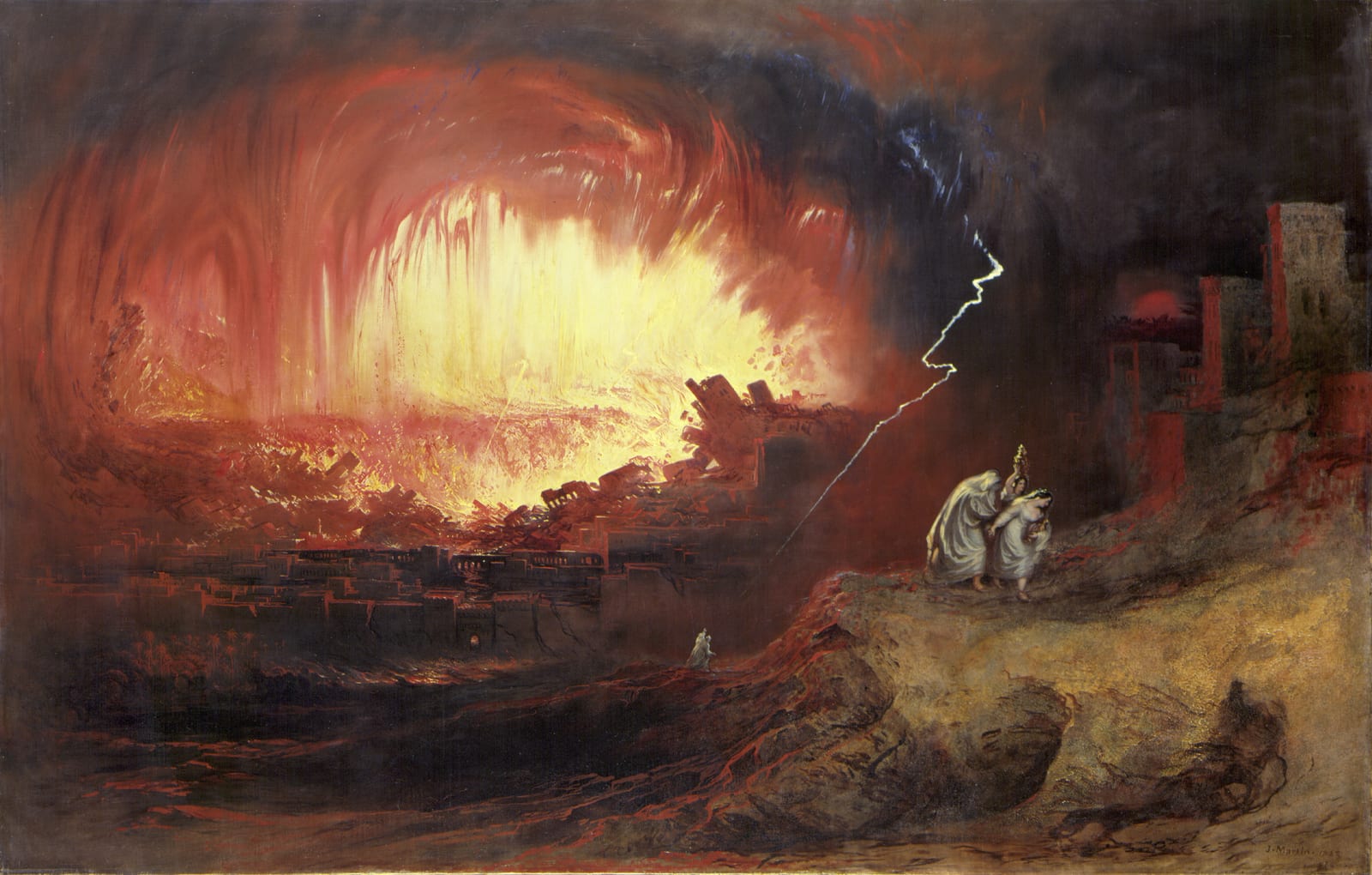
The Destruction of Sodom and Gomorrah
The Lord rained sulfur and fire upon the cities of the plain for their wickedness; only Lot and his daughters escaped (Genesis 19). The leading modern candidate is Tall el-Hammam, north-east of the Dead Sea.
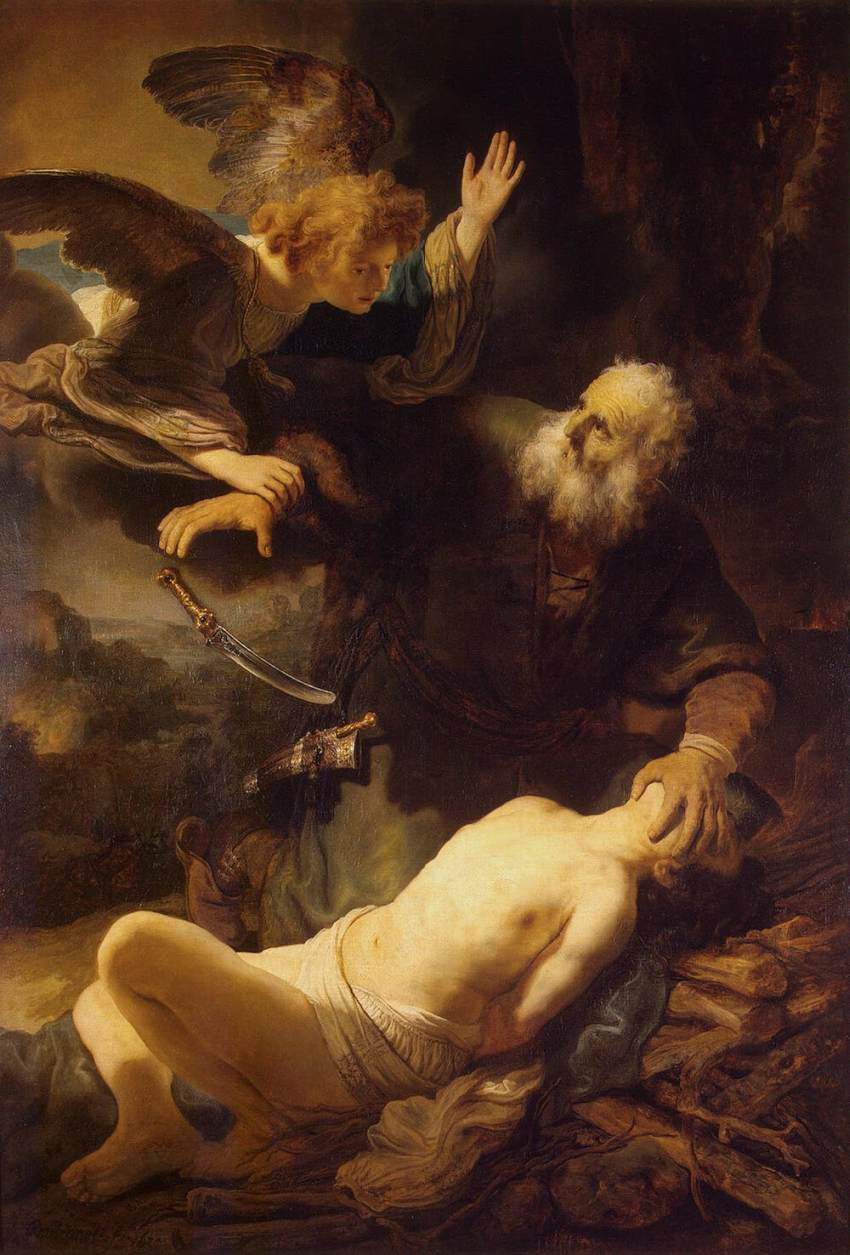
The Binding of Isaac (Akedah)
Abraham, commanded to sacrifice his beloved son Isaac on Mount Moriah, raised the knife — and at that moment the angel of the Lord called him to stay his hand. A ram caught by its horns in the thicket was offered in Isaac's stead (Gen 22).
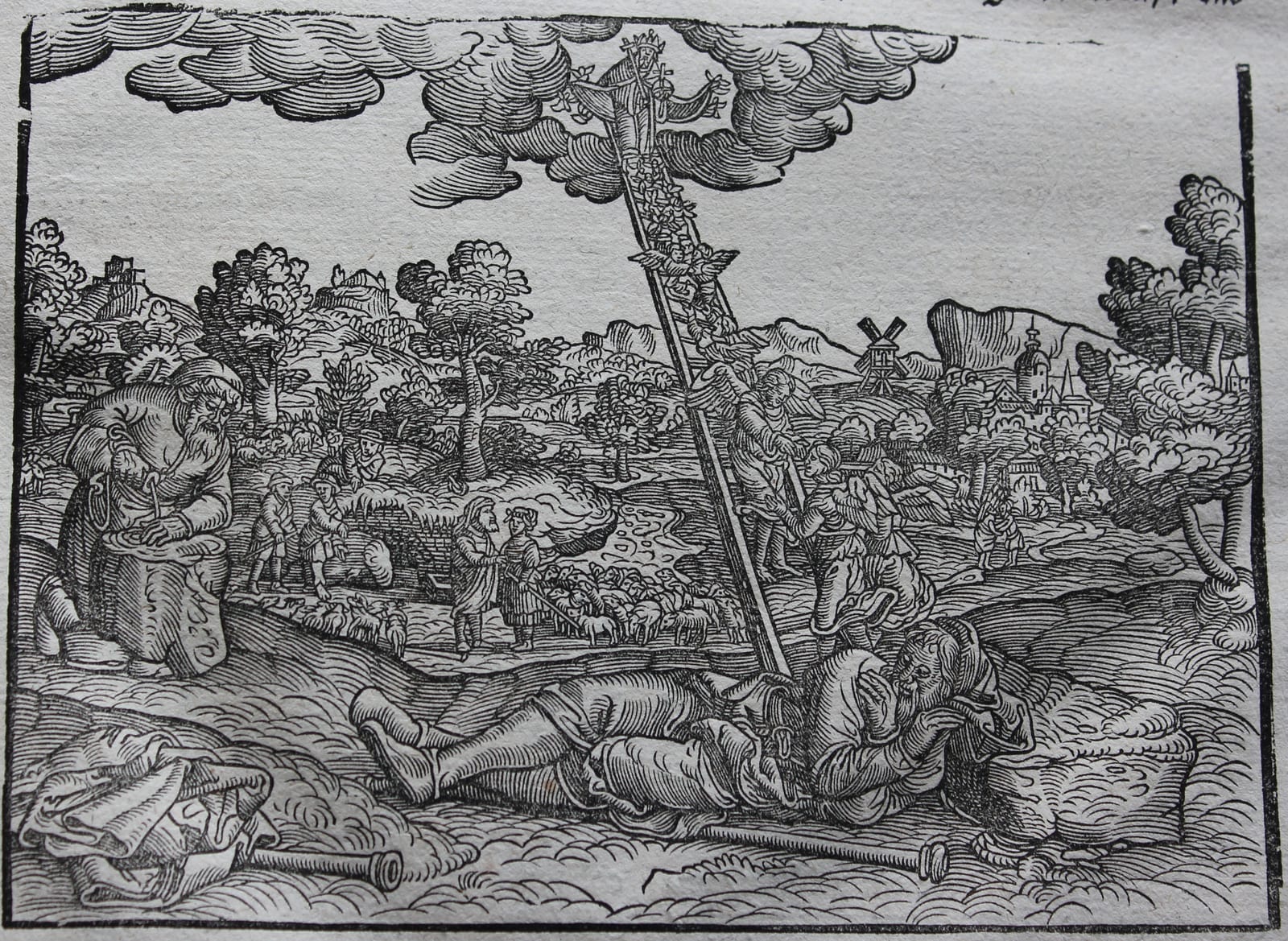
Jacob's Ladder at Bethel
Fleeing his brother Esau, Jacob lay down with a stone for a pillow and dreamed of a ladder set up on earth, its top reaching to heaven, with the angels of God ascending and descending — and the LORD standing above it. 'Surely the LORD is in this place; and I knew it not!' (Gen 28).
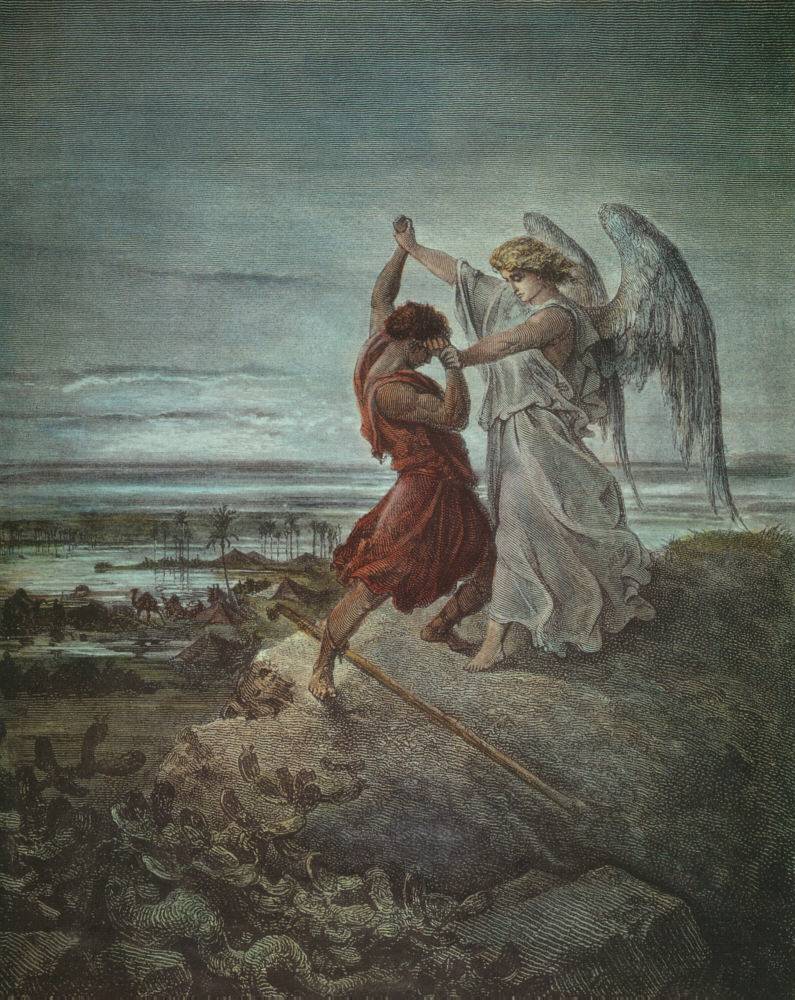
Jacob Wrestling the Angel at Peniel
Returning to confront Esau, Jacob crossed the Jabbok river and wrestled a mysterious figure all night. At dawn, his hip dislocated, he refused to release: 'I will not let you go unless you bless me.' He was renamed Israel — 'one who strives with God' (Gen 32).
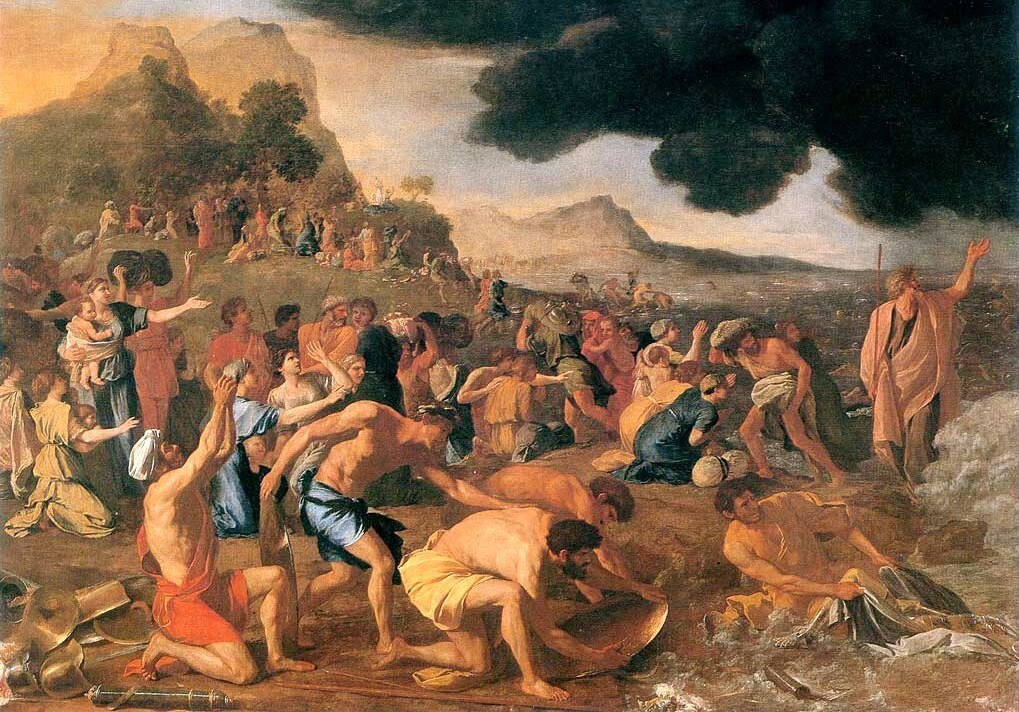
The Parting of the Red Sea
The waters divided to deliver Israel from Pharaoh's army — the founding act of the Exodus, recalled in every Passover and prefiguring baptism (Ex 14; 1 Cor 10:1–2).
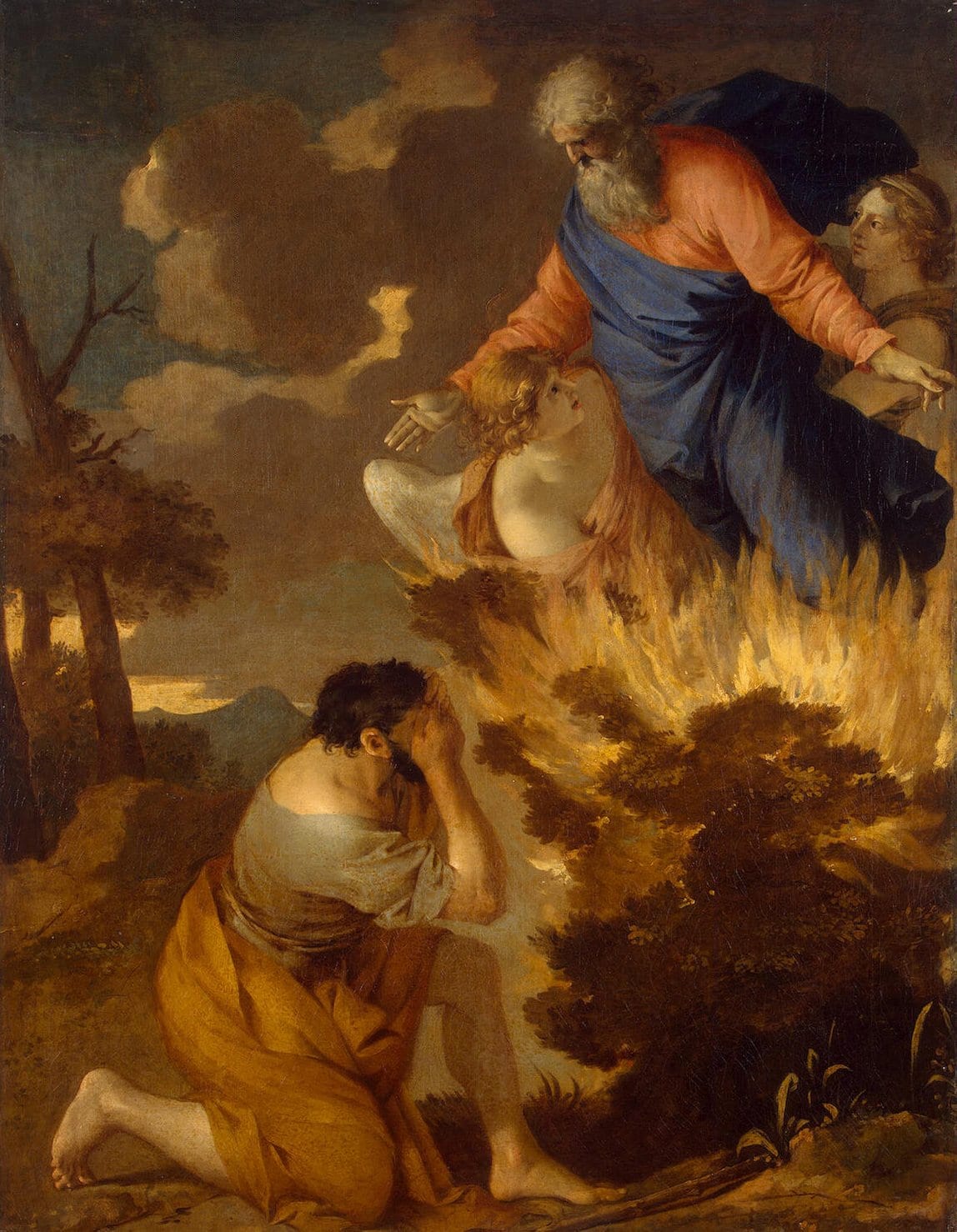
The Burning Bush
Moses, tending Jethro's flock at Horeb, saw a bush that burned without being consumed. From its midst God spoke His name — 'I AM WHO I AM' — and called Moses to deliver Israel (Exodus 3).
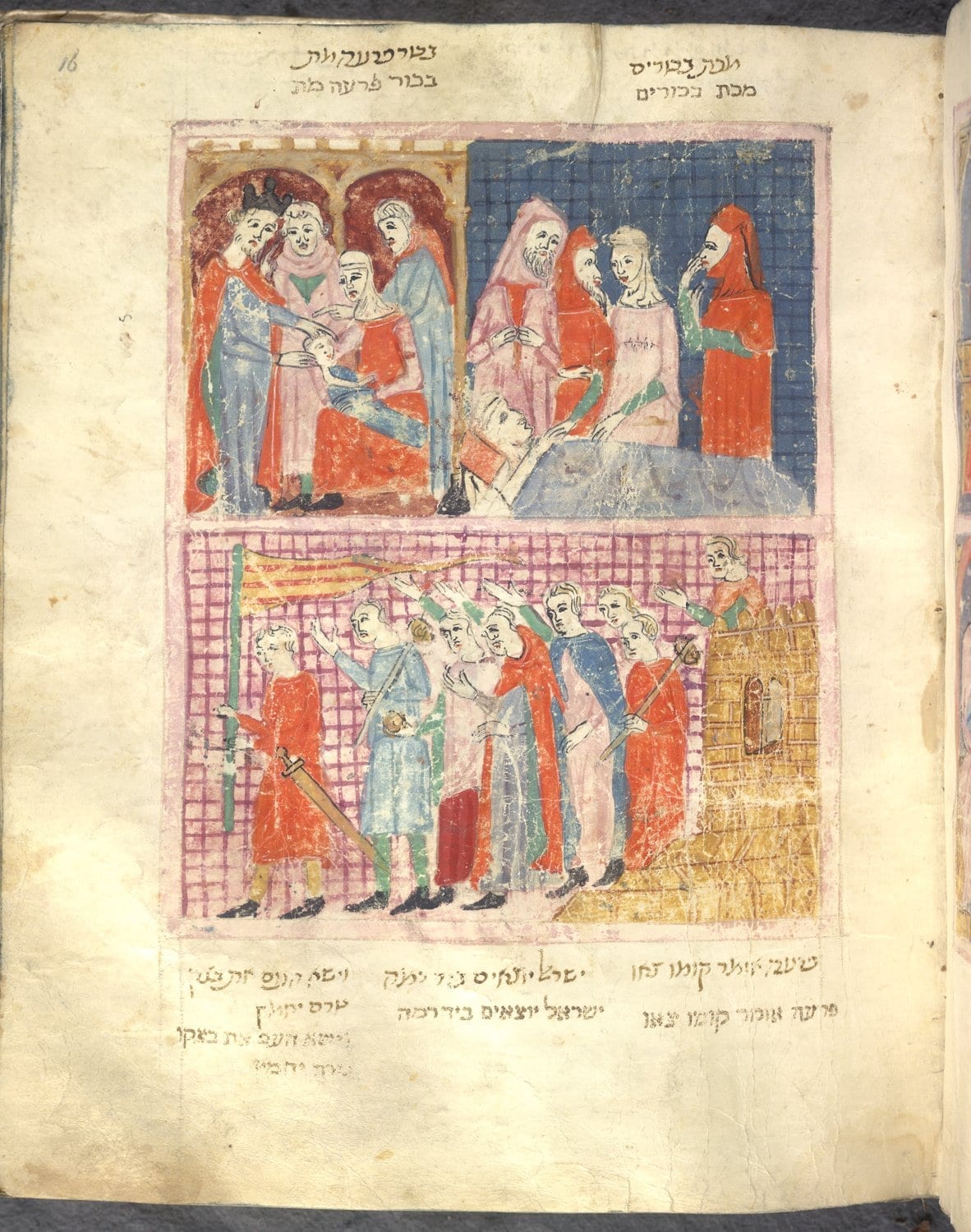
The Ten Plagues of Egypt
Ten progressive judgments fell upon Egypt until Pharaoh let Israel go: the Nile to blood, frogs, gnats, flies, livestock plague, boils, hail, locusts, darkness, and the death of the firstborn (Exodus 7–12).
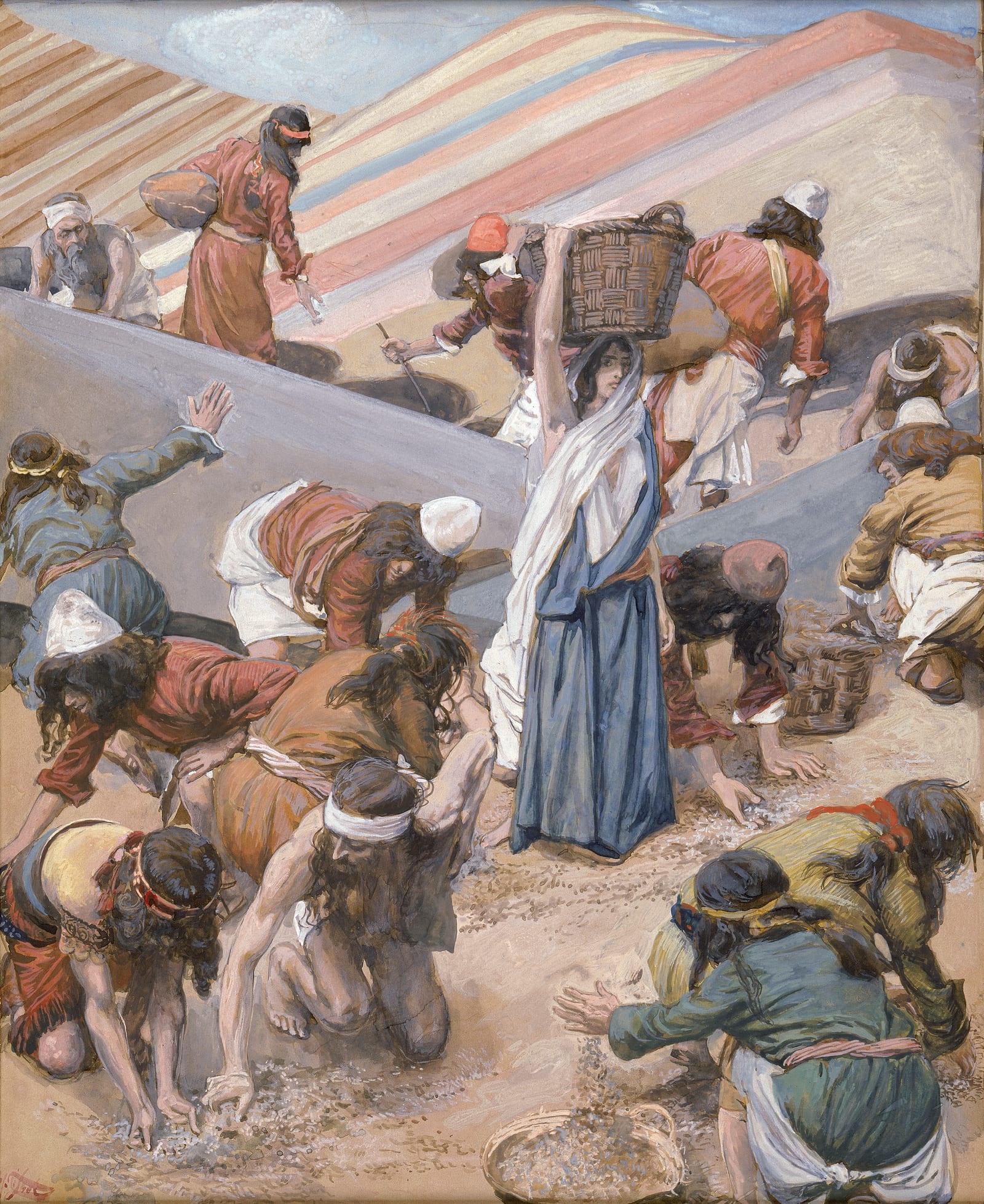
Manna in the Wilderness
For forty years, bread from heaven appeared each morning on the desert floor to feed Israel — except on the Sabbath. Christ identifies Himself as the true bread of which manna was only a sign (John 6).
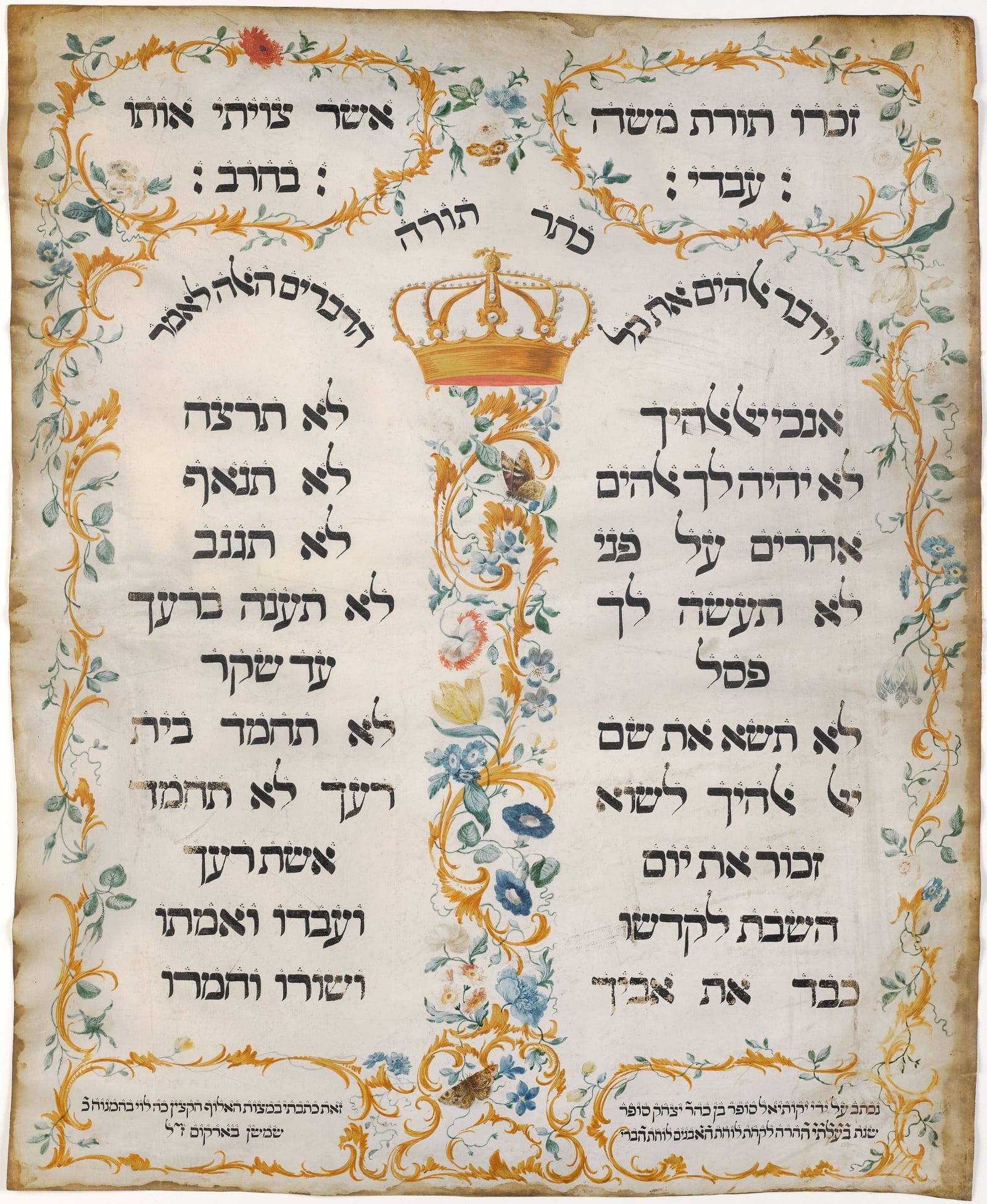
The Giving of the Ten Commandments at Sinai
Fifty days out of Egypt, Israel reached Mount Sinai. The mountain was wrapped in fire, smoke, thunder, and the sound of the trumpet. Moses went up; the people stood far off and trembled. God spoke the Ten Words from the cloud and gave Moses the two tablets of stone (Exodus 19–20).
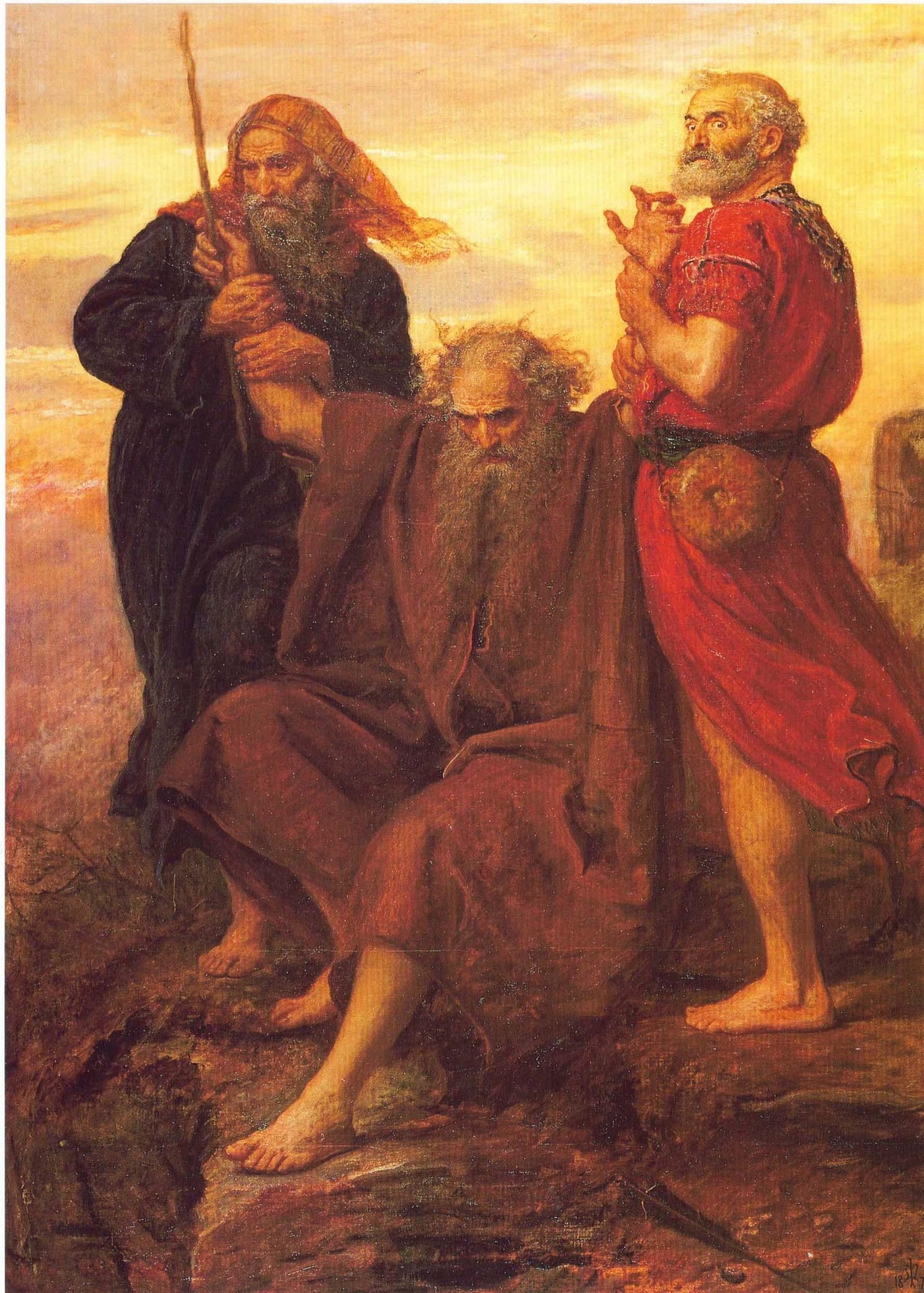
The Battle of Rephidim — Moses' Raised Hands
When Amalek attacked Israel at Rephidim, Joshua led the battle while Moses stood on a hill with the staff of God. As long as Moses's hands were raised Israel prevailed; when they grew heavy Israel weakened. Aaron and Hur held his arms up until sundown (Exodus 17:8–13).
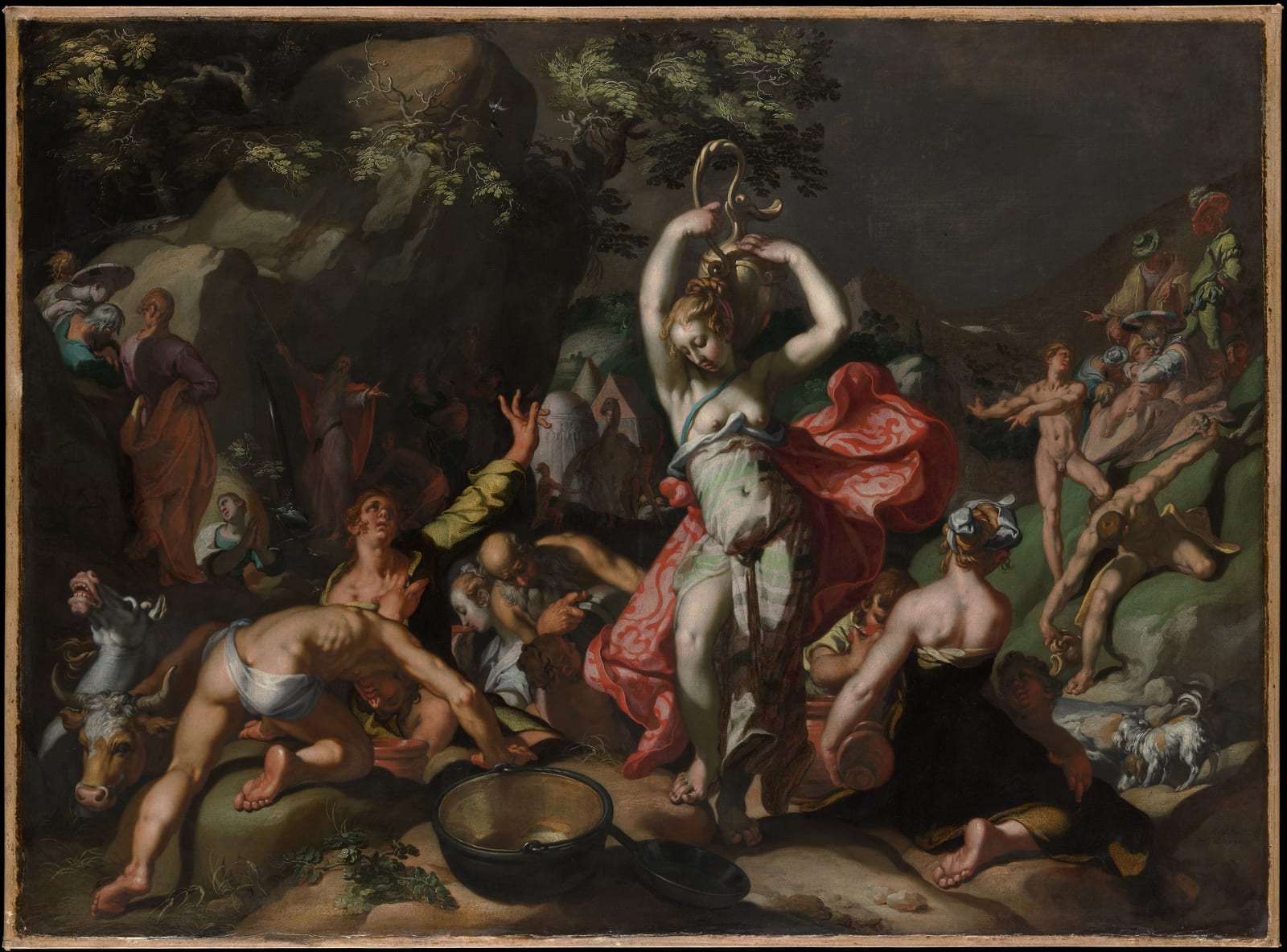
Water from the Rock at Meribah
Thirsting in the wilderness, the people quarrelled with Moses for water. Commanded by God, Moses struck the rock at Horeb with his staff; water gushed out for the entire camp. The place was named Massah and Meribah — 'testing' and 'contention' (Exodus 17:1–7).
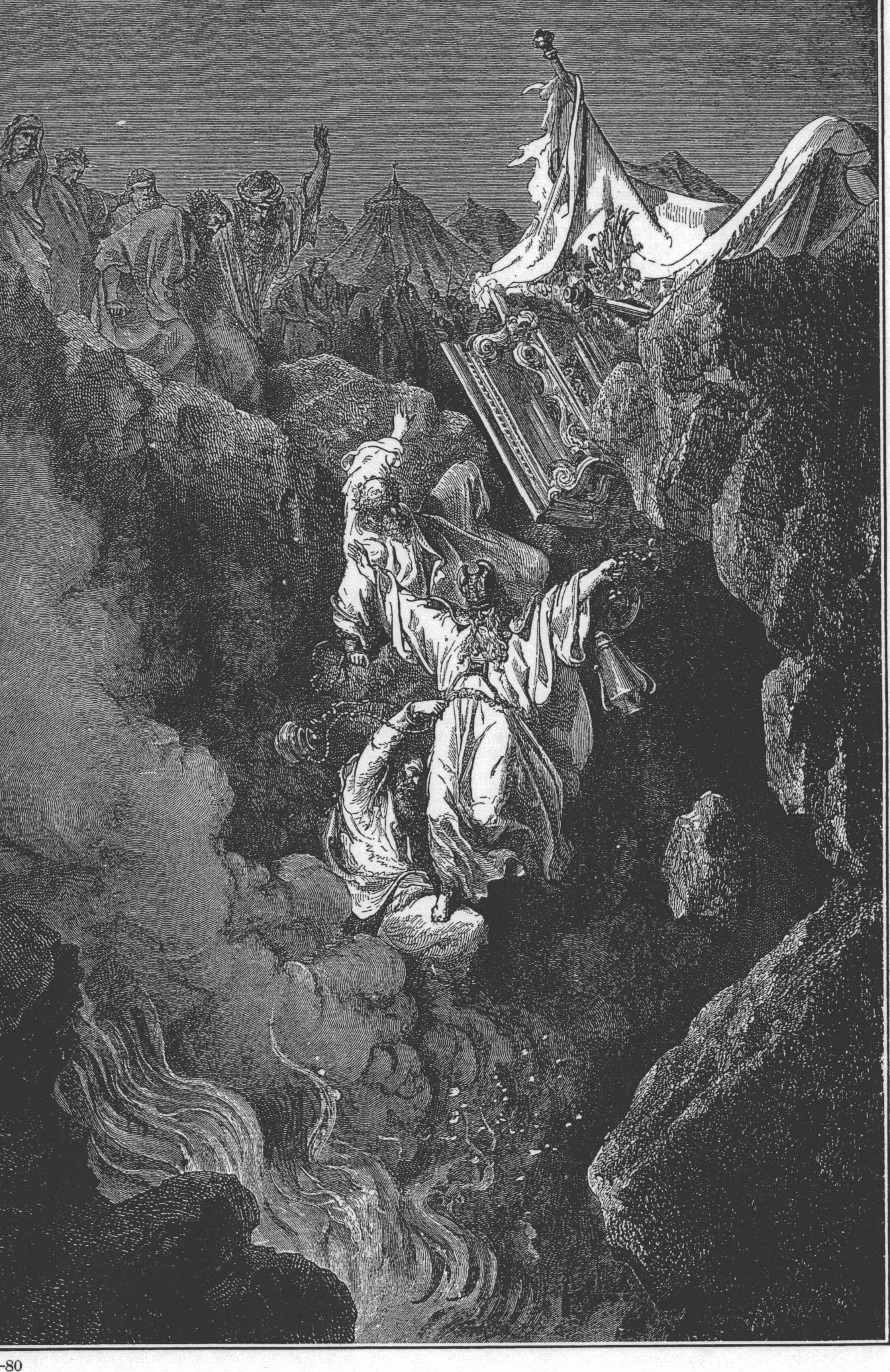
Korah's Rebellion — the Earth Opens
When the Levite Korah led 250 leaders of Israel in a rebellion against Moses and Aaron's priestly authority, the ground opened beneath Korah and his followers and swallowed them alive. Fire from the LORD consumed the 250 men presenting incense (Num 16).
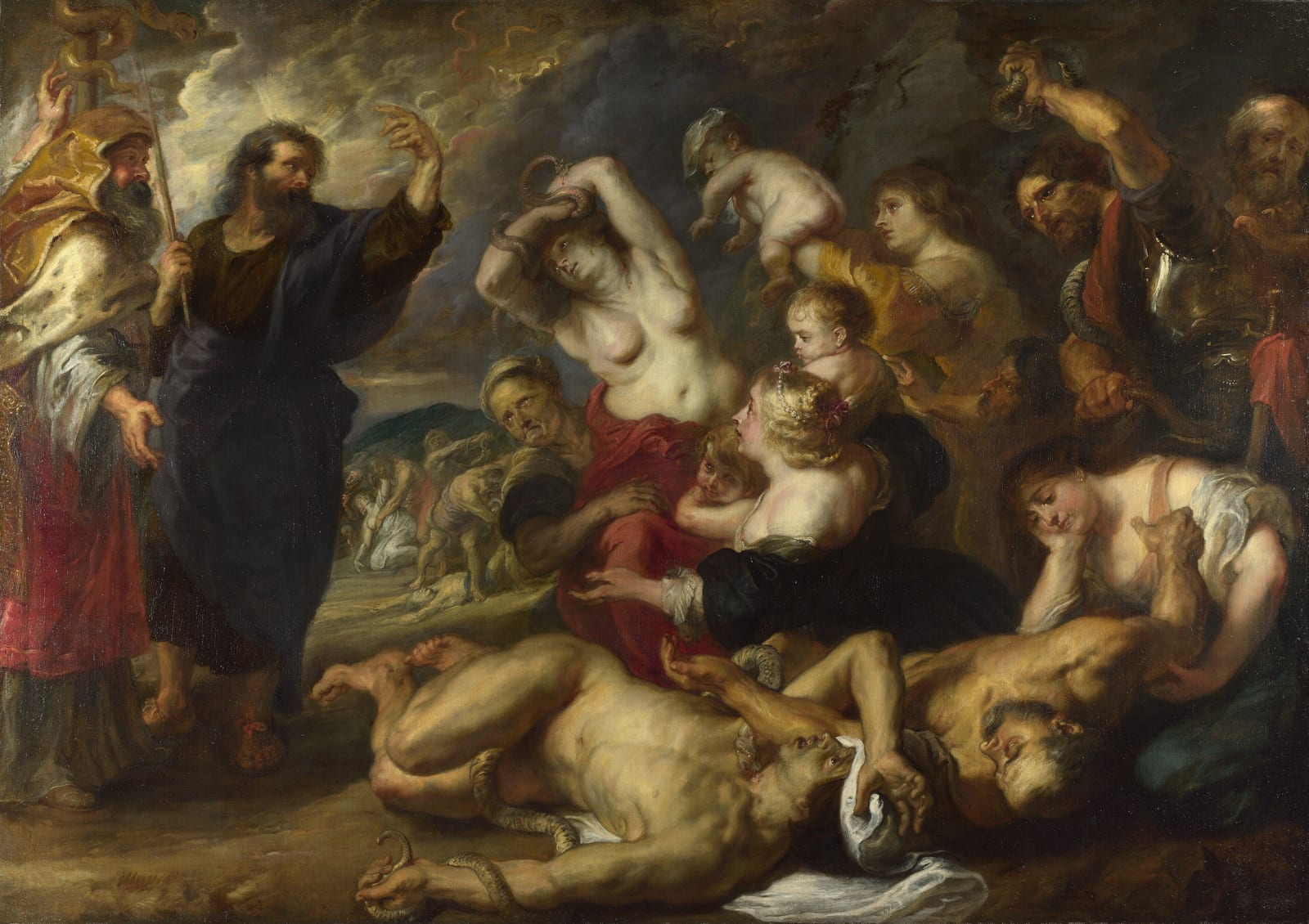
The Bronze Serpent in the Wilderness
When the Israelites complained against God and were bitten by fiery serpents, Moses was commanded to make a bronze serpent and set it on a pole. All who looked at it were healed. Christ cites this episode as a type of His own Crucifixion (John 3:14–15).
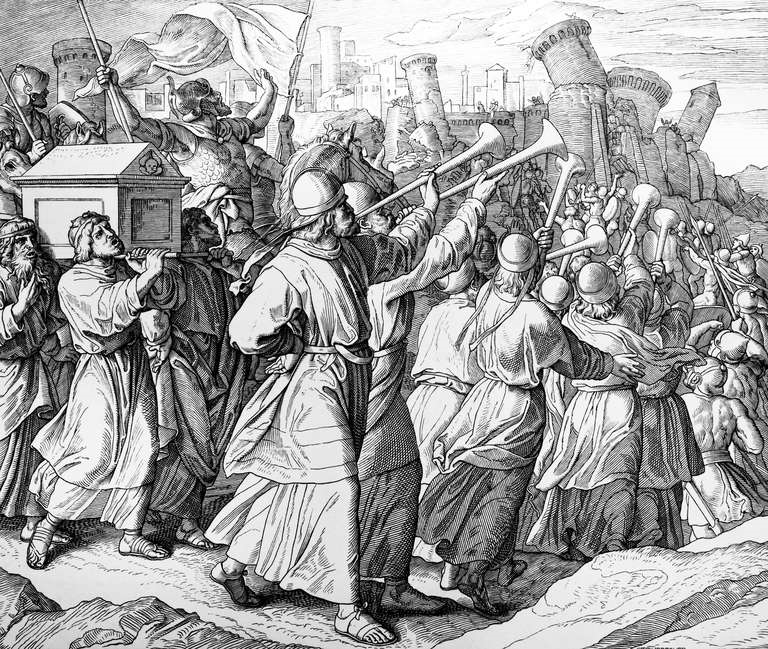
The Fall of the Walls of Jericho
Israel marched once around Jericho's walls for six days and seven times on the seventh; at the trumpet blast and the people's shout, the walls fell flat (Joshua 6). Tell es-Sultan is the archaeological site.
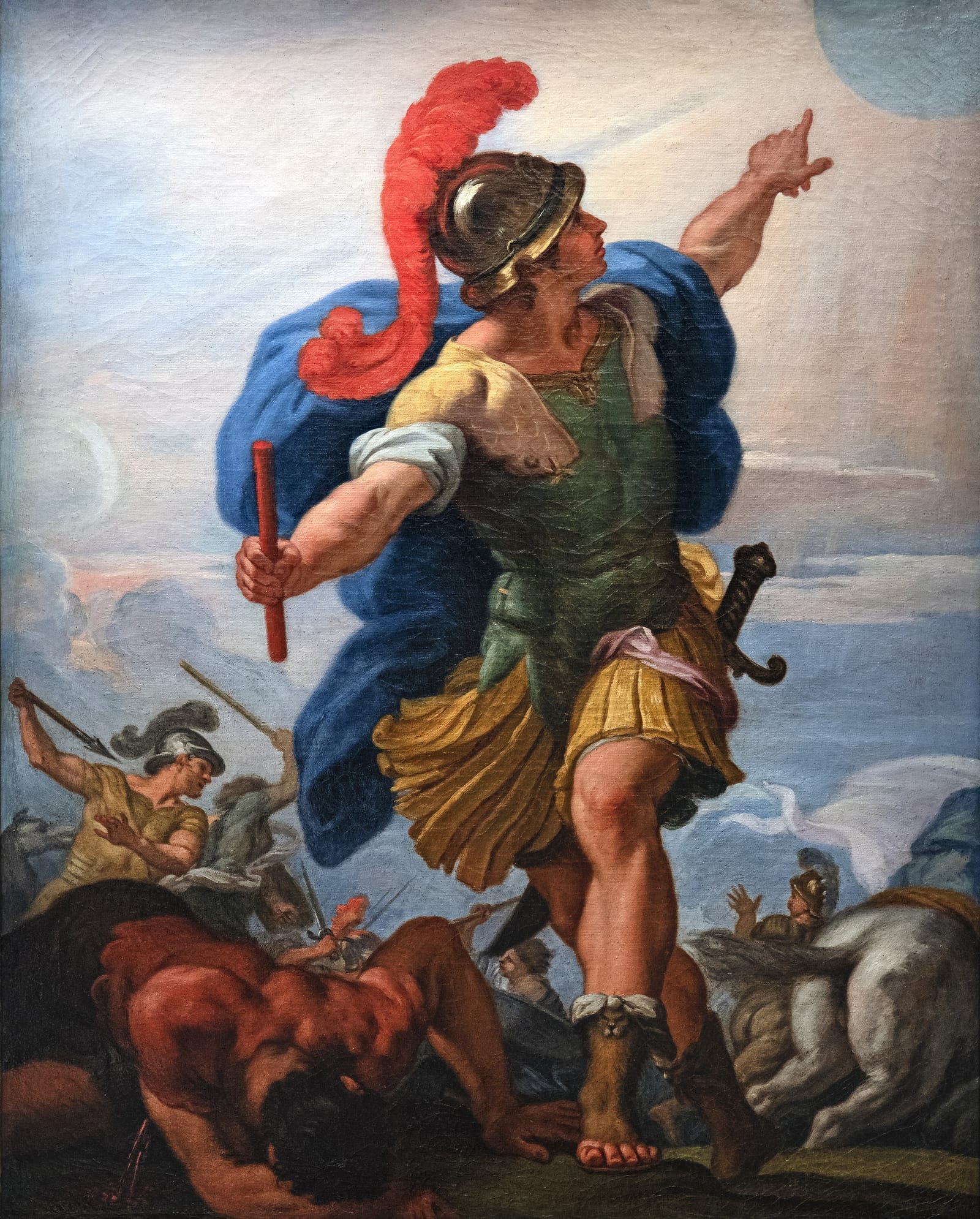
Joshua's Long Day — The Sun Stands Still
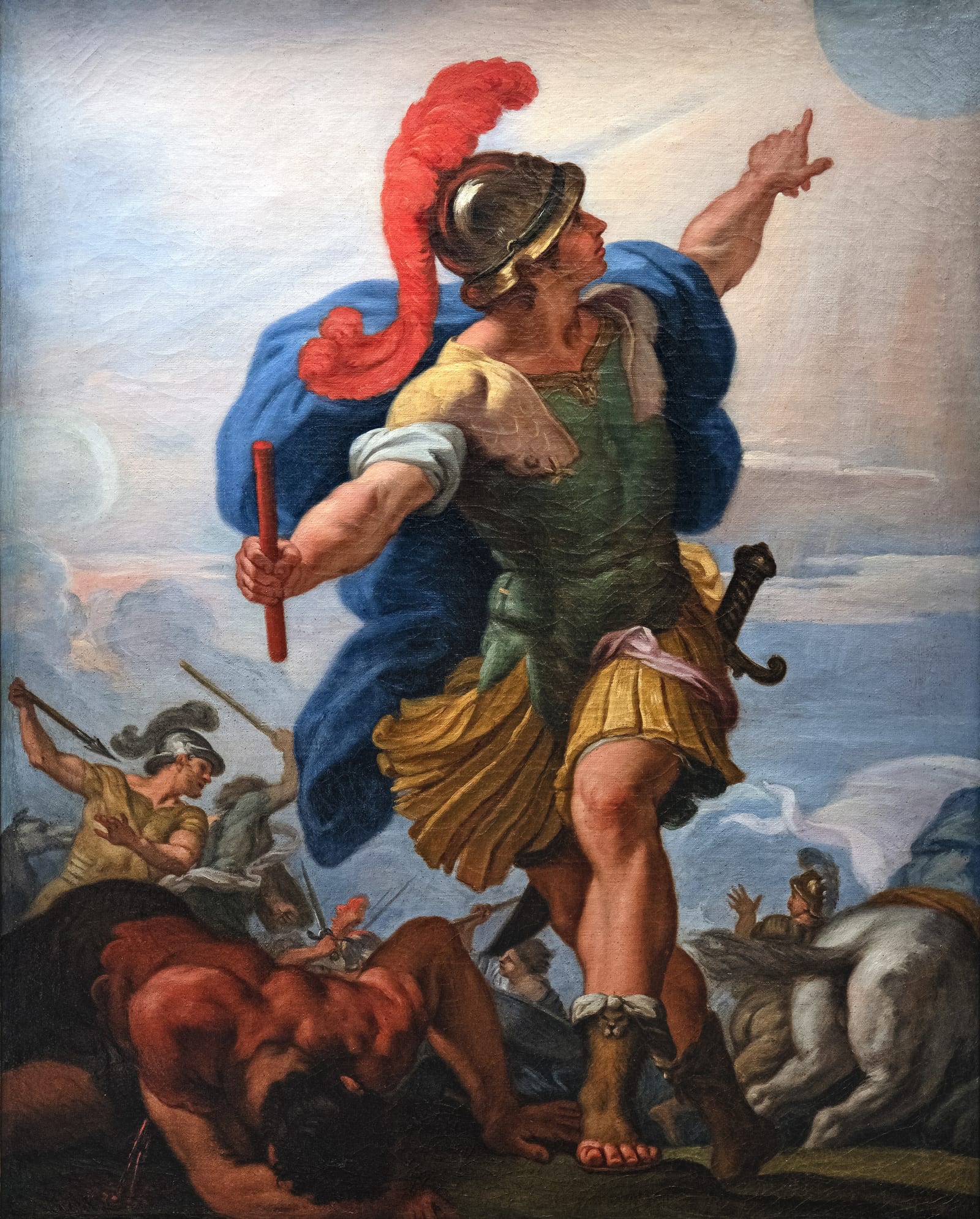
In the heat of battle against five Amorite kings, Joshua commanded: 'Sun, stand still at Gibeon, and Moon, in the valley of Aijalon.' The day was prolonged until Israel had defeated their enemies (Joshua 10).
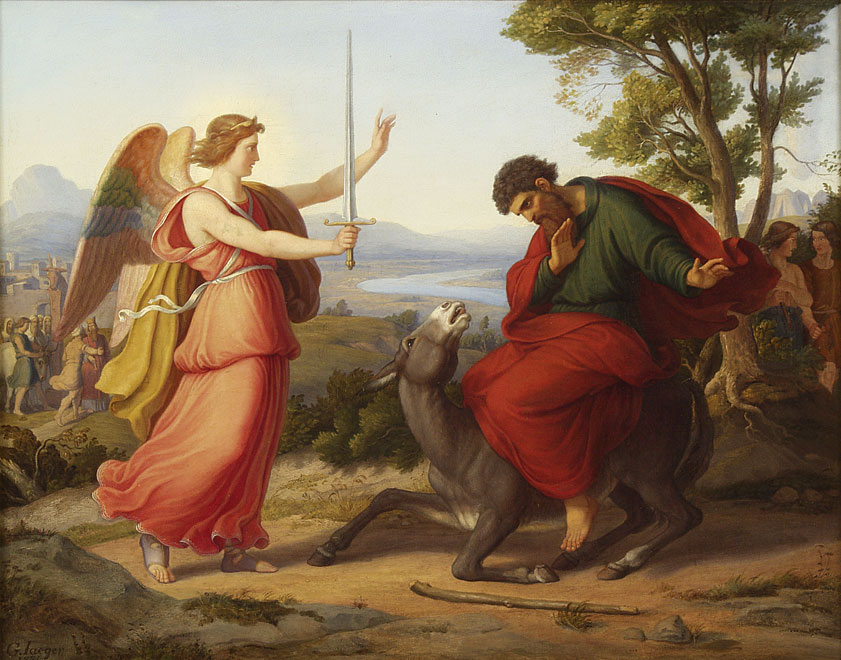
Balaam's Donkey
Hired by Balak king of Moab to curse Israel, the prophet Balaam set out on his donkey. The angel of the LORD stood in the road with drawn sword — visible only to the donkey, which turned aside three times. Balaam beat her. The donkey opened her mouth and spoke: 'What have I done to you, that you have struck me these three times?' (Num 22).
Crossing of the Jordan into the Promised Land
Forty years after the Red Sea, the priests carrying the Ark of the Covenant stepped into the Jordan at flood stage. The waters upstream stood up in a heap; the waters downstream flowed off; Israel crossed on dry ground (Joshua 3).
Gideon's Fleece
Asked to lead Israel against Midian, Gideon doubted. He asked God for a sign: dew on a wool fleece, dry ground around it. It was so. He asked again — the opposite: dry fleece, wet ground. It was so (Judges 6:36–40).
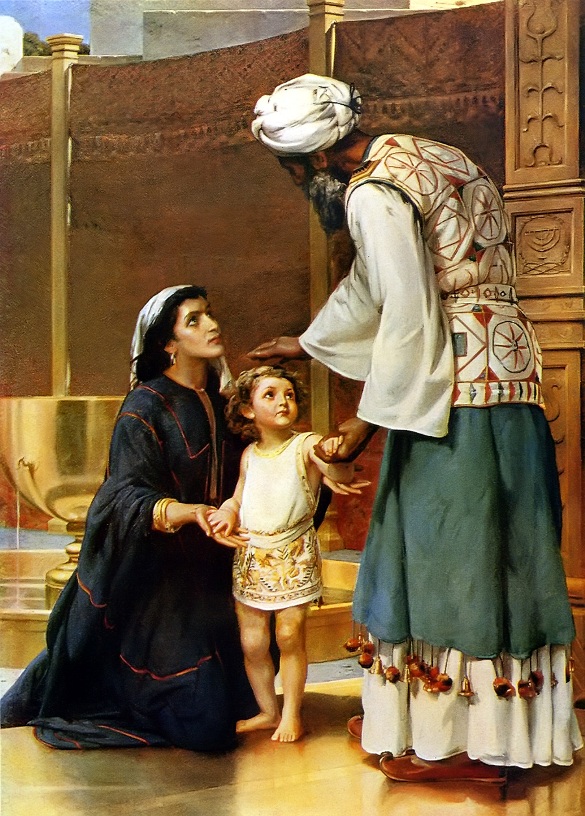
Hannah's Prayer Answered with Samuel
The childless Hannah, mocked by her husband's other wife, prayed silently at the Tabernacle of Shiloh — 'her lips moved but her voice was not heard.' The high priest Eli, thinking her drunk, was rebuked and blessed her instead: 'Go in peace; the God of Israel grant your petition.' She bore Samuel (1 Sam 1).
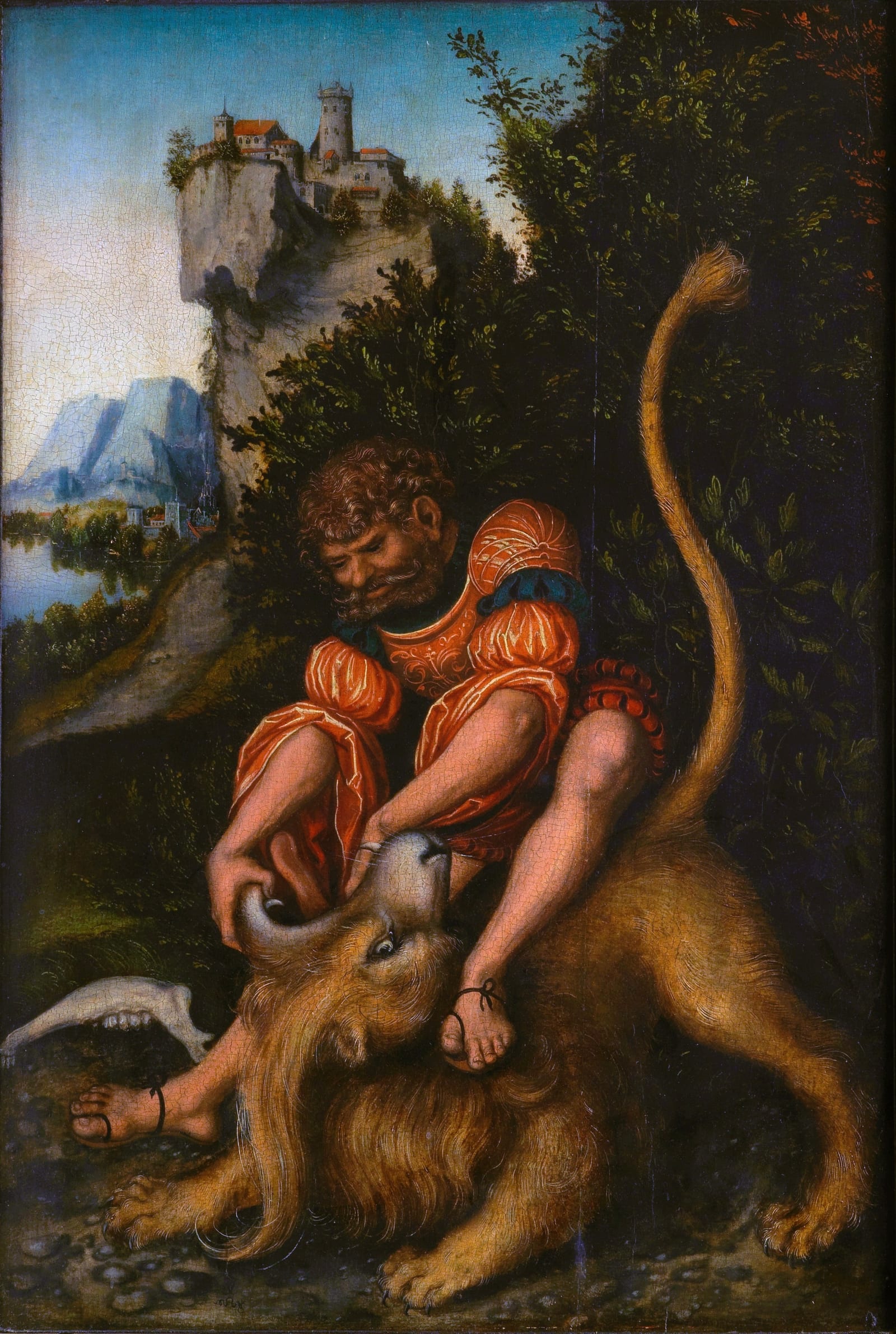
Samson and the Destruction of the Philistine Temple
Blinded and bound by the Philistines, his miraculous hair regrown, Samson was brought to amuse the Philistine court at the temple of Dagon. He prayed once more for strength, embraced the two central pillars, and pulled the temple down — killing more in his death than in his life (Judges 16).
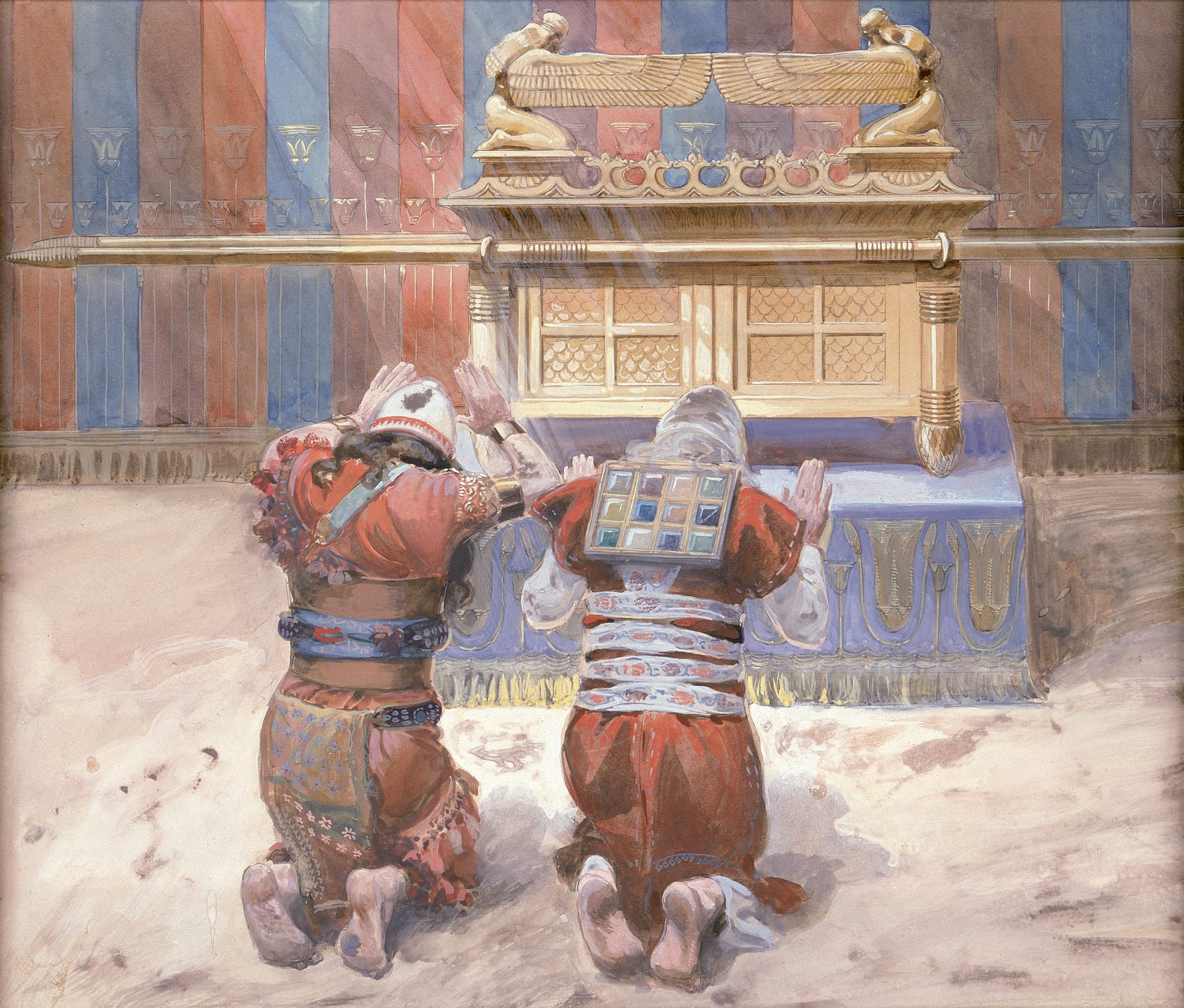
The Ark of the Covenant and Dagon at Ashdod
After the Philistines captured the Ark in battle, they placed it in the temple of Dagon at Ashdod. The next morning Dagon's statue lay face down before the Ark. They replaced it; the morning after, the statue was found broken, head and hands cut off (1 Sam 5).
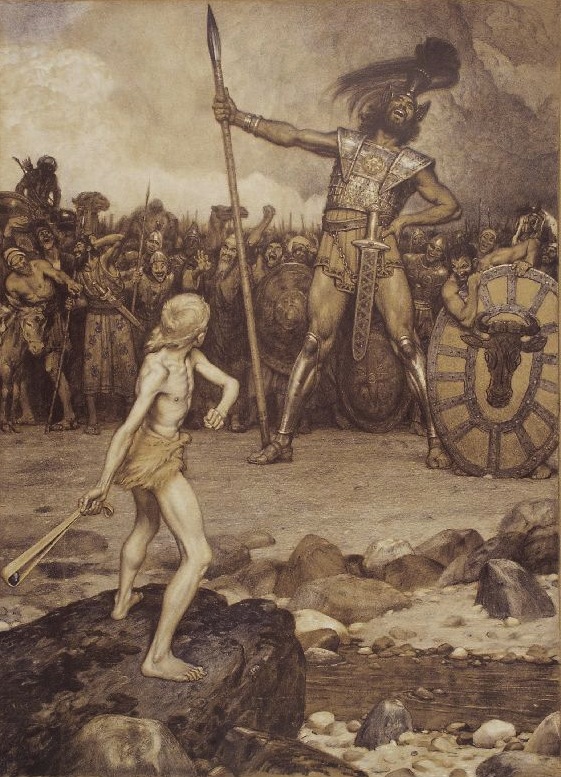
David and Goliath
For forty days the Philistine giant Goliath of Gath defied the army of Israel in the Valley of Elah. David, a shepherd boy with five smooth stones from the brook, struck Goliath in the forehead with a sling, killed him, and cut off his head with the giant's own sword (1 Sam 17).
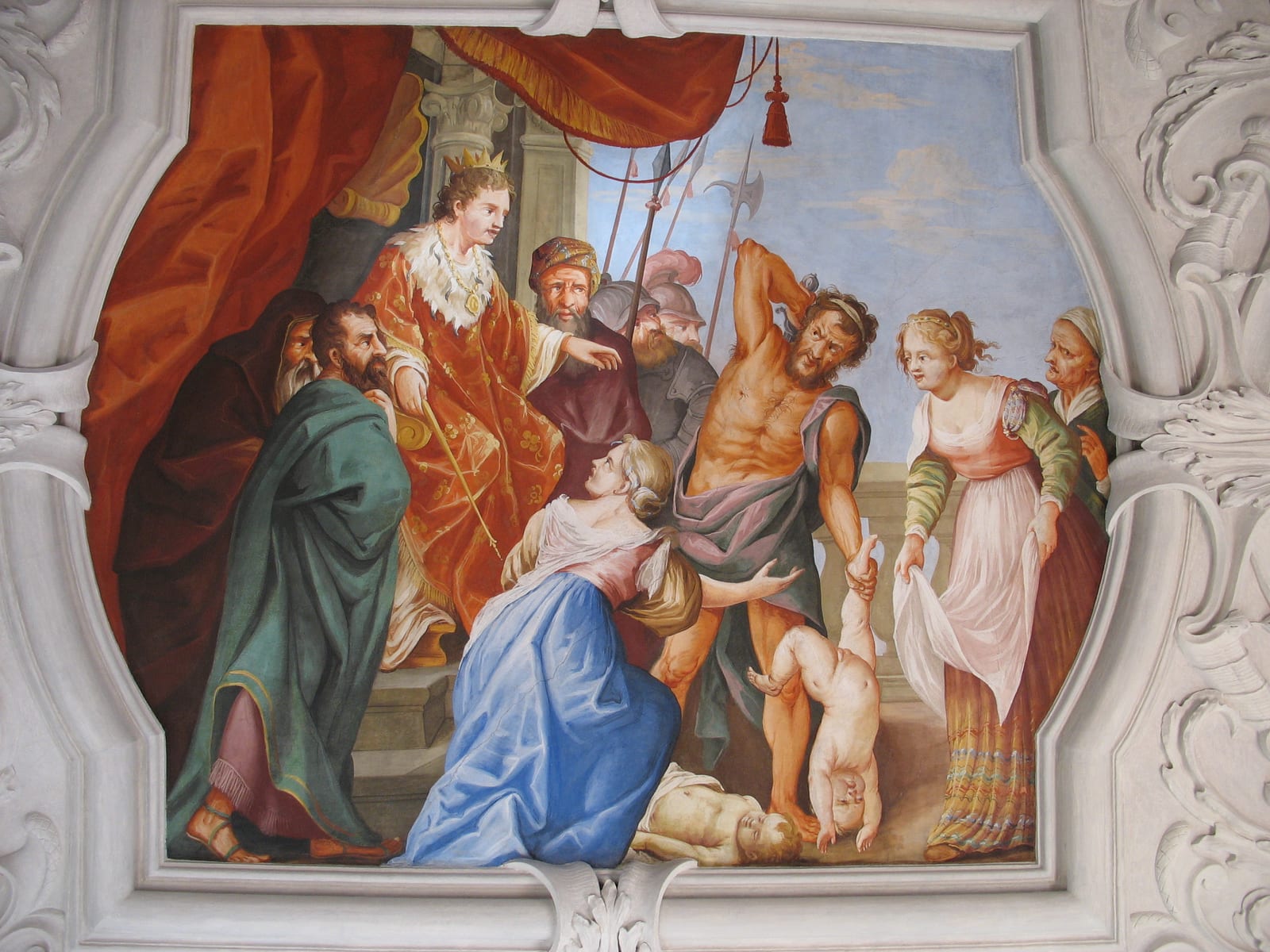
The Wisdom of Solomon — the Two Mothers
Two women came before Solomon claiming the same living infant. The other woman's child had died in the night and she had switched them. Solomon ordered the living child cut in two and divided — the true mother cried out: 'Give her the living child, by no means slay it.' Solomon gave her the child (1 Kings 3:16–28).
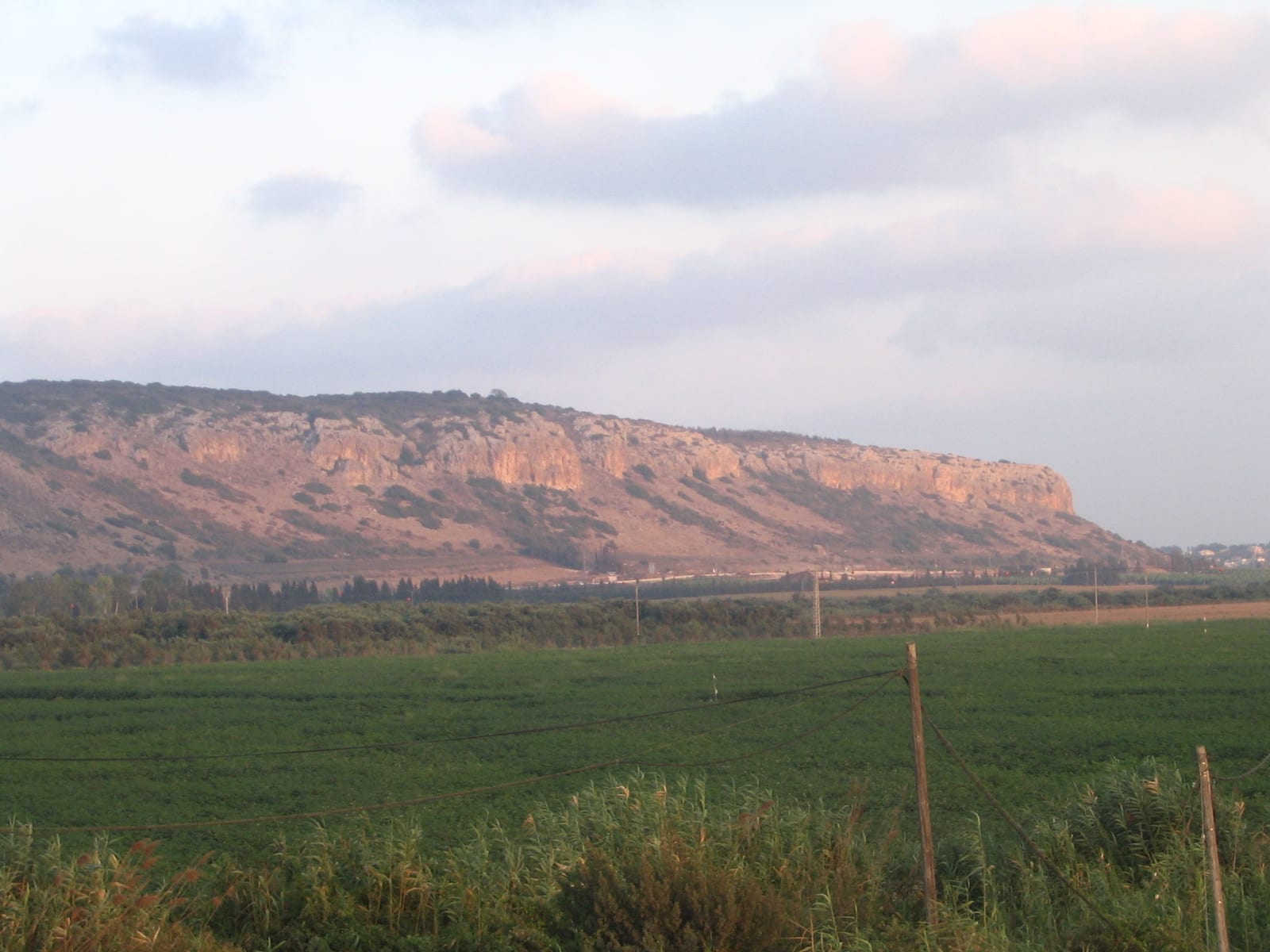
Fire from Heaven on Mount Carmel
Elijah's contest with the prophets of Baal: fire from heaven consumed the offering, the wood, the stones, and the very water of the trench (1 Kings 18).
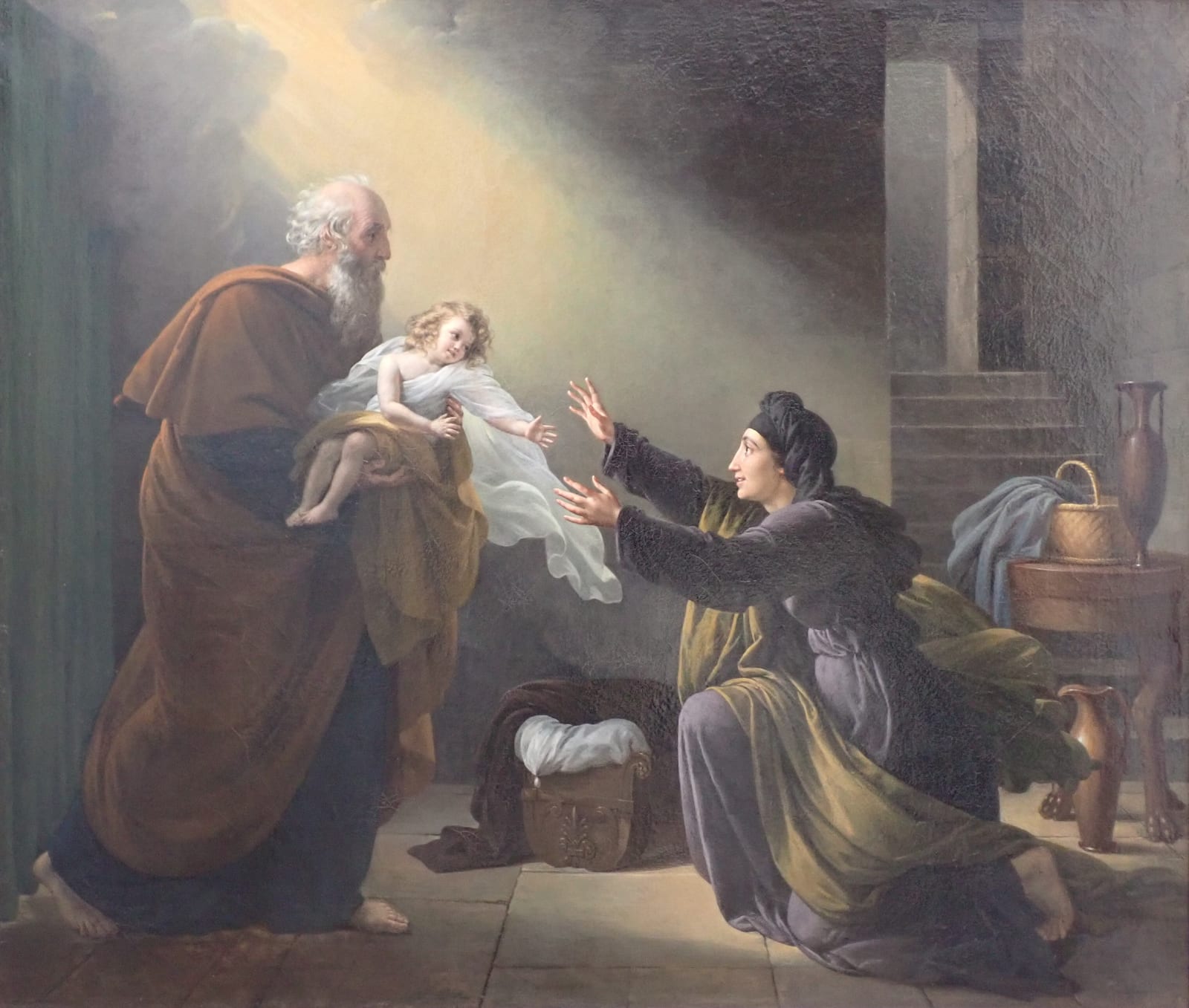
The Widow's Son of Zarephath
Sent by God to a Phoenician widow during the great drought, Elijah multiplied her last handful of flour and raised her son from the dead — the first recorded resurrection in Scripture (1 Kings 17).
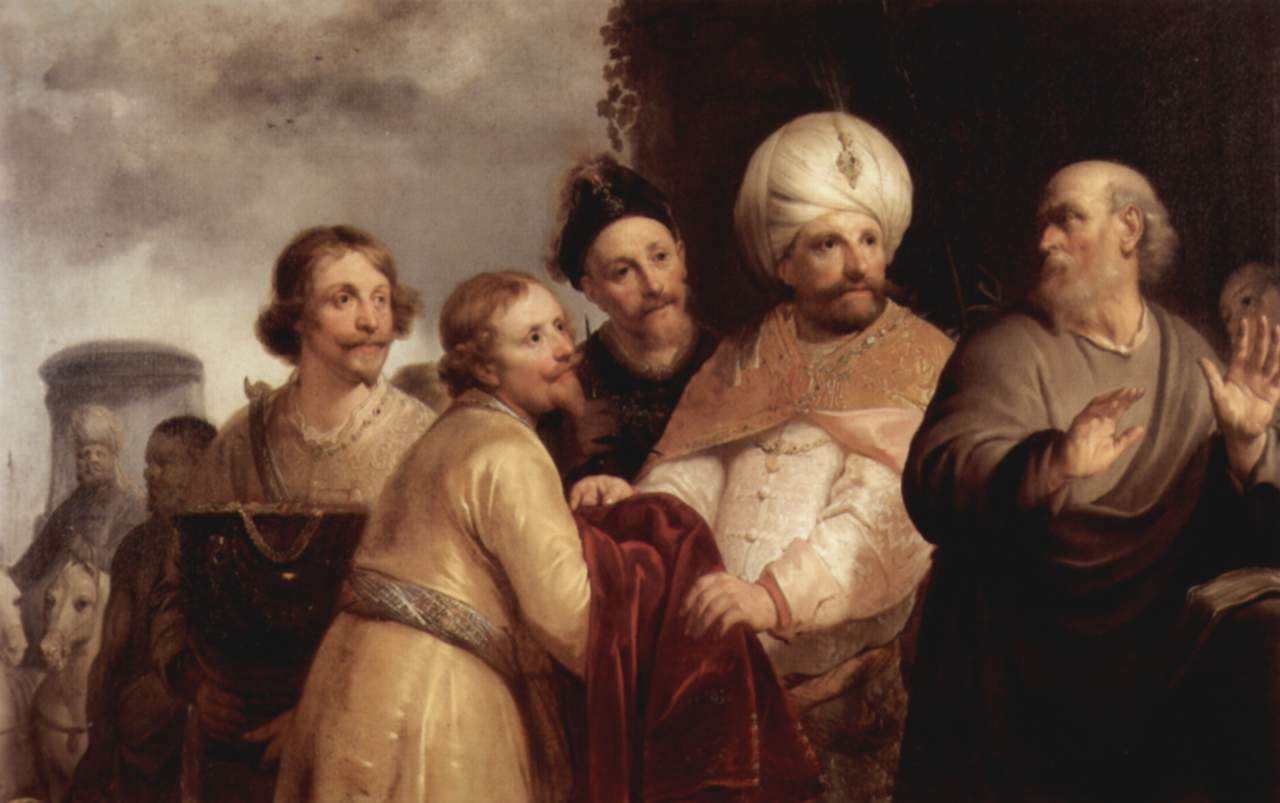
Naaman Healed in the Jordan
Naaman, commander of the army of Aram, was healed of leprosy by washing seven times in the Jordan — at the word of Elisha, on the testimony of a captive Israelite slave-girl (2 Kings 5).
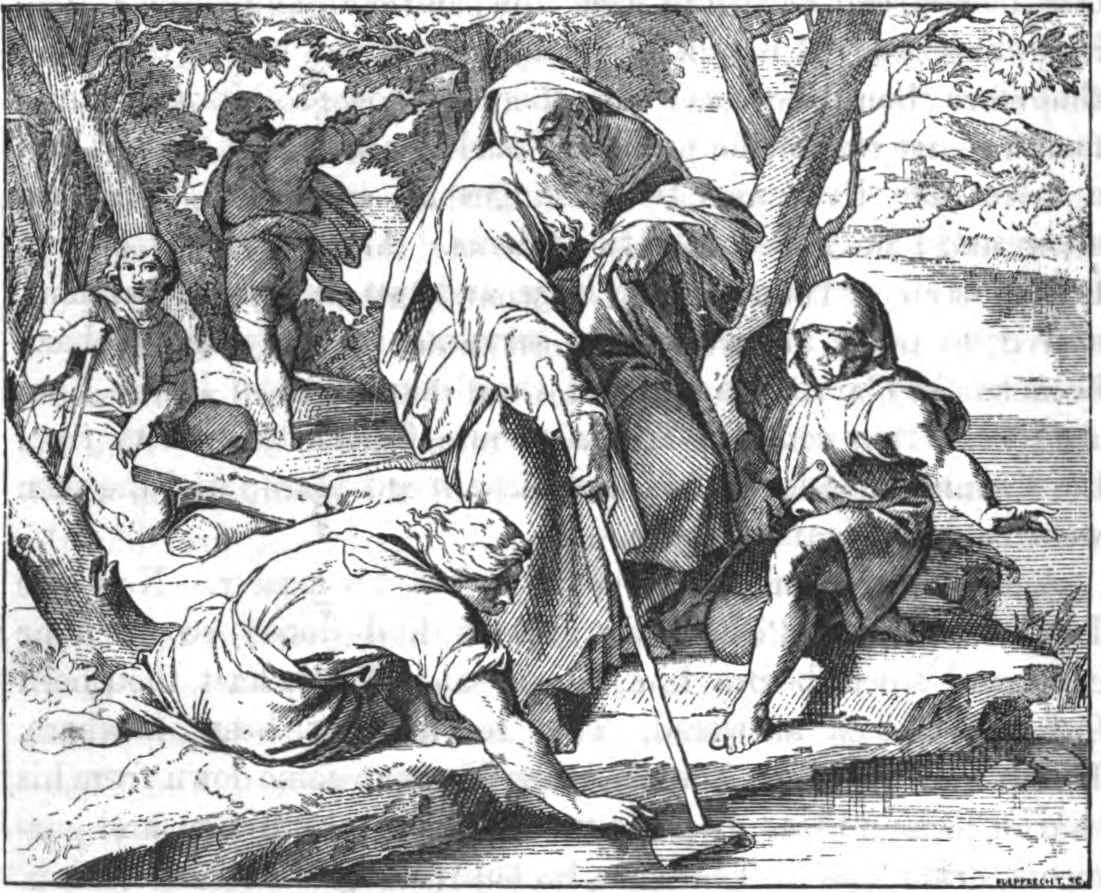
Elisha and the Floating Axe-Head
As a school of prophets cut timber by the Jordan to expand their dwelling, the iron head of one borrowed axe flew off into the deep water. The man cried out. Elisha threw a stick in at the spot; the iron floated to the surface (2 Kings 6:1–7).
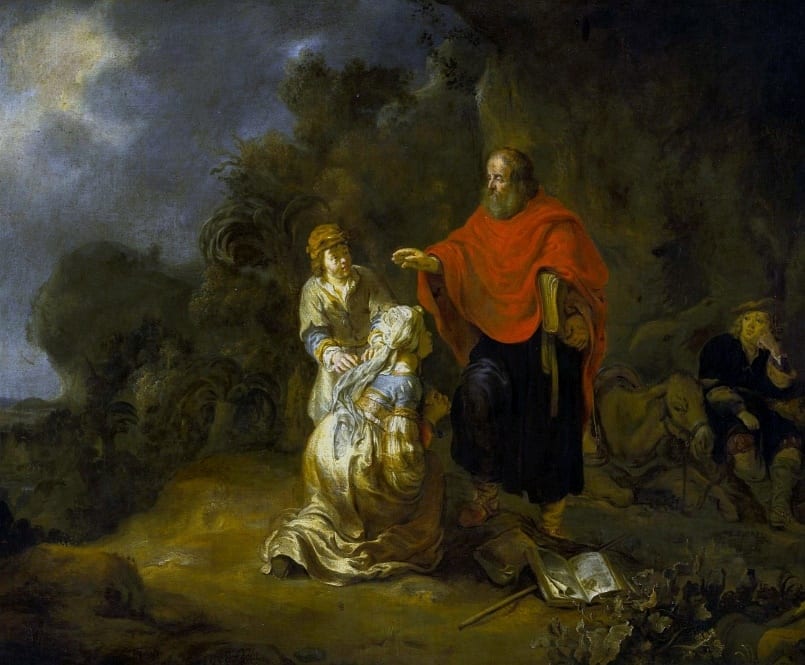
Elisha and the Shunammite Woman's Son
A great Shunammite woman who had built a room for Elisha was promised a son in her old age. Years later the boy died of heatstroke in the harvest field. Elisha came, stretched himself upon the body twice, prayed — and the boy sneezed seven times and opened his eyes (2 Kings 4:8–37).
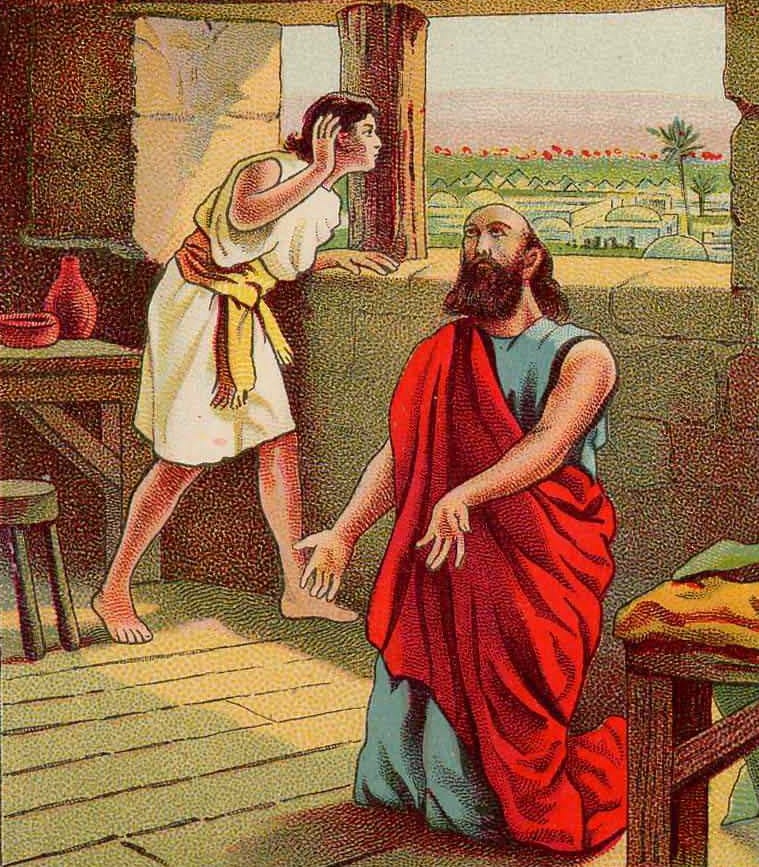
Elisha at Dothan — Chariots of Fire
When the Aramaean king sent his army to capture Elisha at Dothan, the prophet's servant rose at dawn terrified by the encircling host. 'Do not fear; those who are with us are more than those who are with them.' Elisha prayed; the servant's eyes were opened. The mountain was full of horses and chariots of fire (2 Kings 6:8–17).
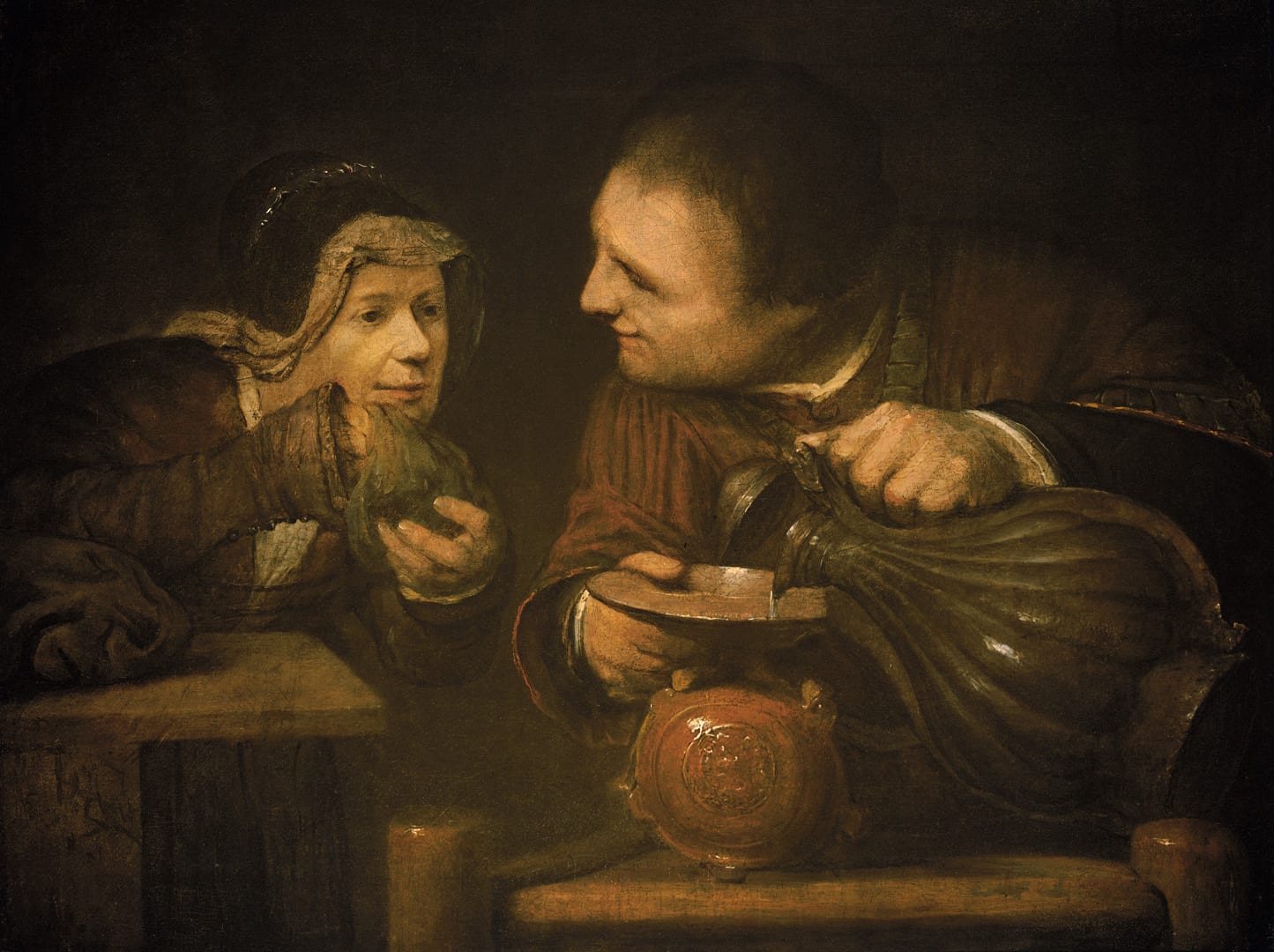
The Widow's Multiplied Oil
A widow of one of the prophet-school told Elisha that her creditor was coming to take her two children as slaves. He asked what she had in the house. 'Nothing but a flask of oil.' He told her to borrow empty vessels from her neighbours and pour. The oil did not stop until every vessel was full (2 Kings 4:1–7).
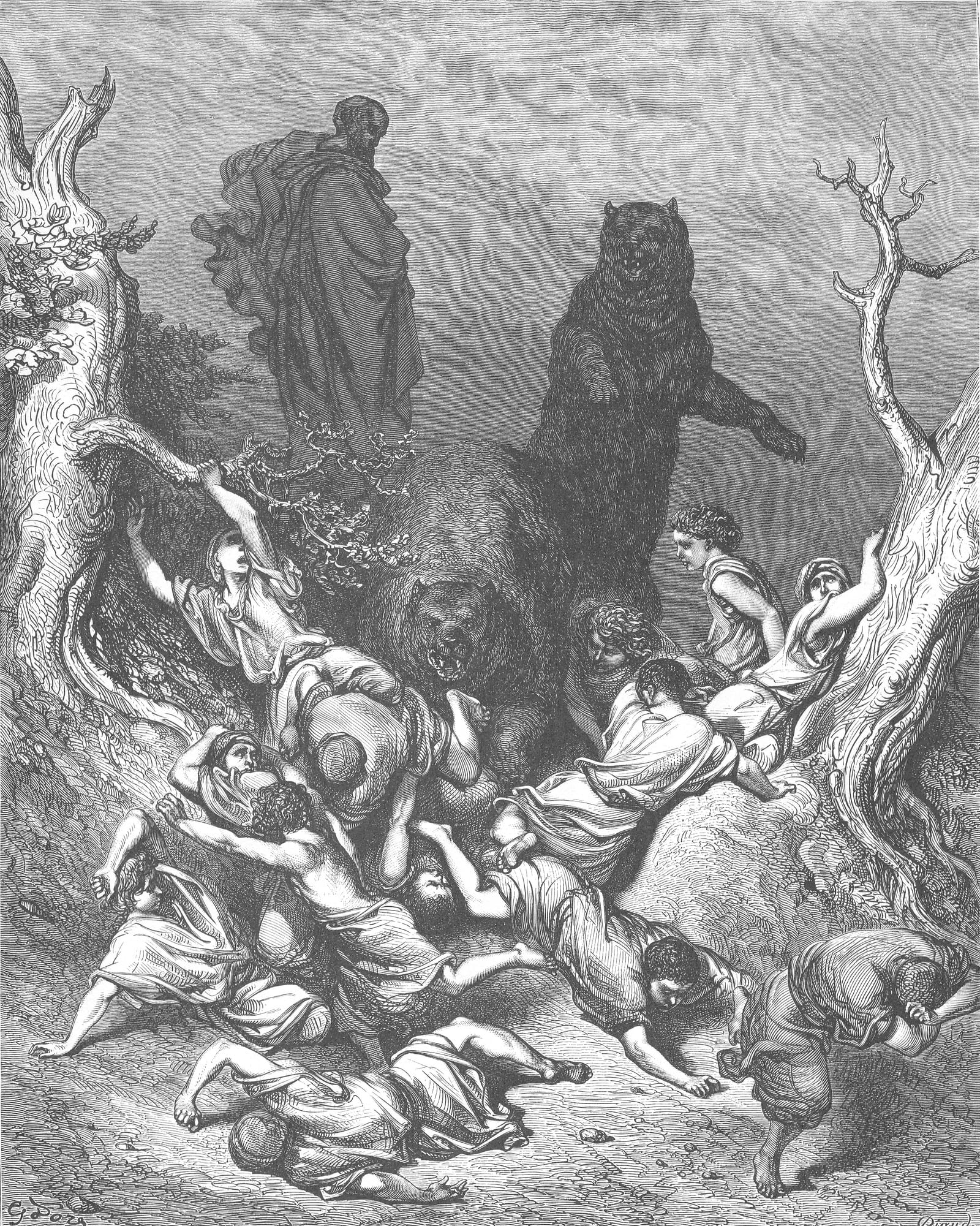
The Youths of Bethel and the Two She-Bears
As Elisha walked from Jericho toward Bethel, a band of youths from the city mocked his baldness: 'Go up, baldhead!' He turned and cursed them in the name of the LORD. Two she-bears came out of the woods and mauled 42 of them (2 Kings 2:23–25).
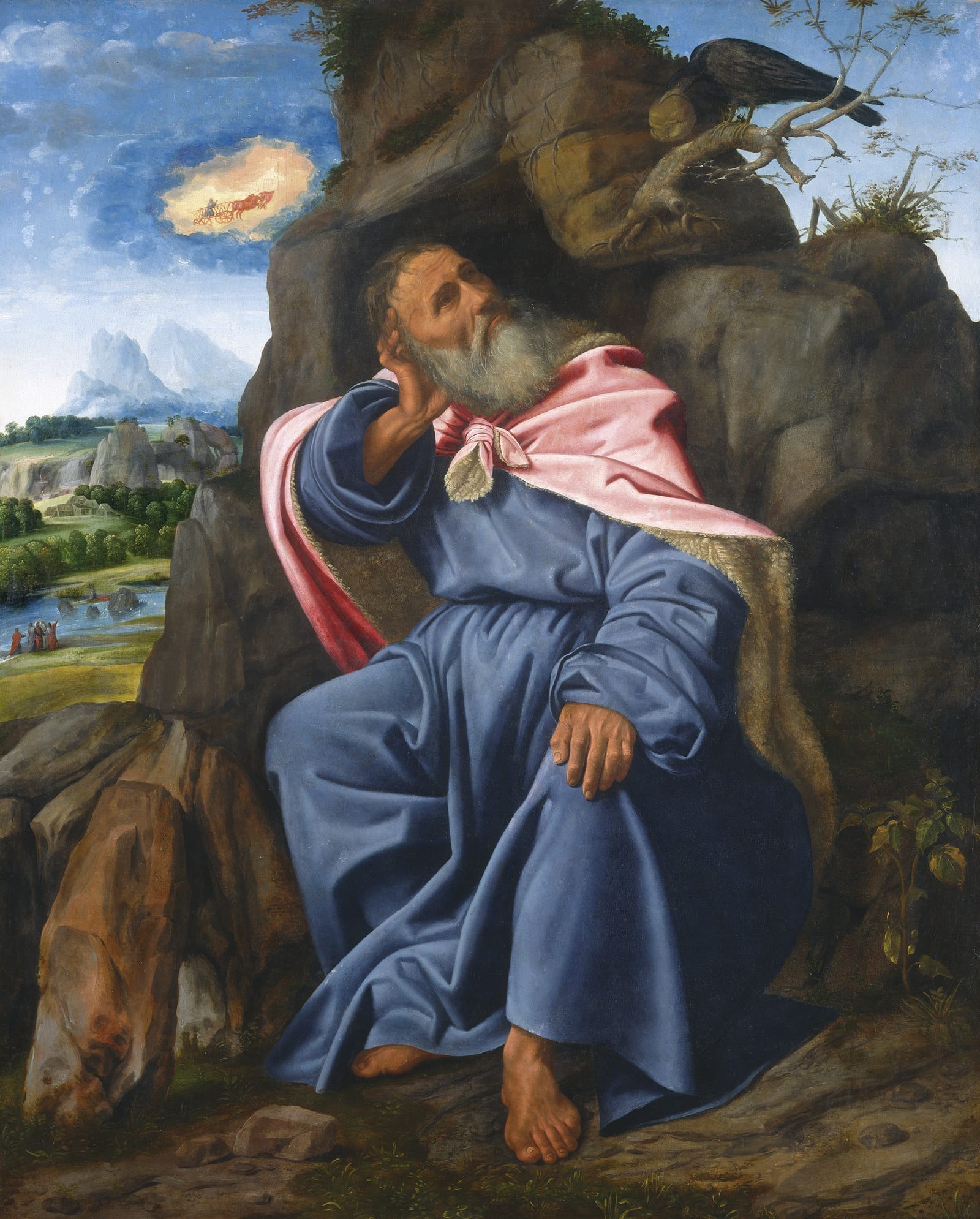
Elijah Taken Up in a Whirlwind
Elijah and Elisha crossed the Jordan on dry ground; a chariot of fire and horses of fire separated them, and Elijah went up in a whirlwind into heaven (2 Kings 2). One of two figures in Scripture not to have died.
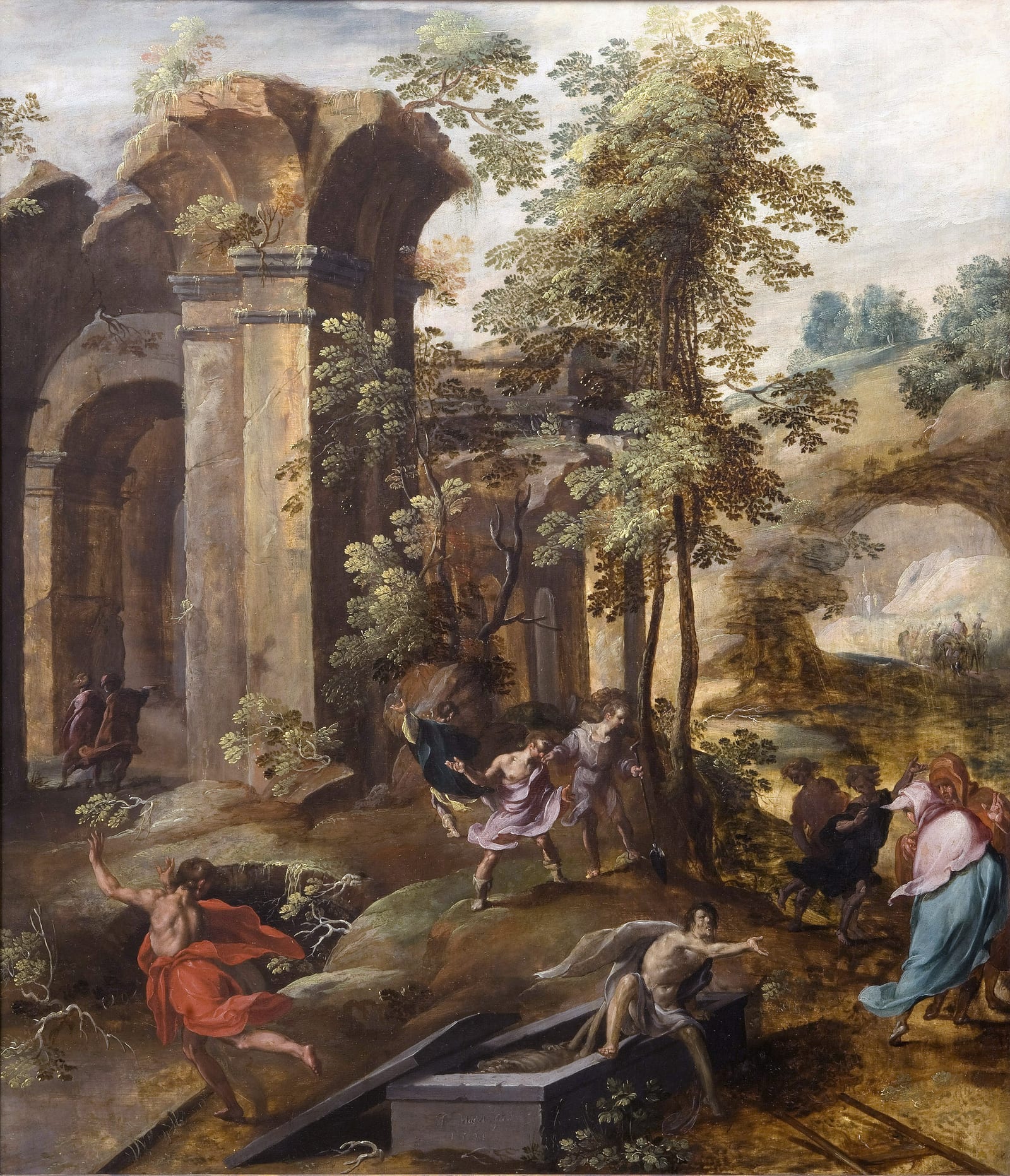
Elisha's Bones Raising a Dead Man
A burial party, surprised by a band of raiding Moabites, threw the body of the man they were burying into Elisha's tomb. As the body touched the prophet's bones, the man came to life and stood up on his feet (2 Kings 13:20–21).
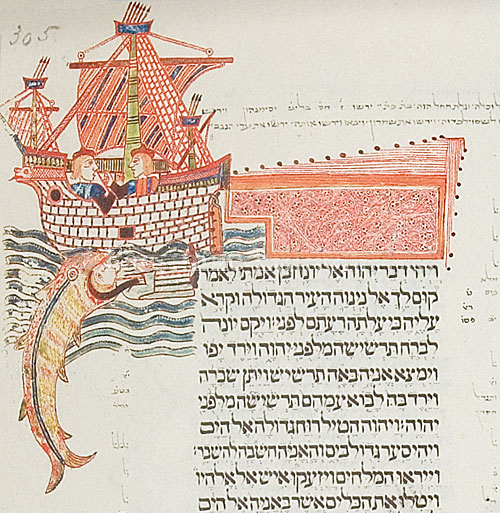
Jonah and the Great Fish
Fleeing the call to preach to Nineveh, Jonah was thrown overboard, swallowed by a great fish, and after three days disgorged onto dry land. Jesus cites this as the sign of His own death and resurrection (Matt 12:39–40).
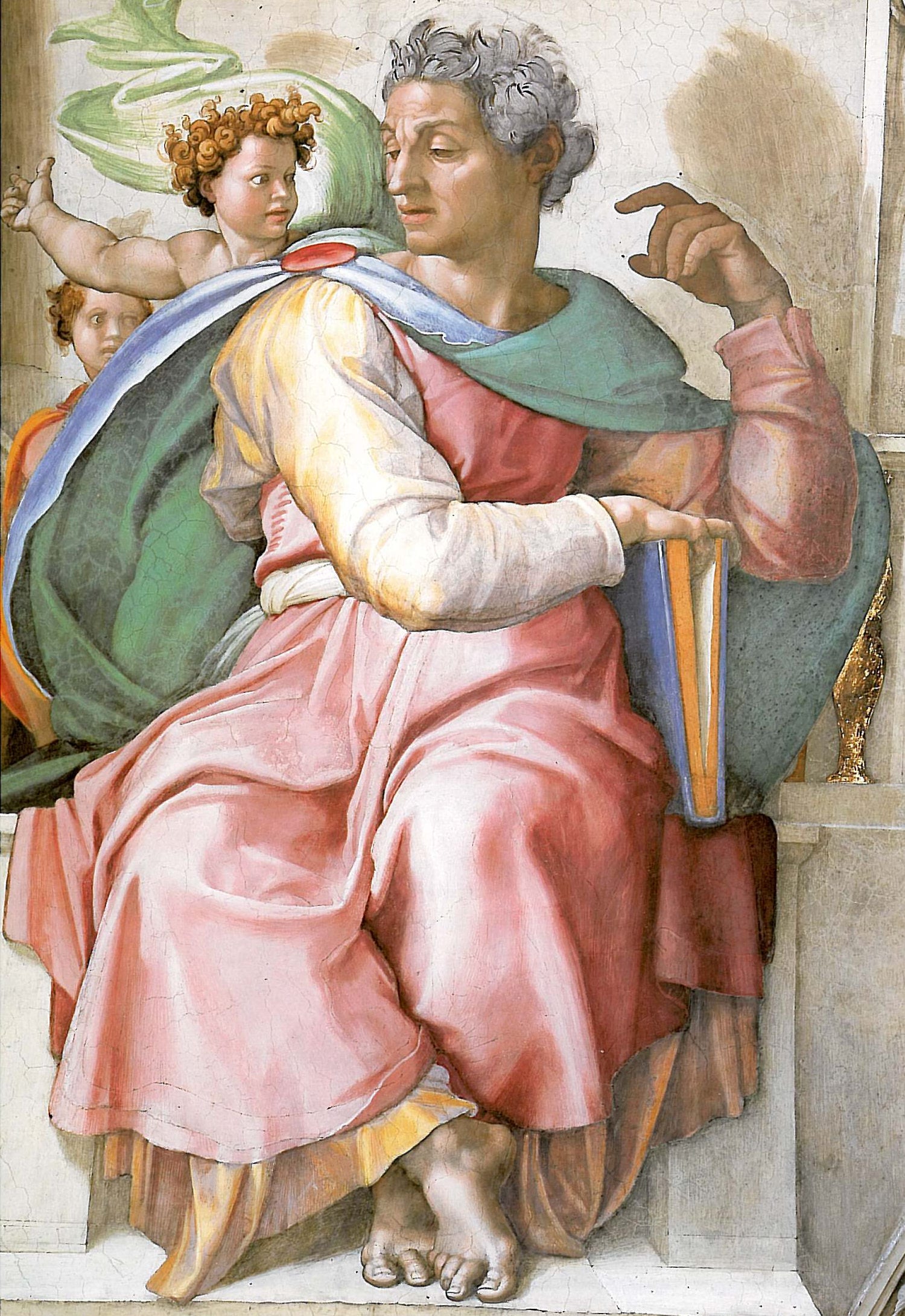
Isaiah's Vision in the Temple — 'Holy, Holy, Holy'
In the year of King Uzziah's death, Isaiah saw the Lord enthroned in the Temple, His train filling the sanctuary. Above stood six-winged seraphim crying: 'Holy, holy, holy is the LORD of hosts.' The foundation of the Sanctus of the Eucharistic liturgy (Isa 6).
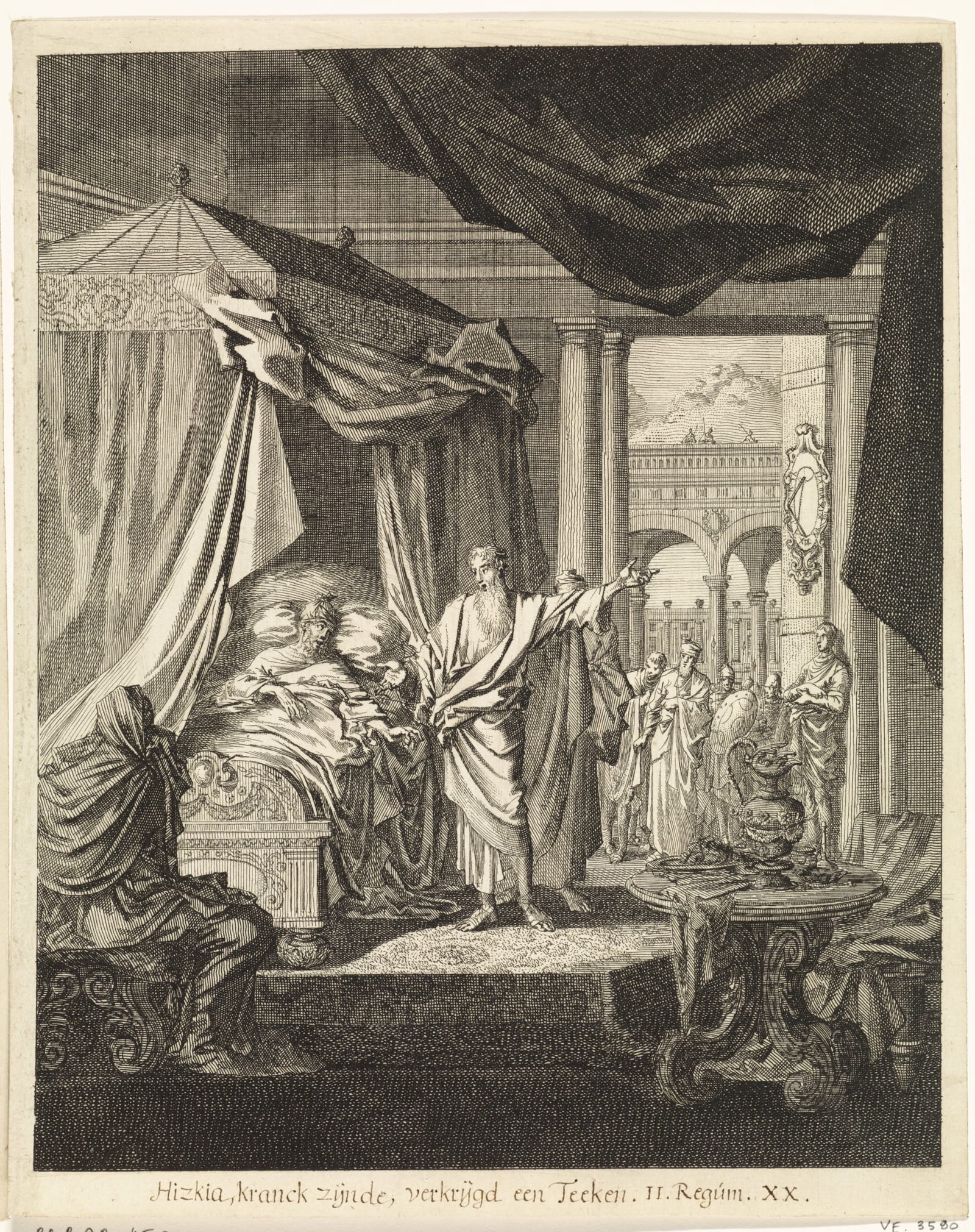
The Sundial of Ahaz Going Back
When King Hezekiah lay dying and asked God for a sign that he would recover, the prophet Isaiah offered him a choice: the shadow on the sundial of Ahaz could go forward ten degrees or backward ten degrees. Hezekiah chose the harder sign — the shadow retreated (2 Kings 20:9–11).
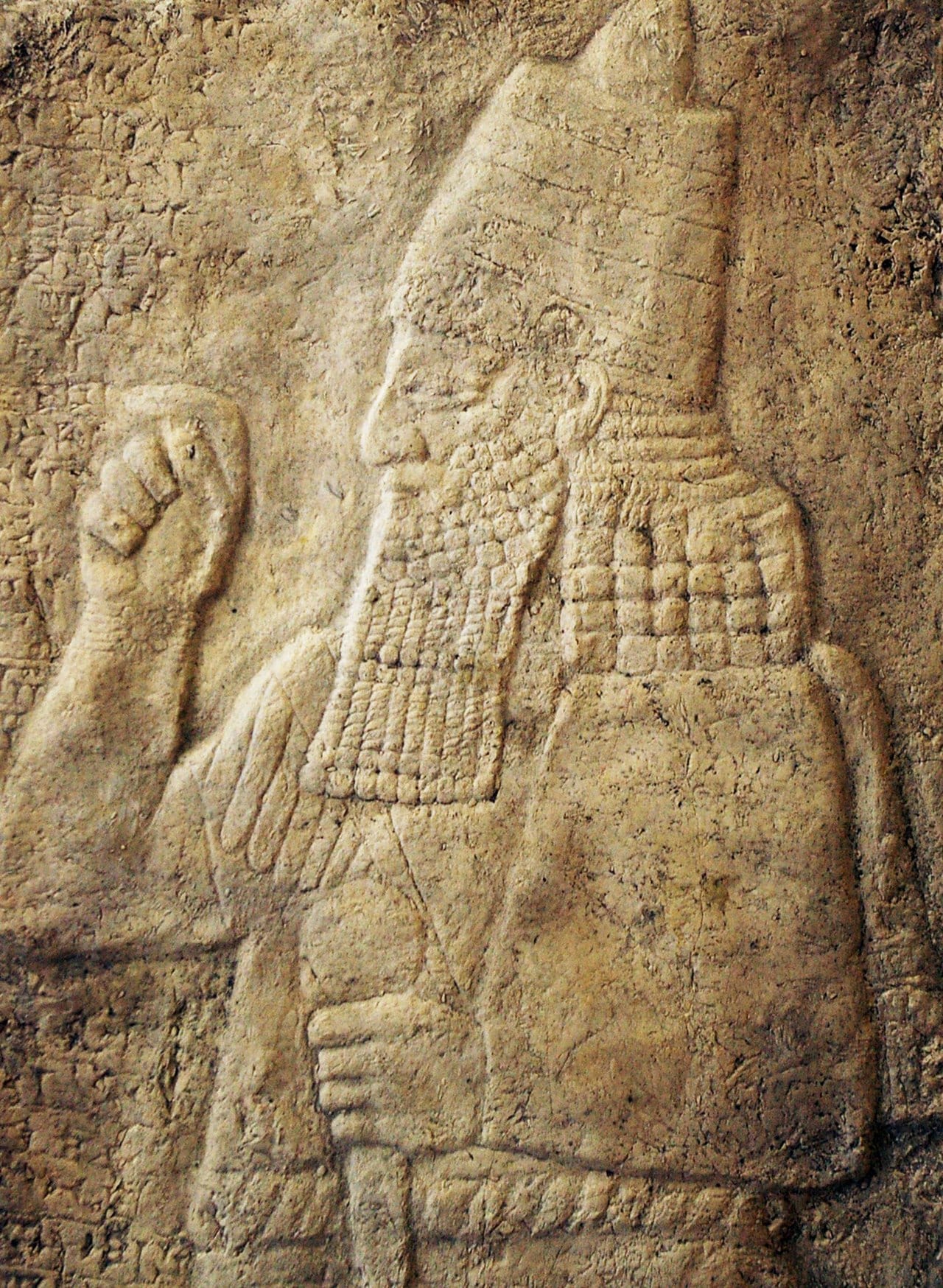
The Destruction of Sennacherib's Army
After King Hezekiah of Judah refused to surrender Jerusalem to the Assyrian Sennacherib, the angel of the Lord struck the besieging army in a single night — 185,000 men dead by morning. Sennacherib returned to Nineveh in disgrace and was murdered by his own sons (2 Kings 19; Isaiah 37).
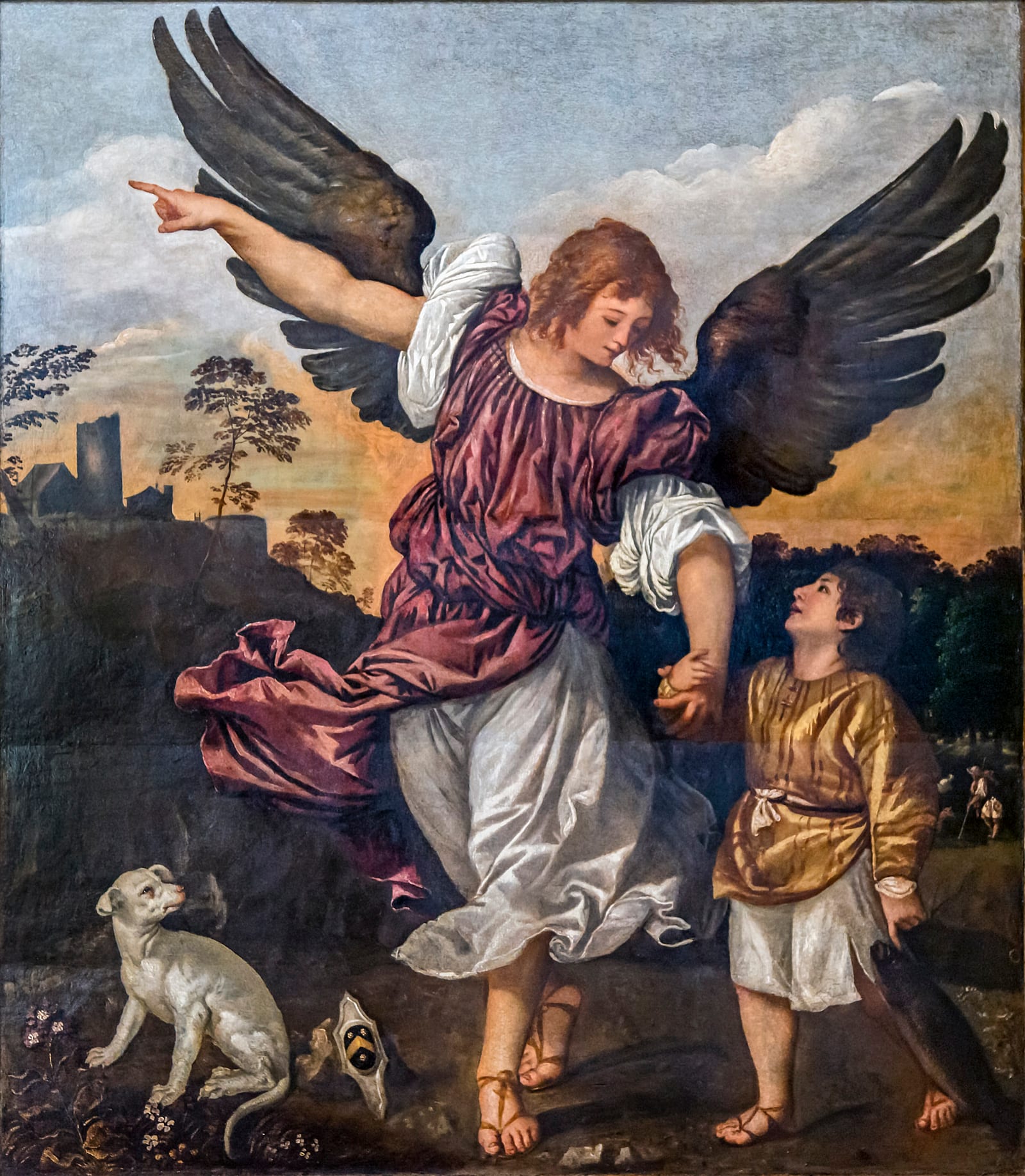
Tobit, Tobias, and the Archangel Raphael
The blind exile Tobit sent his son Tobias on a journey accompanied (unknown to either) by the Archangel Raphael in human form. Raphael cured Tobit's blindness with fish-bile, freed Sarah from a demon by burning a fish-heart, and revealed himself as 'one of the seven angels who stand before the glory of the Lord' (Tobit 12).
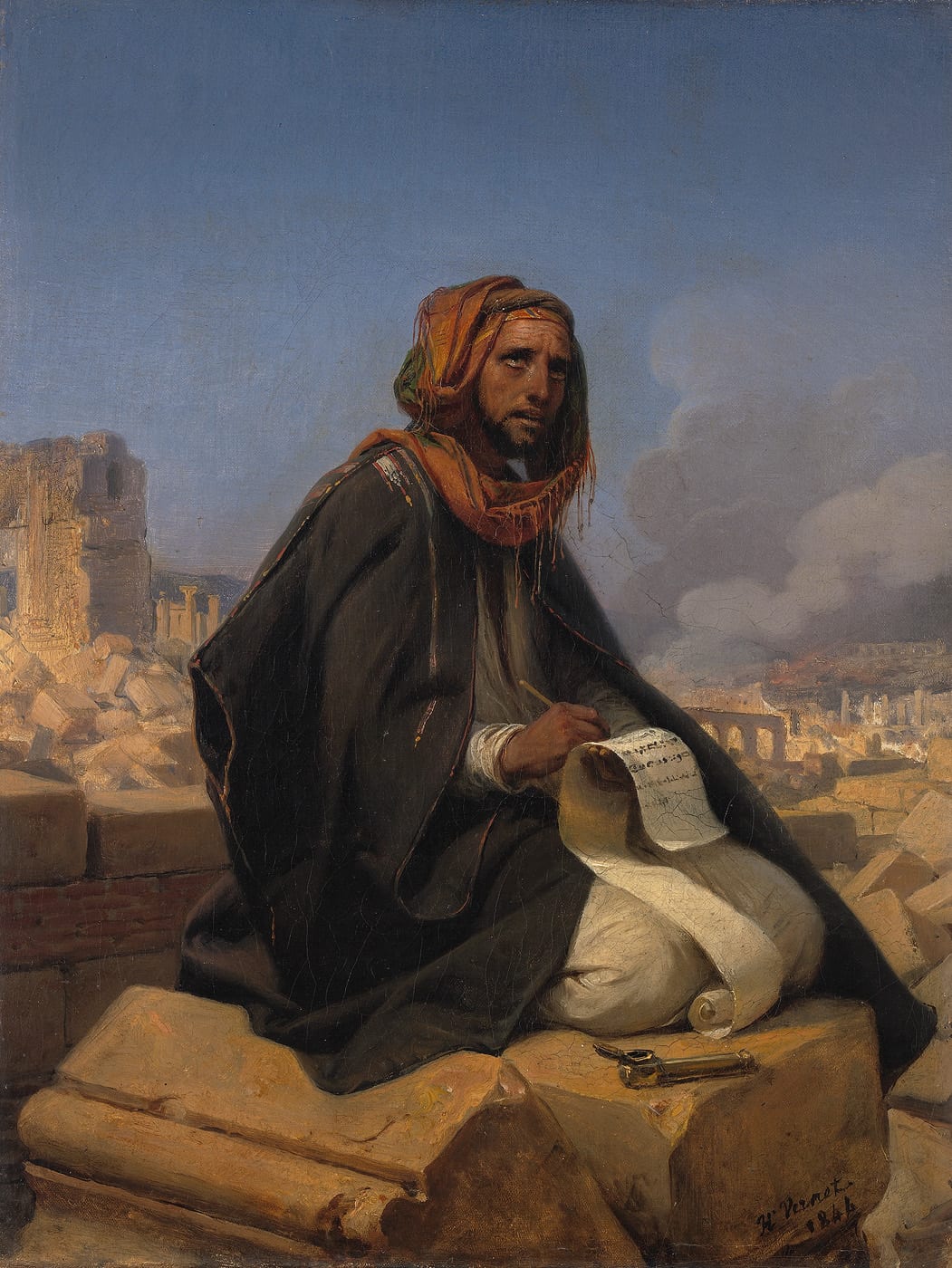
The Call of Jeremiah — Touched on the Lips
'Before I formed you in the womb I knew you, and before you were born I consecrated you; I appointed you a prophet to the nations.' Jeremiah protested his youth; the LORD stretched out His hand and touched his mouth: 'Behold, I have put my words in your mouth' (Jer 1).
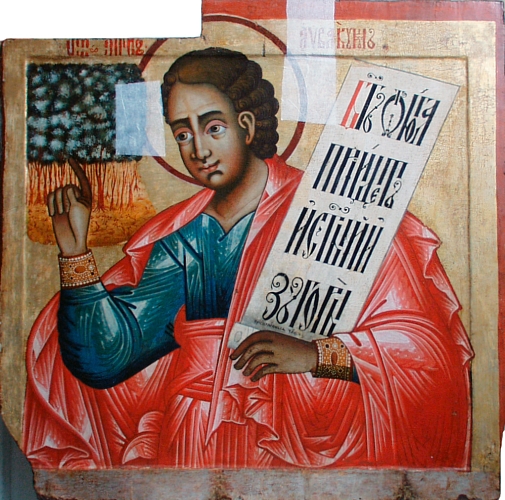
Habakkuk's Theophany
Crying out to God against the rise of the Babylonians, Habakkuk received a vision of the LORD coming from Teman, the Holy One from Mount Paran — pestilence going before Him, the eternal mountains scattering, the everlasting hills bowing down (Hab 3).
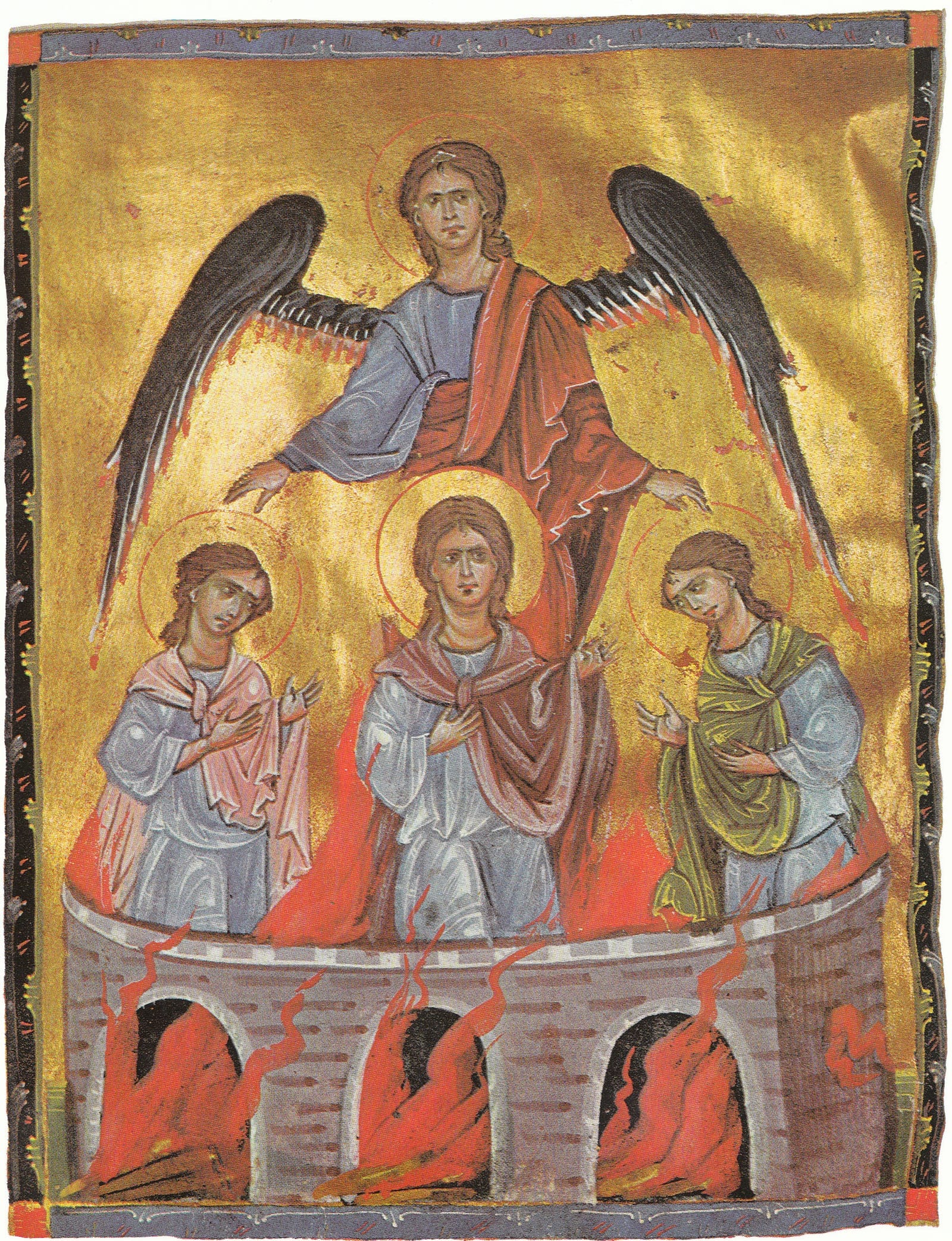
The Three Young Men in the Fiery Furnace
Shadrach, Meshach, and Abednego refused to worship Nebuchadnezzar's golden image; thrown into a furnace heated seven times hotter than usual, they were untouched, and a fourth figure 'like a son of the gods' walked with them in the fire (Daniel 3).
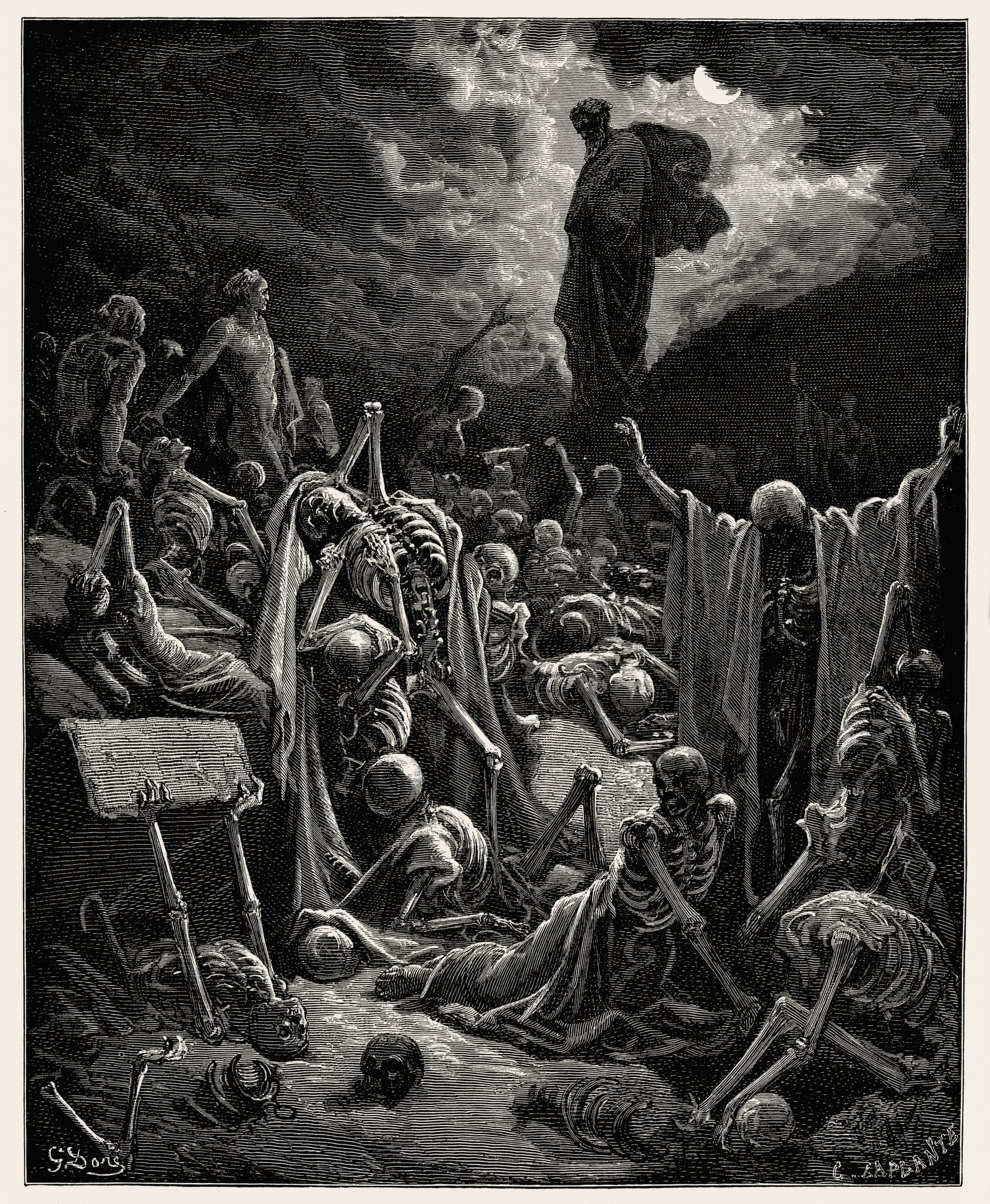
Ezekiel's Vision of the Valley of Dry Bones
The prophet Ezekiel, in exile in Babylon, was set down in a valley full of dry bones. 'Son of man, can these bones live?' At God's word he prophesied; the bones came together, sinews and flesh formed on them; the breath of the LORD entered them and they stood up — an exceedingly great army (Ezek 37).
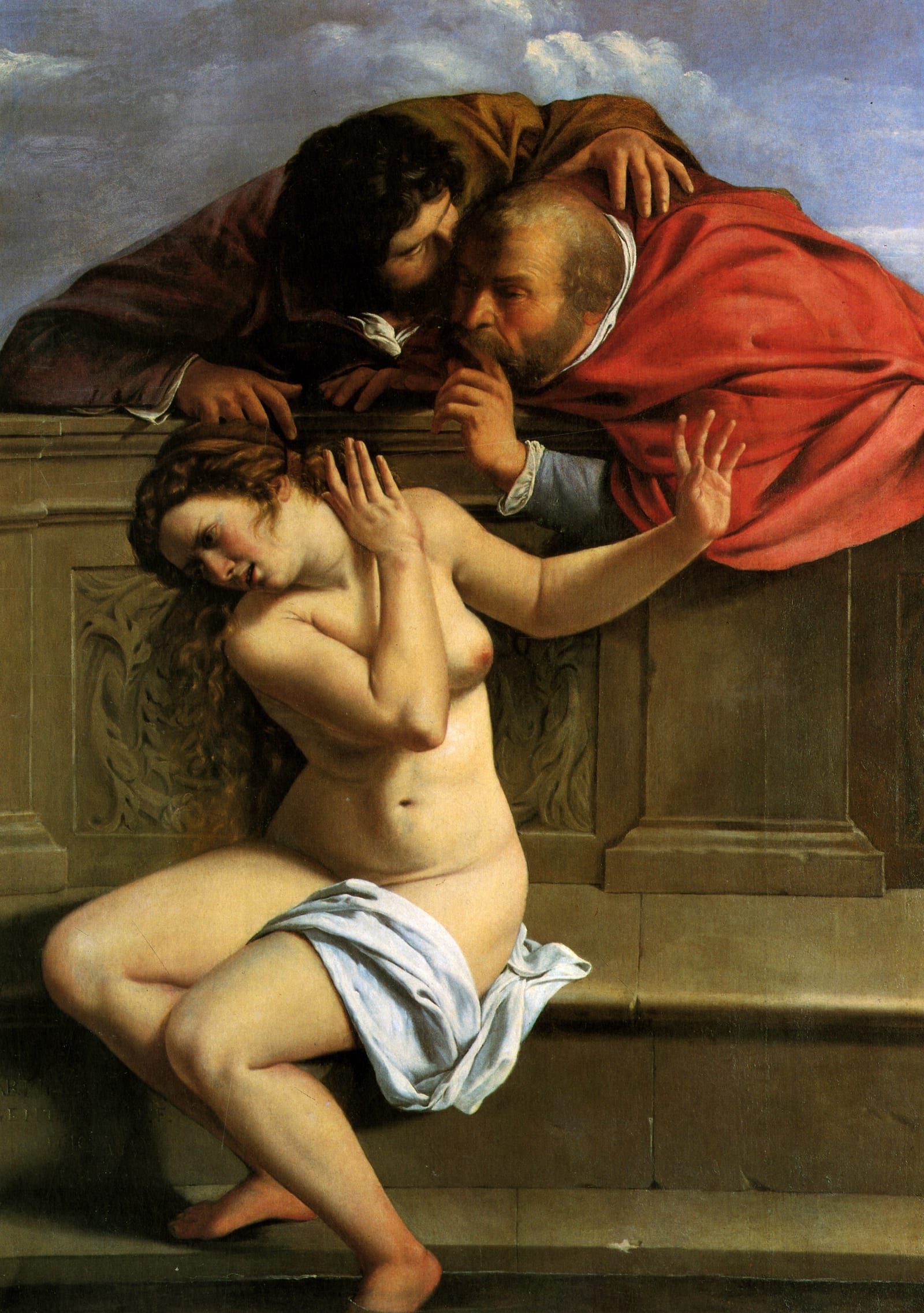
Susanna and Daniel
Two elders of the Jewish exile community in Babylon falsely accused the chaste Susanna of adultery, and condemned her to death by stoning. The young Daniel interrupted the verdict and questioned the two elders separately — exposing the conspiracy (Daniel 13 / Susanna).
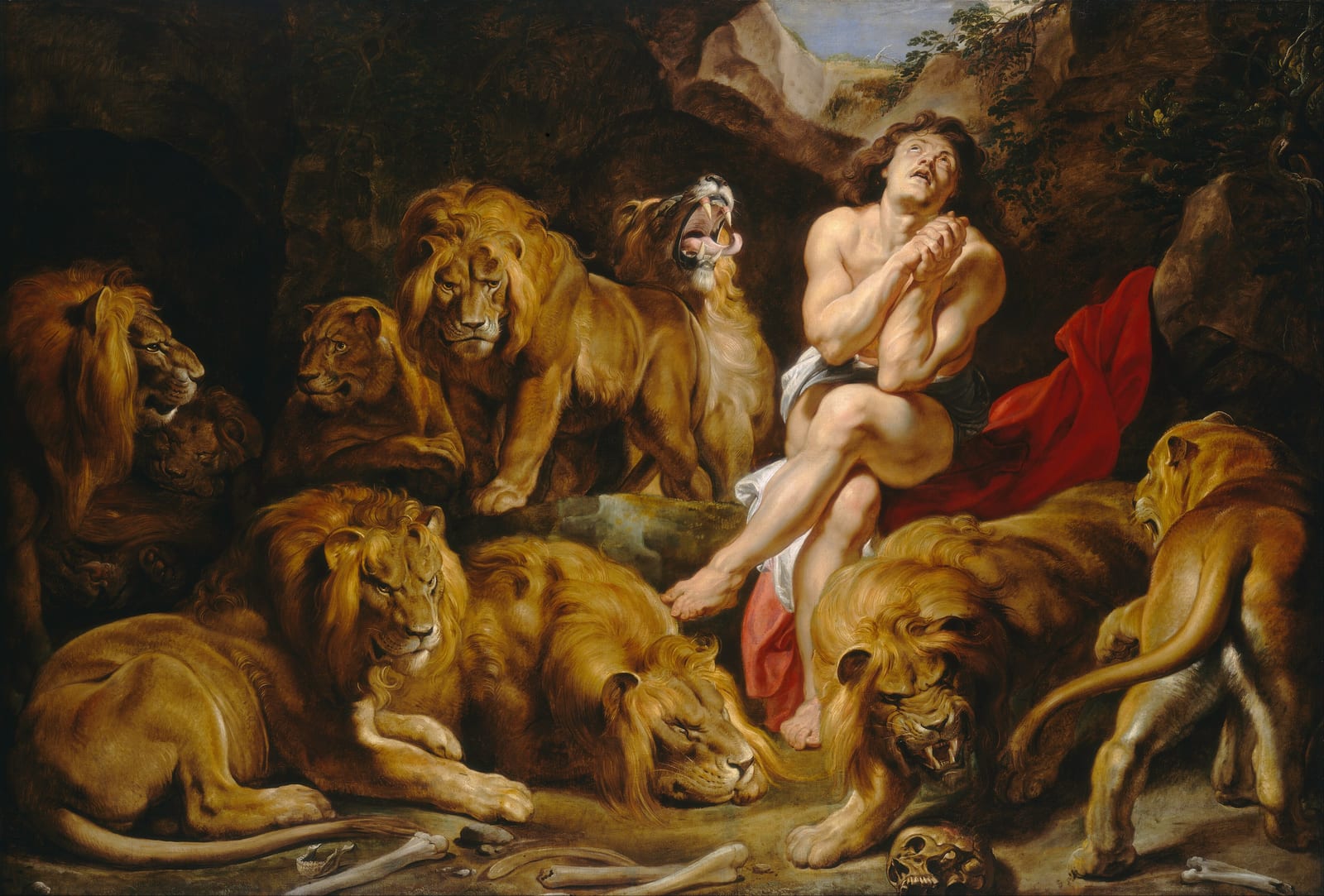
Daniel in the Lions' Den
When Darius outlawed prayer to any but himself, Daniel continued his thrice-daily prayers and was thrown to the lions. God 'shut the lions' mouths' (Dan 6:22), and Daniel emerged unharmed at dawn.
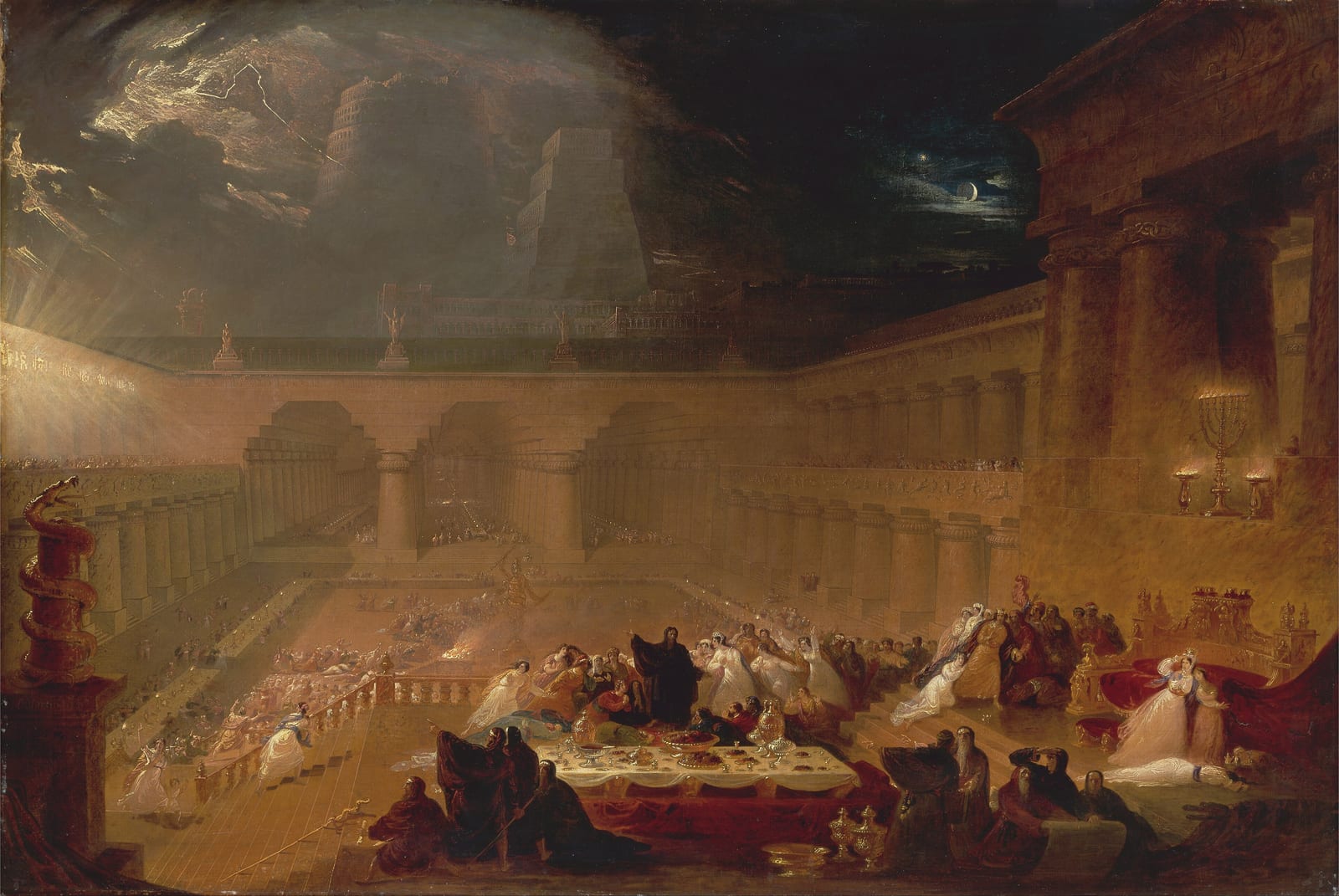
Belshazzar's Writing on the Wall
At a great drunken banquet, Belshazzar — last king of Babylon — drank from the gold cups stolen from the Jerusalem Temple. The fingers of a man's hand appeared and wrote on the palace wall: 'Mene, Mene, Tekel, Uparsin.' Daniel was brought in to interpret. That night Babylon fell (Dan 5).
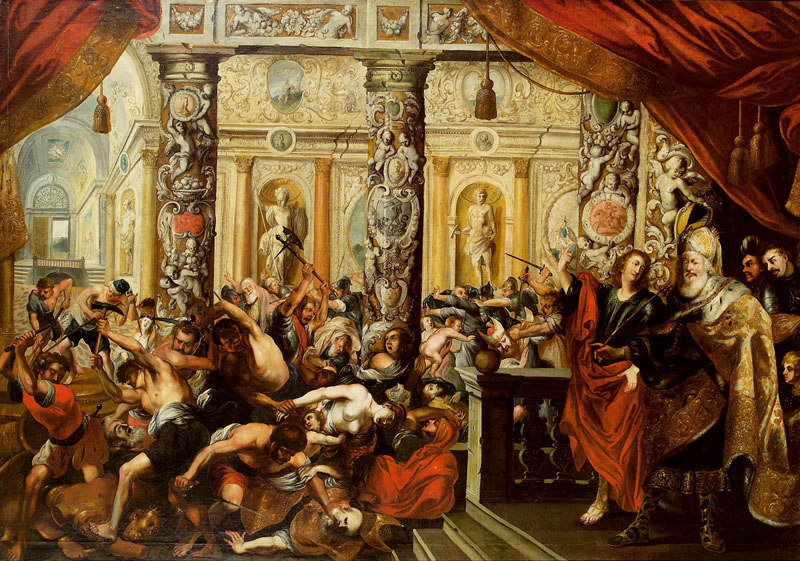
Daniel, Bel, and the Dragon
Daniel exposed the priests of Bel — who were secretly eating the offerings left for the idol — by scattering ashes on the temple floor and inviting the king to inspect in the morning. He then killed a sacred dragon by feeding it a cake of pitch, fat, and hair (Daniel 14 / Bel and the Dragon).
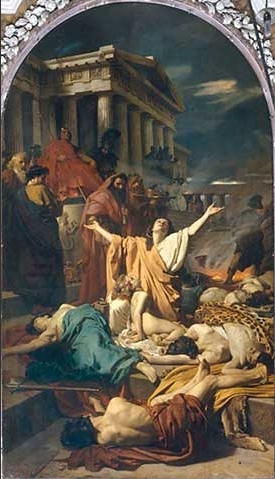
Eleazar and the Seven Maccabean Brothers
Refusing to eat pork in violation of the Law, the aged scribe Eleazar was tortured to death rather than feign compliance (2 Macc 6). Then seven brothers — one after another — were tortured and killed before their mother, who exhorted each one. She perished last. The earliest scriptural witnesses to resurrection faith (2 Macc 7).
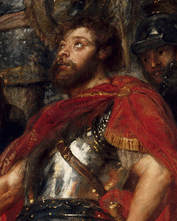
The Maccabean Rededication of the Temple
Three years after Antiochus IV Epiphanes desecrated the Temple by erecting an altar to Zeus and sacrificing swine on it, Judas Maccabeus and his brothers recaptured Jerusalem, purified the Temple, and rededicated the altar on the third anniversary of its profanation. The eight-day feast they instituted is Hanukkah (1 Macc 4).
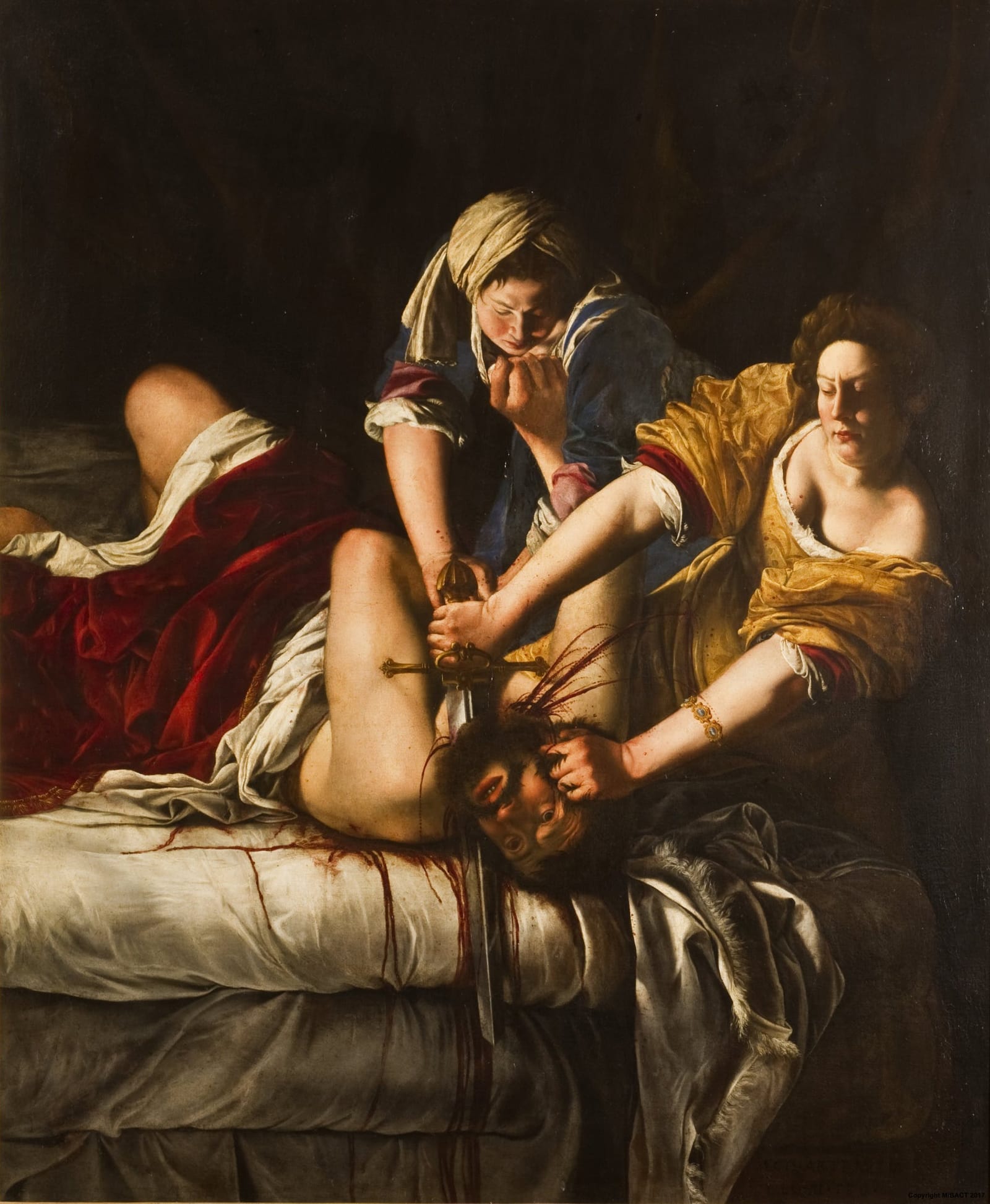
Judith and Holofernes
As the Assyrian general Holofernes besieged her city, the widow Judith of Bethulia entered the enemy camp with her maid, charmed Holofernes at a banquet, and at midnight beheaded him with his own sword. The Assyrians fled in panic at sunrise. The deuterocanonical Book of Judith.
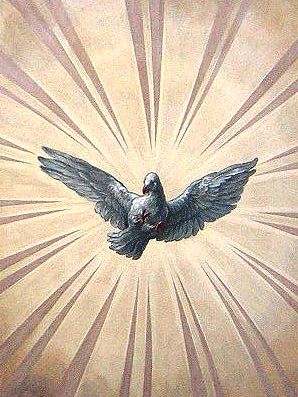
Pentecost — the Descent of the Holy Spirit
Fifty days after Easter, the apostles and Mary were gathered in the Upper Room when a sound like a violent wind filled the house and tongues as of fire appeared and rested on each of them. They went out and preached; the crowd of pilgrims in Jerusalem heard each one in his own native language (Acts 2).
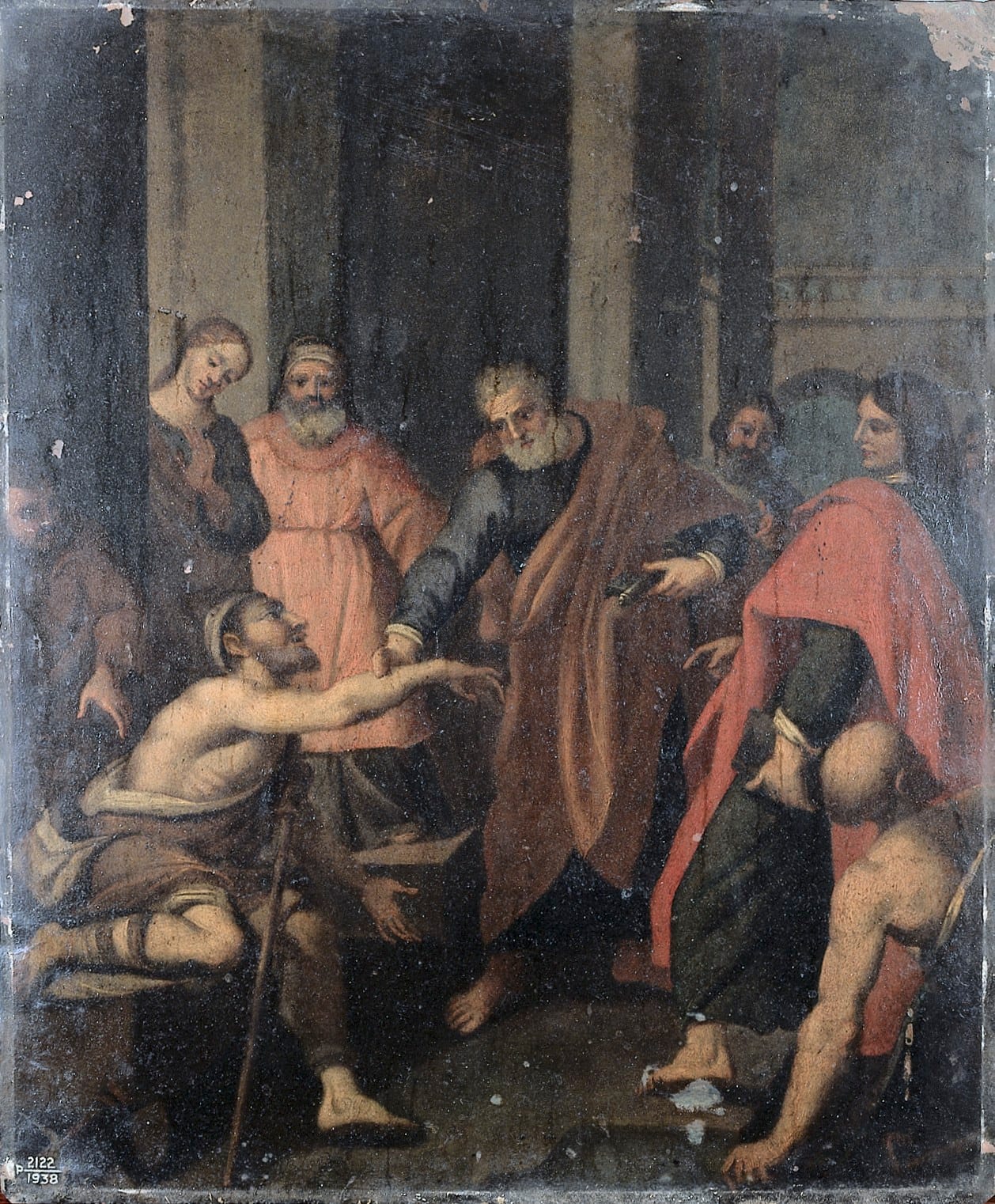
Peter and John at the Beautiful Gate
Going up to the Temple at the hour of prayer, Peter and John met a man lame from birth begging at the Beautiful Gate. 'I have no silver or gold, but what I have I give you; in the name of Jesus Christ of Nazareth, walk.' The first apostolic miracle (Acts 3).
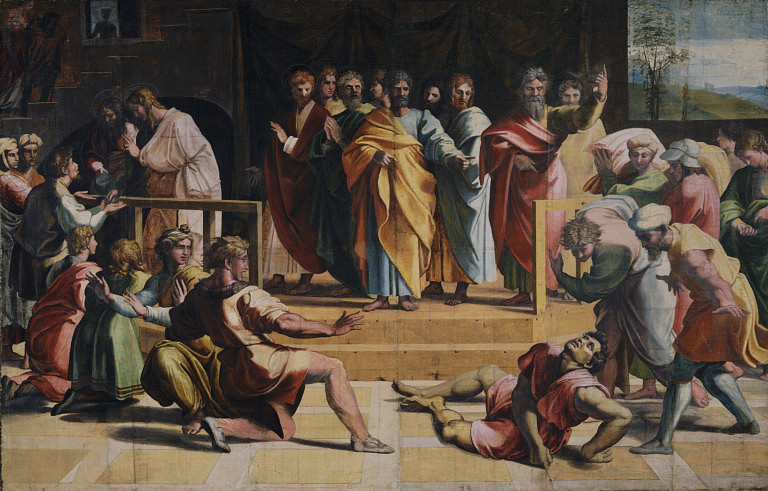
Ananias and Sapphira
A married couple of the early Jerusalem community sold a field and presented part of the proceeds to the apostles, while claiming it was the whole. Peter confronted Ananias: 'You have not lied to men but to God.' He fell down dead. Three hours later Sapphira likewise (Acts 5).
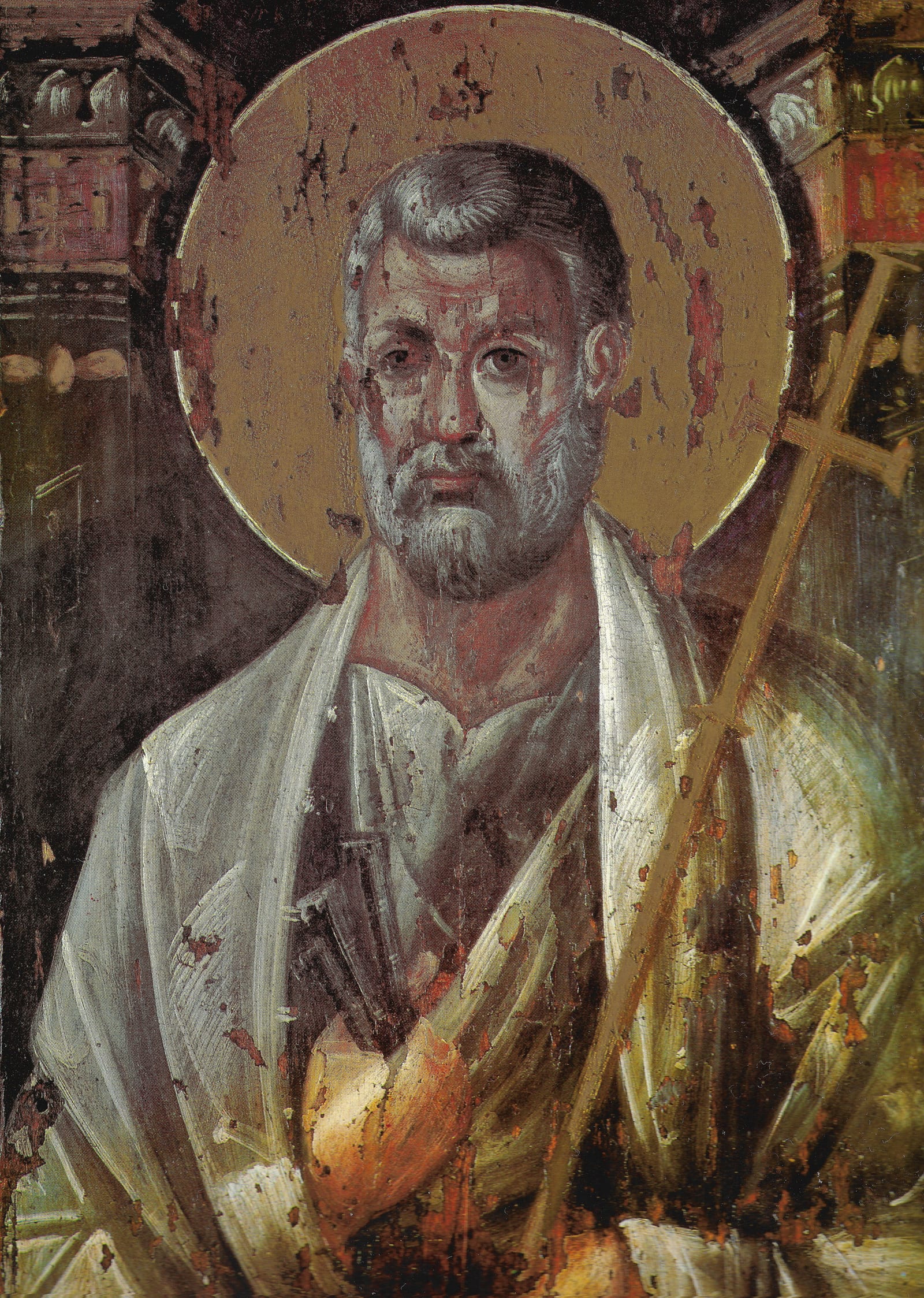
Peter's Shadow Heals
The early Christian community gathered daily in Solomon's Portico of the Temple. The people carried out the sick into the streets so that Peter's very shadow might fall on some of them as he passed by. They were all healed (Acts 5:12–16).
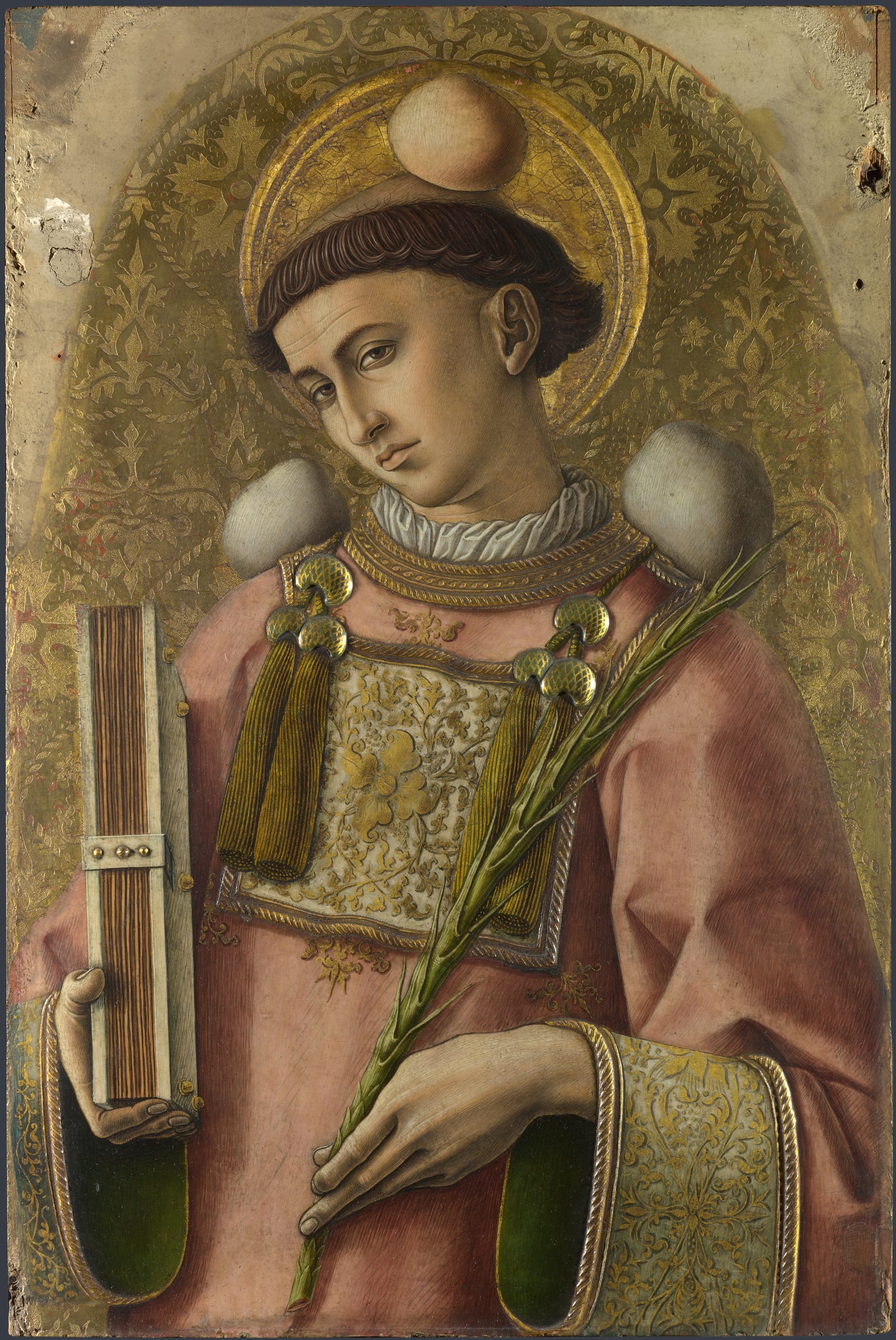
St. Stephen's Vision at his Martyrdom
On trial before the Sanhedrin, the deacon Stephen — full of the Holy Spirit — gazed into heaven and saw Christ standing at the right hand of God. They cast him out, stoned him, and Saul of Tarsus stood by holding the cloaks of the witnesses (Acts 7).
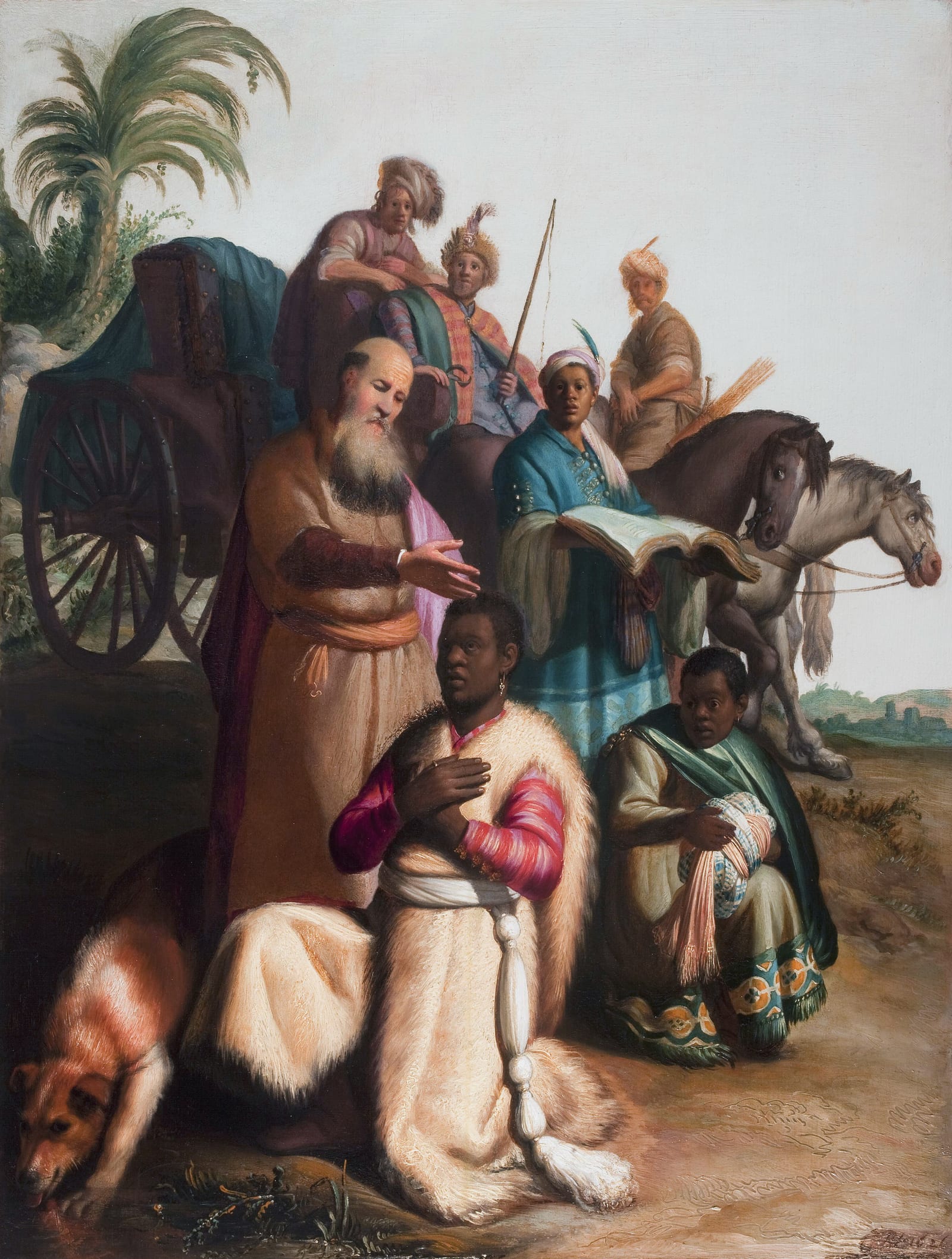
Philip and the Ethiopian Eunuch
An angel sent the deacon Philip from Samaria to a desert road. There he met a high official of the Ethiopian queen reading Isaiah 53 in his chariot. Philip baptized him at the first water. The Spirit caught Philip up and translated him to Azotus (Acts 8).
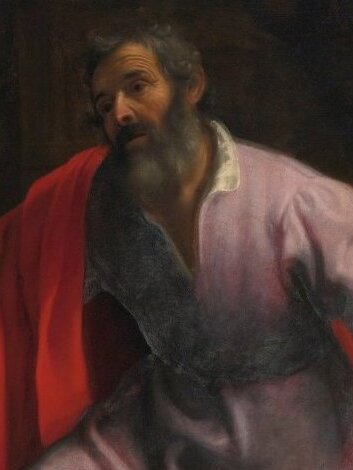
Cornelius and the Gentile Pentecost
An angel appeared to the Roman centurion Cornelius at Caesarea; Peter, prepared by a vision of unclean animals on a rooftop at Joppa, came to his house. As Peter preached, the Holy Spirit fell on the Gentile household before baptism — the opening of the Church to the nations (Acts 10).
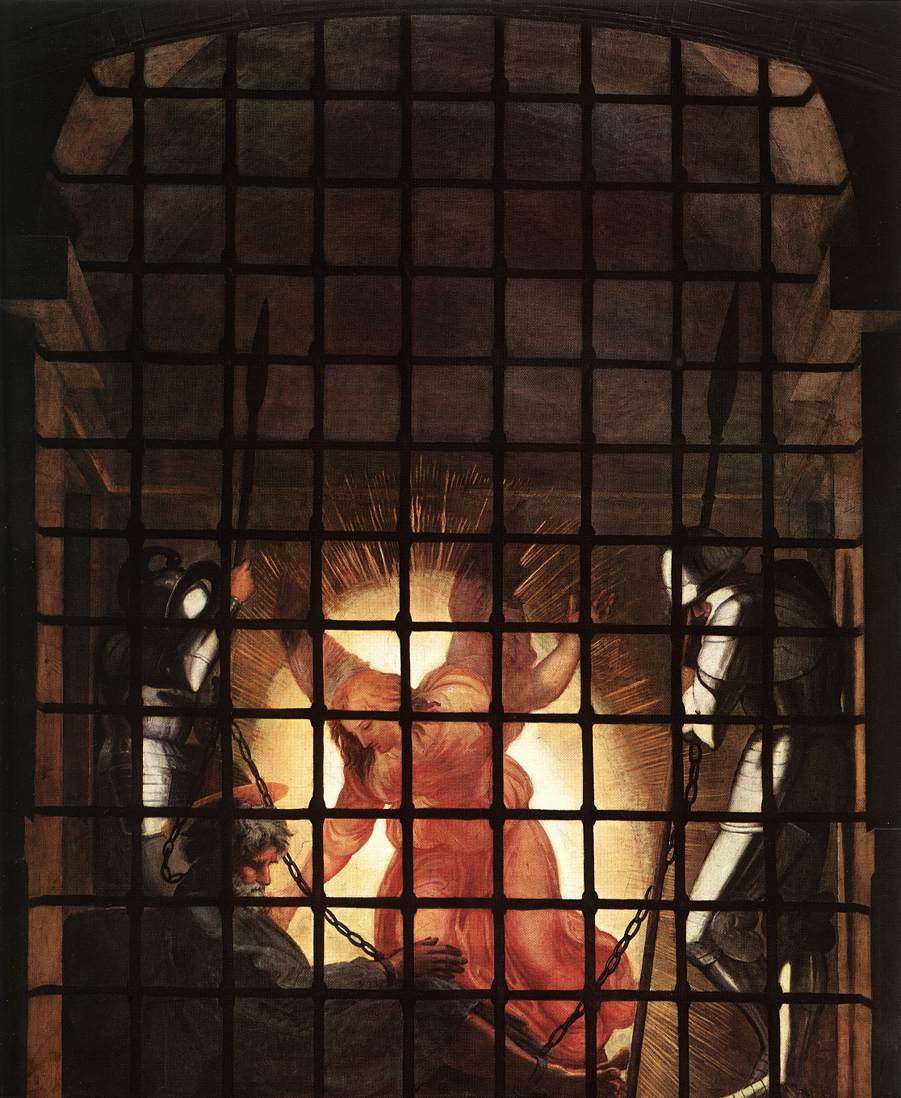
Peter's Escape from Prison
The night before Herod Agrippa's planned execution of Peter, an angel of the Lord woke him in his cell — chained between two soldiers. The chains fell off; the iron gate of the prison opened of itself; he walked free into the Jerusalem street (Acts 12).
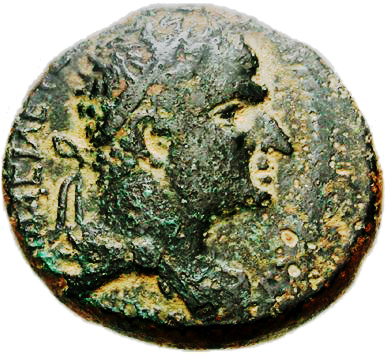
The Death of Herod Agrippa I
Herod Agrippa I — who had killed James the brother of John and arrested Peter — appeared at Caesarea in dazzling royal apparel and accepted the crowd's acclamation as a god. 'Immediately an angel of the Lord smote him, because he did not give God the glory; and he was eaten by worms and died' (Acts 12:20–23).
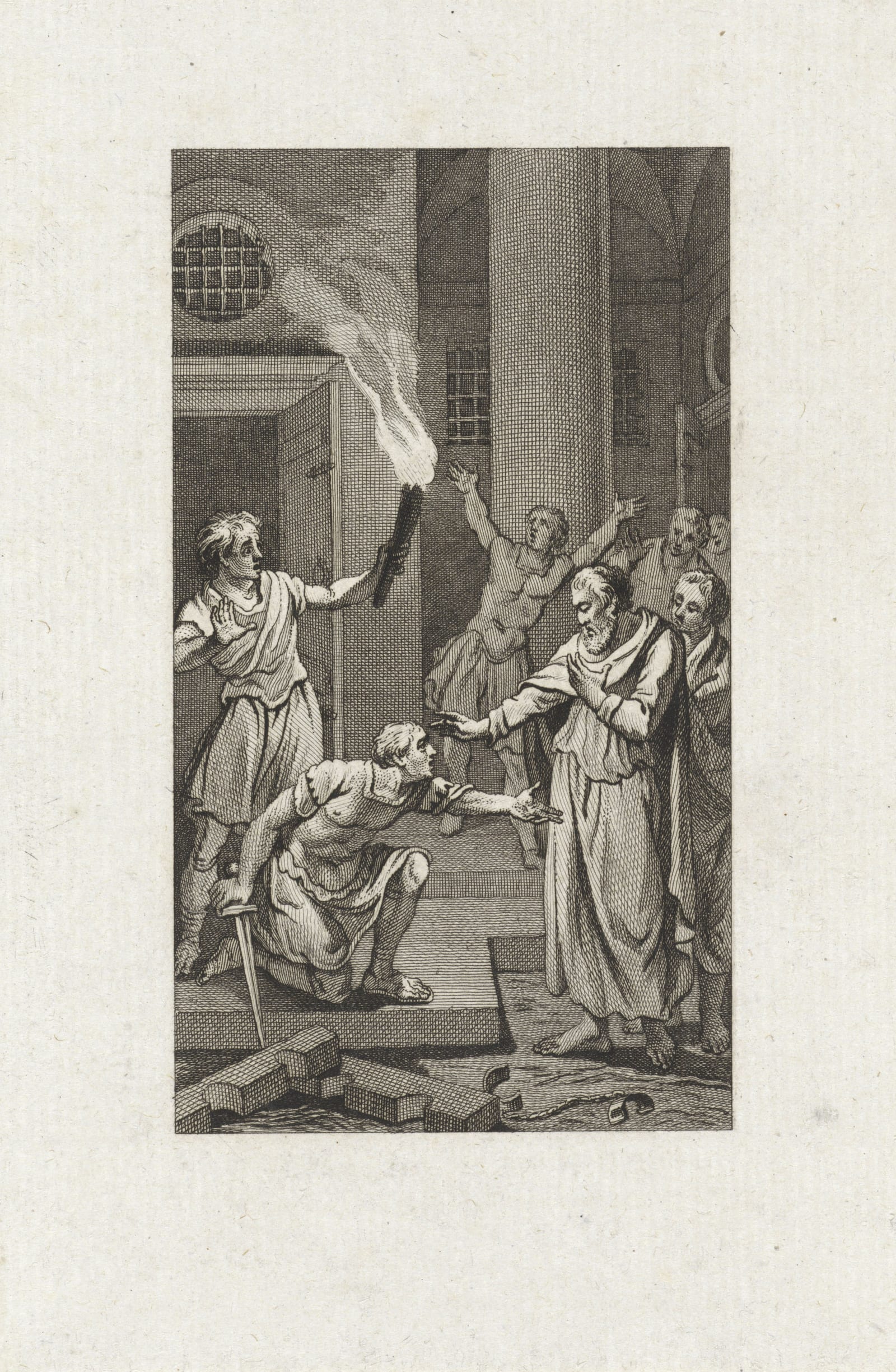
Paul and Silas — the Earthquake at Philippi
Beaten and chained in the inner cell of the Philippi jail after Paul exorcised a slave-girl, Paul and Silas sang hymns at midnight. A sudden earthquake shook the foundations; doors opened, chains fell off. The Roman jailer drew his sword to kill himself; Paul stopped him. The jailer was baptized that night (Acts 16).
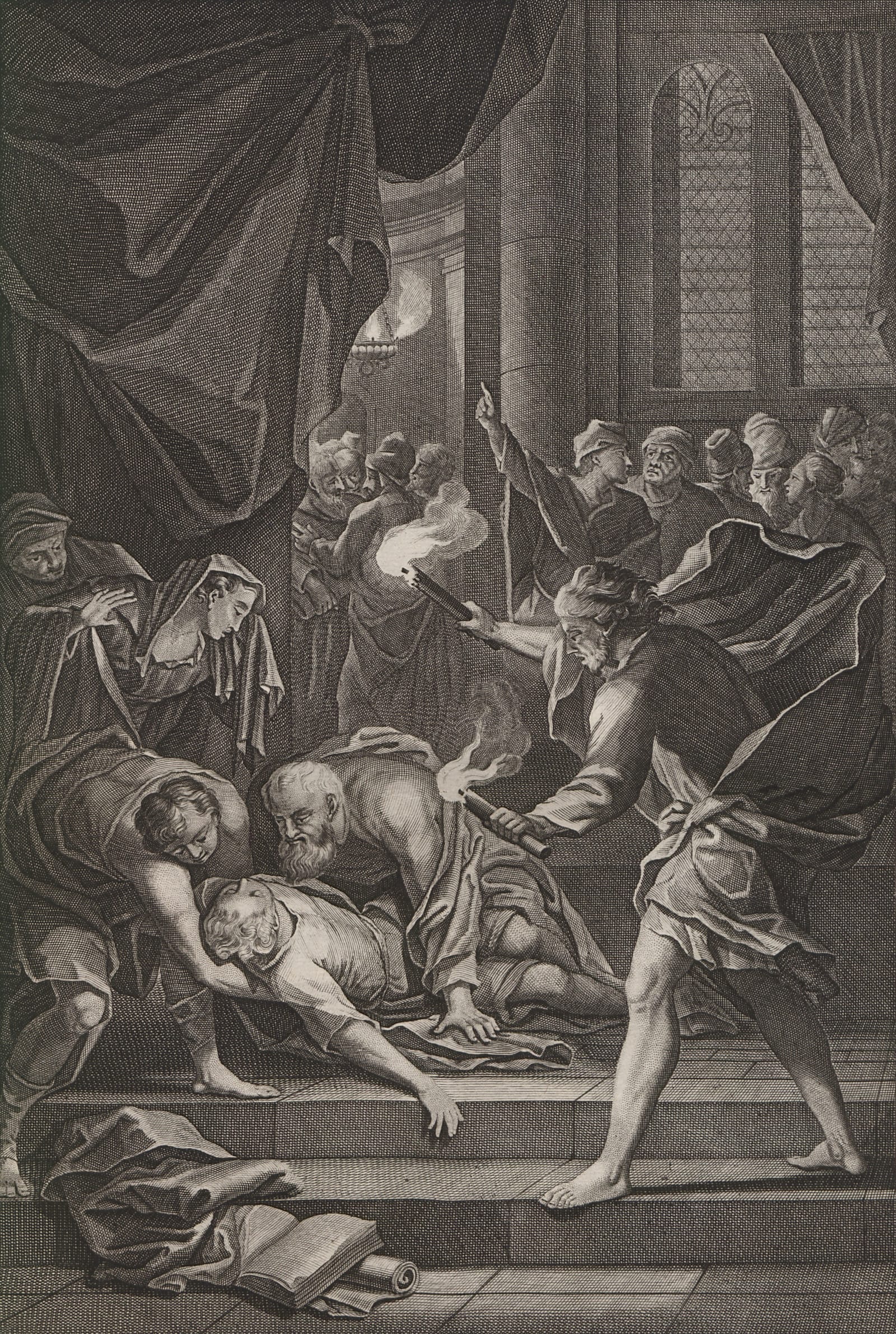
Paul Raises Eutychus at Troas
Preaching late into the night at Troas, Paul kept the assembly until midnight. A young man named Eutychus, sitting in a third-storey window, fell asleep, fell out, and was picked up dead. Paul went down, embraced him: 'Do not be alarmed, for his life is in him.' He was alive (Acts 20:7–12).
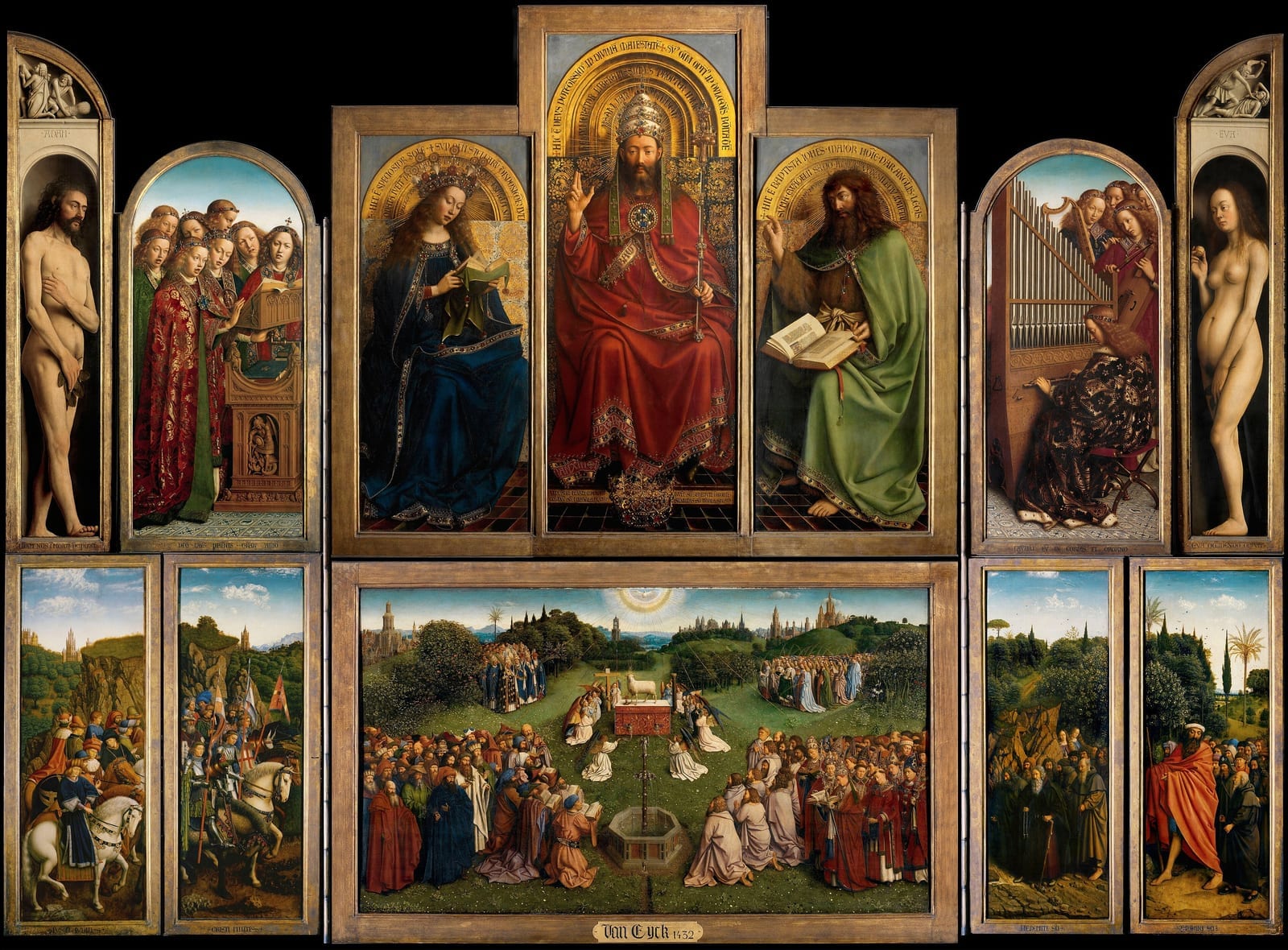
The Vision of the Lamb at the Throne
On the Lord's Day on Patmos, John saw a door opened in heaven and was taken up in the Spirit. He beheld the throne of God surrounded by twenty-four elders, four living creatures, and 'a Lamb standing as though it had been slain' — the central vision of the Book of Revelation (Rev 4–5).
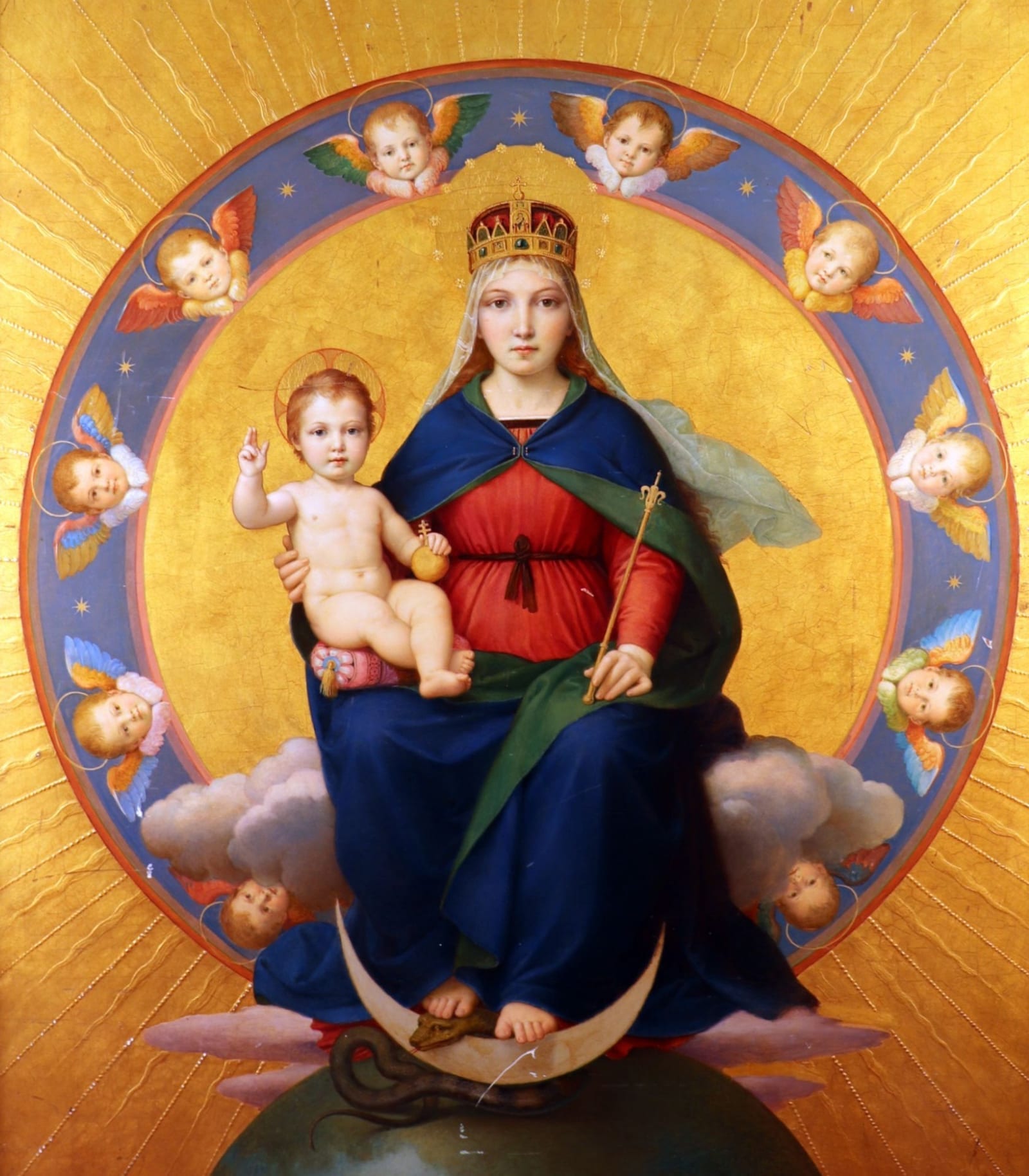
The Woman Clothed with the Sun
John saw a great sign in heaven: a woman clothed with the sun, with the moon under her feet and on her head a crown of twelve stars. She was about to give birth, while a great red dragon stood before her to devour her child (Rev 12).
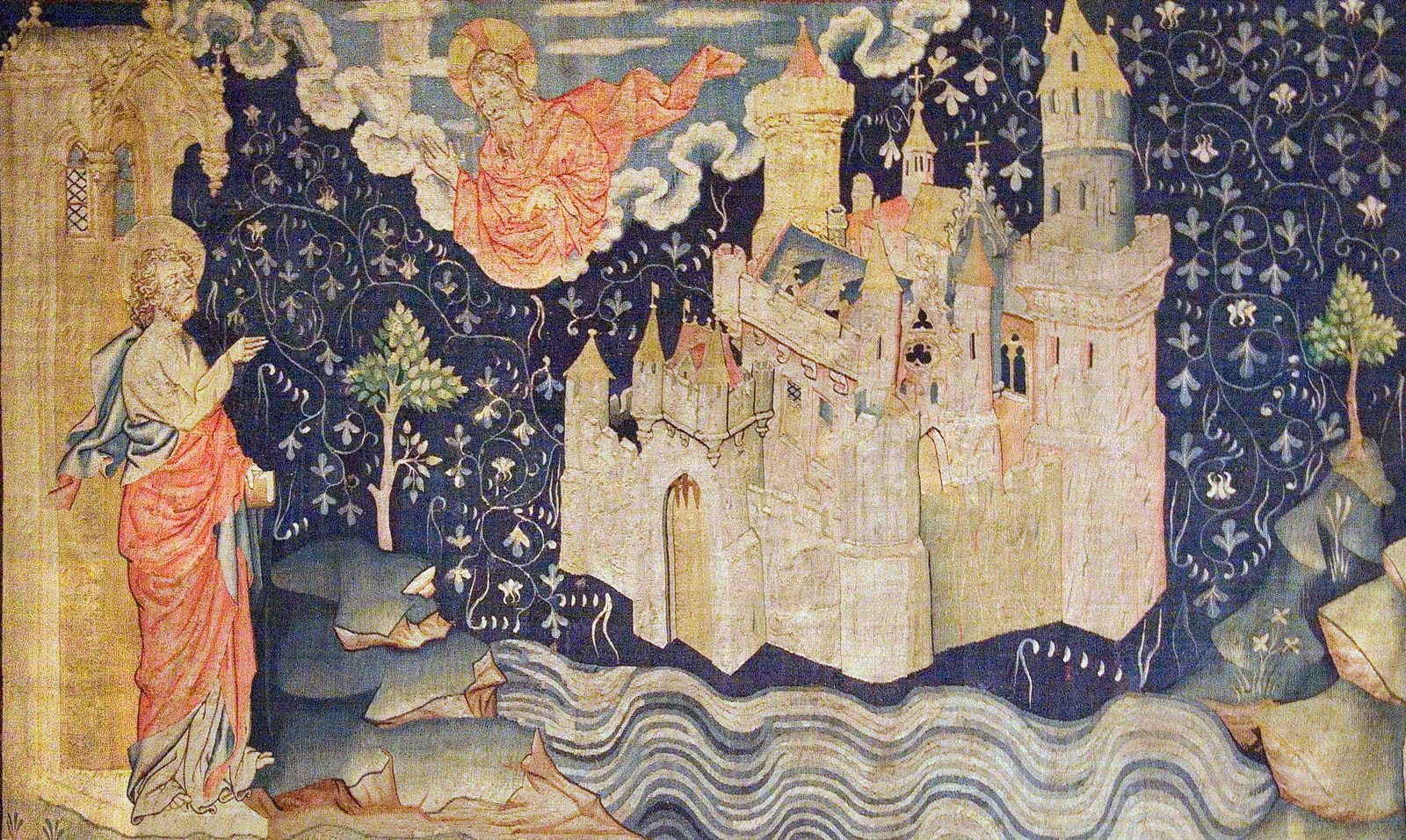
The New Jerusalem Coming Down from Heaven
At the close of the Apocalypse John saw the new heaven and the new earth, and the new Jerusalem coming down from God out of heaven, prepared as a bride adorned for her husband. 'Behold, I make all things new' (Rev 21).