
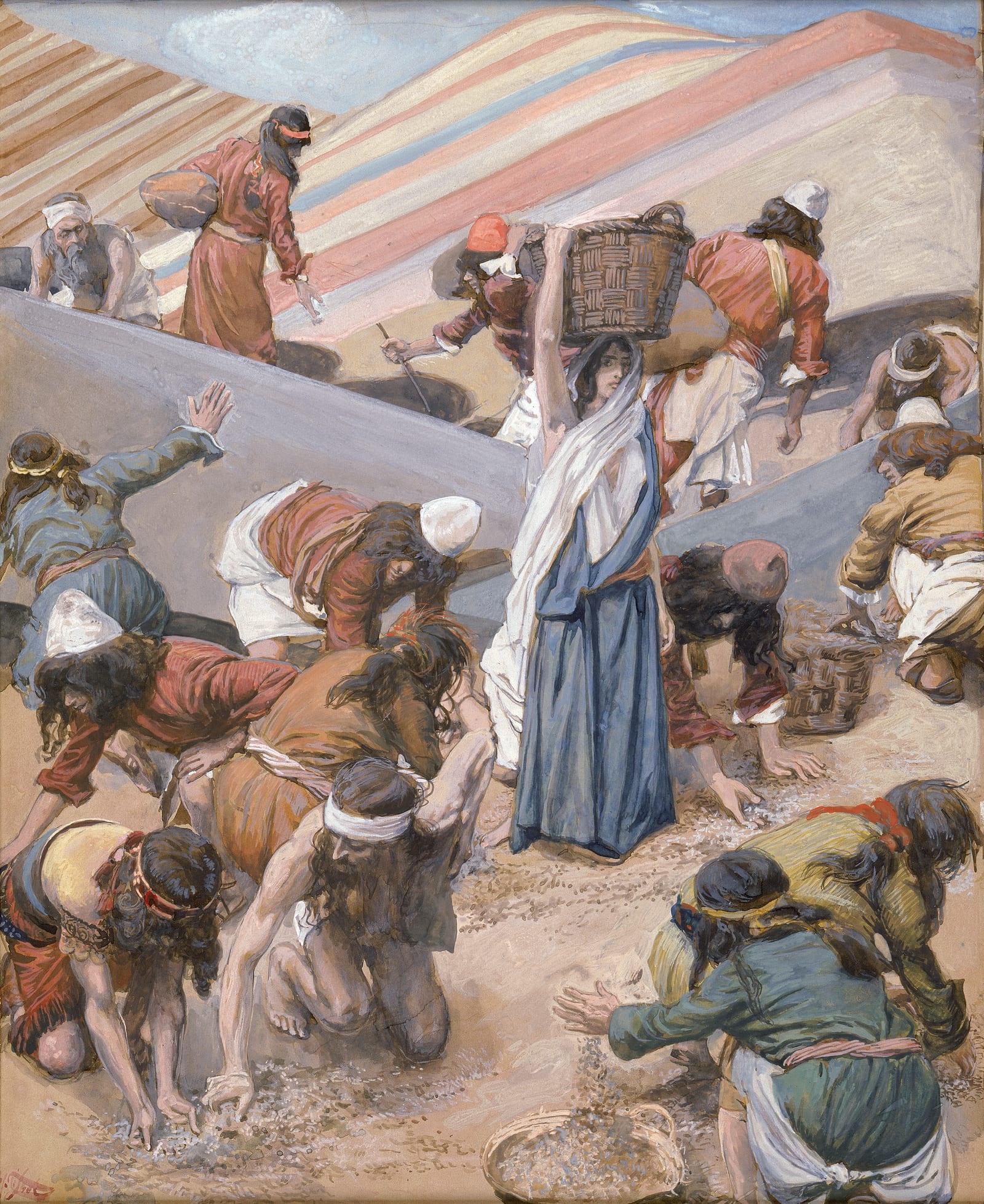
In the wilderness, when Israel had no food, the people murmured against Moses and Aaron. The Lord said: 'I am going to rain bread from heaven for you' (Exodus 16:4). Each morning, when the dew had lifted, a fine flaky substance appeared on the desert floor. The people called it manna — Hebrew for 'What is it?'
It tasted like wafers made with honey. Each household gathered an omer per person per day. None could be stored — by morning it bred worms — except on the sixth day, when a double portion appeared and the seventh day's share kept fresh, so that no one would gather on the Sabbath. Manna fell daily for forty years, until Israel entered the promised land.
Christ ties Himself directly to this sign in John 6: 'Your ancestors ate the manna in the wilderness, and they died. This is the bread that comes down from heaven, so that one may eat of it and not die. I am the living bread that came down from heaven' (John 6:49–51). The Eucharist is the manna of the new covenant.