
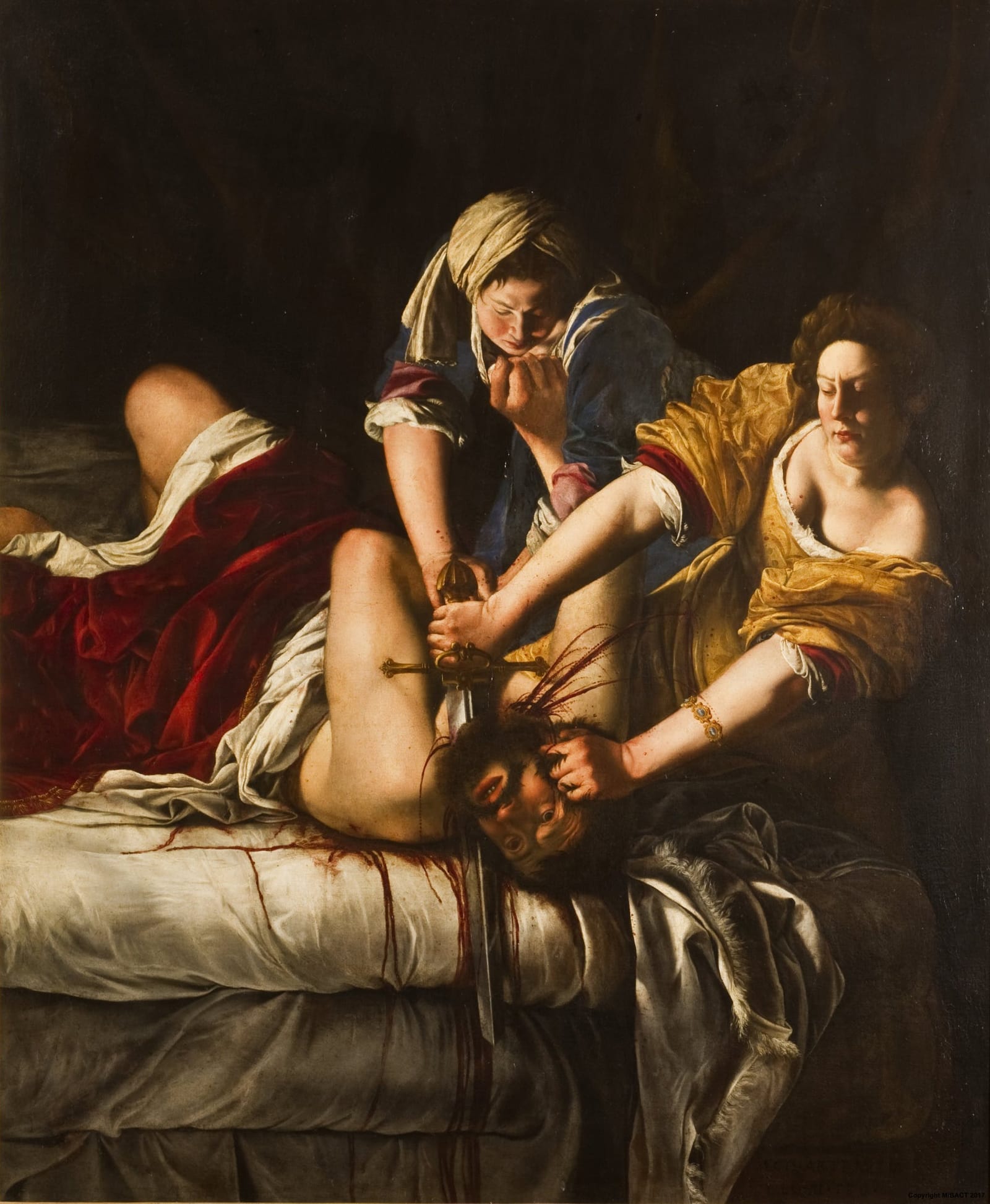
The deuterocanonical Book of Judith (Catholic and Orthodox Bibles) tells of the widow Judith of the Israelite city of Bethulia, besieged and on the brink of surrender by the Assyrian army of Nebuchadnezzar's general Holofernes. With her maidservant Judith went out from the city by night, entered the Assyrian camp, and was brought to Holofernes' tent — where her beauty and apparent willingness to betray Israel won her his confidence.
Over four days she dined with him. On the fourth night, when he was drunk and asleep in his tent, she took down his own sword and with two strokes severed his head. Hiding the head in her food-bag, she and her maid walked out of the camp under the pretext of going to pray — and returned to Bethulia. Her account roused the city; at dawn the Israelites attacked; finding their general decapitated, the Assyrian army fled in panic. The story has been a major subject of Western art (Caravaggio, Artemisia Gentileschi, Klimt) and is the founding scriptural text for Mary as the new Judith ('she crushed the head of the serpent').