
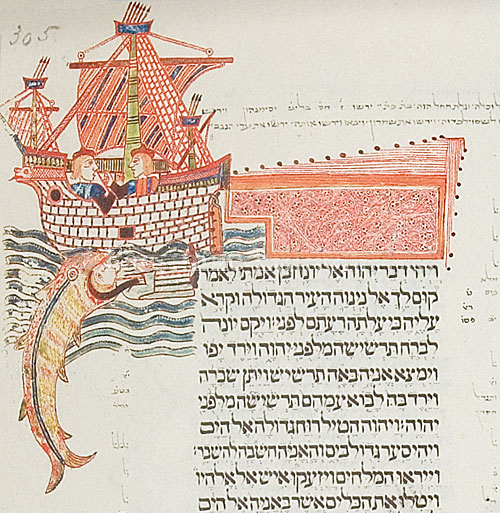
The word of the Lord came to Jonah, son of Amittai: 'Go at once to Nineveh, that great city, and cry out against it.' But Jonah fled in the opposite direction. He went down to Joppa, found a ship bound for Tarshish (the western edge of the known world), and sailed away from the presence of the Lord.
The Lord hurled a great wind upon the sea, and the storm was so violent that the ship threatened to break up. The pagan sailors cast lots to discover who was responsible; the lot fell on Jonah. He confessed: 'I am a Hebrew. I worship the LORD, the God of heaven, who made the sea and the dry land' (Jonah 1:9). At his own instruction, they threw him overboard, and the sea ceased its raging.
The Lord provided a great fish that swallowed Jonah; he was in its belly three days and three nights. From there he prayed: 'Out of the belly of Sheol I cried, and you heard my voice' (Jonah 2:2). The fish vomited him out onto dry land, and Jonah went and preached to Nineveh — and the great city, from king to commoner, repented in sackcloth and ashes. Christ Himself names this episode as the only sign His generation would be given: 'For just as Jonah was three days and three nights in the belly of the sea monster, so for three days and three nights the Son of Man will be in the heart of the earth' (Matthew 12:40). The traditional Tomb of Jonah stood on Tell Nebi Yunus at Mosul (ancient Nineveh) until it was destroyed by ISIS in 2014; archaeologists subsequently discovered a previously unknown Assyrian palace beneath the site.