
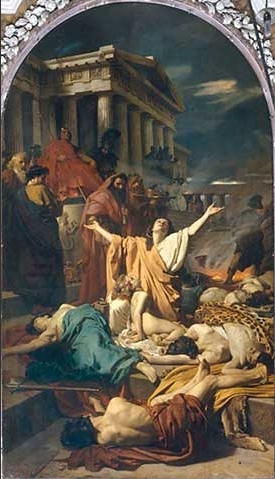
In the persecution of Antiochus IV Epiphanes (167 BC) — which would precipitate the Maccabean Revolt — Eleazar, an aged scribe of high reputation, was forced to open his mouth to eat the flesh of swine. Refusing, and unwilling to feign compliance (as his torturers privately offered to allow), he was beaten to death. His dying words: 'Therefore by departing manfully out of this life I shall show myself worthy of mine old age, and leave a notable example to such as be young to die willingly and courageously for the honourable and holy laws.'
On a different occasion, seven brothers and their mother were arrested. One by one, in the king's presence and before each other, they were tortured to death — flayed, fried in pans, dismembered. Each, before dying, professed faith in the resurrection of the body: 'The King of the world shall raise us up, who have died for his laws, unto everlasting life' (2 Macc 7:9). Their mother, exhorting each in Hebrew, was the most extraordinary of the witnesses: 'I know not how you came into my womb; for I neither gave you breath nor life... but doubtless the Creator of the world... will also of his own mercy give you breath and life again.' She perished last. The 2 Maccabees 7 narrative is the earliest and clearest scriptural witness to bodily resurrection — predating the Pharisaic-Jewish development that would set the stage for the Christian proclamation of Christ's own Resurrection two centuries later.