
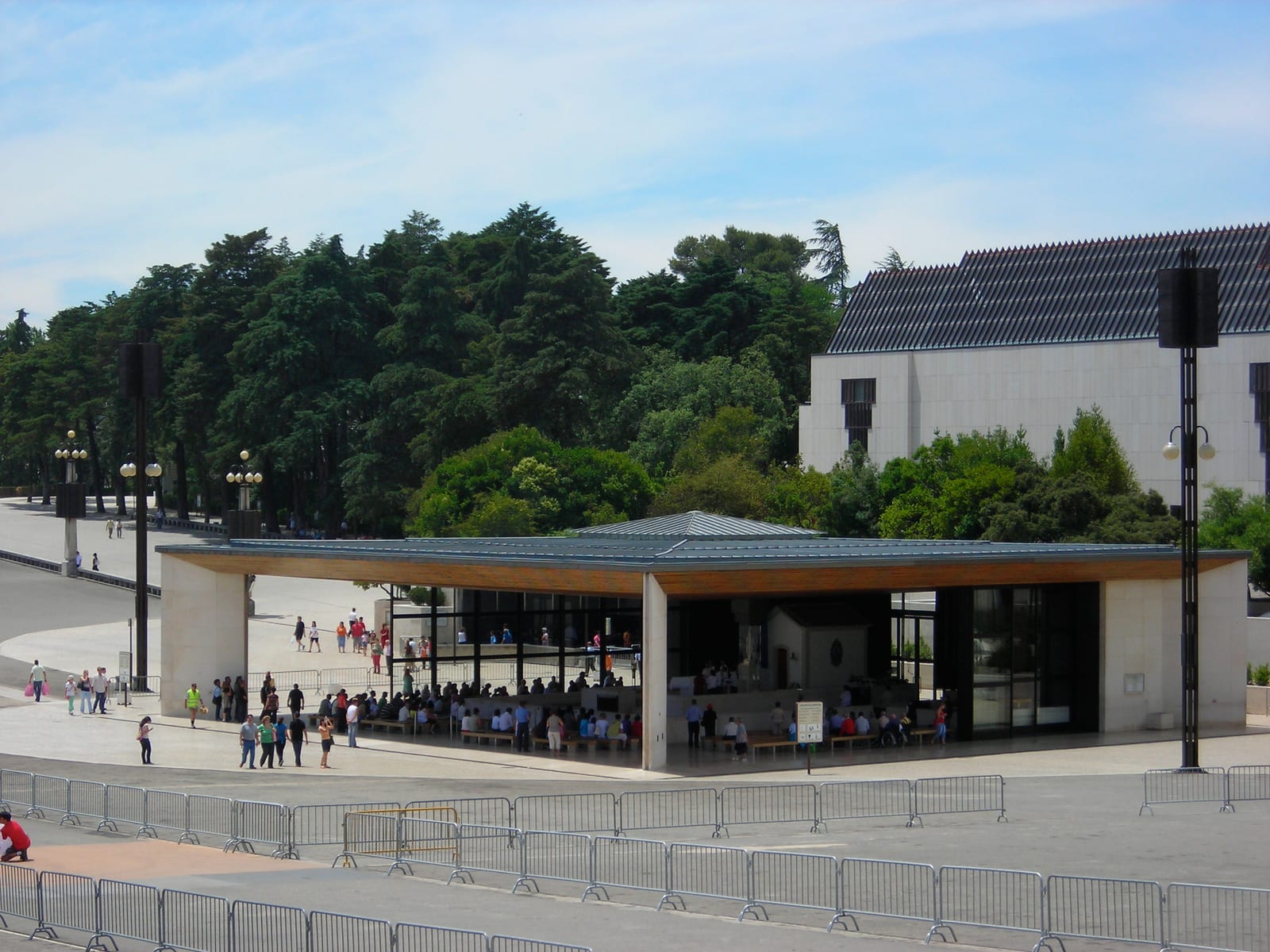
On the night of March 6, 1922, anti-clerical militants — never conclusively identified but generally attributed to the Portuguese Grand Orient masonic lodges then in political power under the First Republic — placed five improvised bombs at the Capelinha das Aparições, the small chapel that had been built in June 1919 at the site of the Fátima apparitions of 1917.
Four bombs were placed inside or against the chapel; a fifth was placed at the base of the holm oak (or its stump) where the Virgin had appeared to the three shepherd children. Three of the four chapel bombs detonated and destroyed the wooden roof, the altar, and much of the interior. The fourth bomb, and the bomb at the tree, failed to detonate; both were later recovered by police.
The statue of Our Lady of Fátima, sculpted in 1920 by José Ferreira Thedim to Lúcia dos Santos's specifications, had been moved to the parish church of Fátima two days before the attack for a scheduled procession, and was untouched. Pilgrimages to the site continued uninterrupted; the chapel was rebuilt within months and remains at the exact spot at the heart of the Fátima sanctuary today.