Potunduva was a river port on the Tietê, a stopping place for the monções — the canoe convoys that carried goods and people between São Paulo and the mines of Cuiabá. By the account told in São Paulo and in Jaú, about 1810 Manuel Portes, the foreman of a convoy coming down from Cuiabá, punished one of his boatmen, Apolinário, for indiscipline; when Portes's back was turned, the man struck him from behind with a machete and fled.
Dying on the riverbank, Portes called out for a confessor, and for Frei Galvão. A friar came out of the forest, waved the onlookers back, sat down and took the dying man's head in his lap, heard his confession and absolved him — and was gone. At that hour, the story goes, Frei Galvão was in São Paulo. In one telling he broke off a sermon to ask the people to pray for a man dying far away; in another he fell silent for half an hour at the Luz and then said, 'I made a very long journey. I am very tired.'
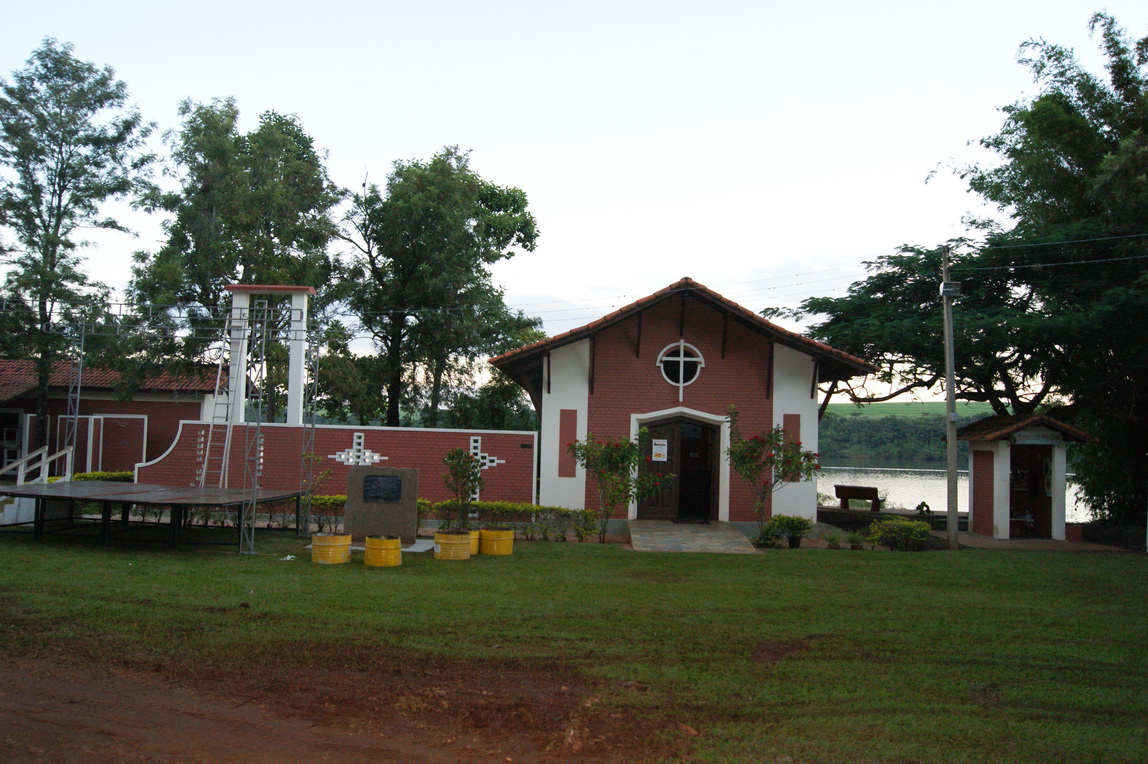
Portes was buried at the port under a rough cross. A small chapel of Frei Galvão was later built at the spot, with a picture of the friar hearing a dying man's confession, and the flood of 1950 swept it away. Today a cross on the riverbank marks the place, beside the Santuário Frei Galvão — a brick chapel with a small memorial shrine to him at the water's edge — and the city of Jaú starts its pilgrim road, the Caminho Peregrino Via Lucis — some 110 kilometres on foot — from it.
Other stories of the same kind are told of him: that he came to a woman in a hard labour on a distant farm and gave her a cup of water, though he had not left the convent; and that a woman who passed him in the street asked, 'Father, do you walk without touching the ground?' These are the traditions of his devotion, retold in Marleine Cohen's biography of 2013. They were not among the cures the Church examined for his beatification and canonisation, and the Church has not ruled on them.