
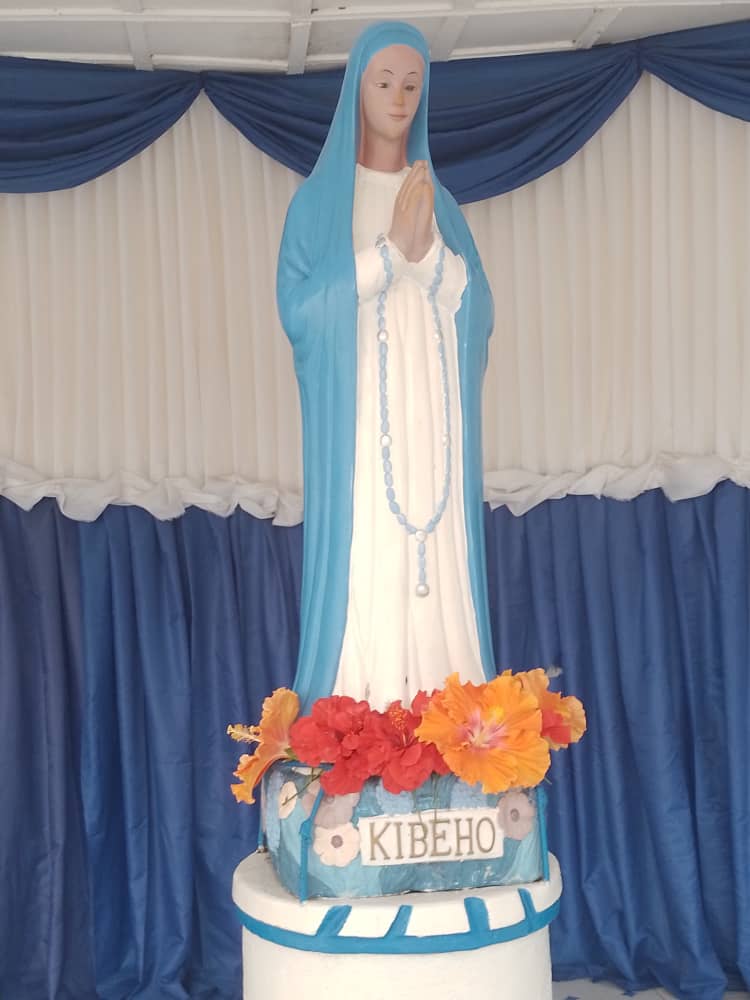
At the College of Kibeho in southern Rwanda, three schoolgirls — Alphonsine Mumureke (16), Nathalie Mukamazimpaka (17), and Marie-Claire Mukangango (21) — saw apparitions of a beautiful African woman over eight years (1981–89). She identified herself in Kinyarwanda as Nyina wa Jambo — 'Mother of the Word.' She spoke to each girl differently, asking for prayer, for fasting, for the recitation of the Rosary of the Seven Sorrows.
On the night of August 15, 1982 — the feast of the Assumption — Mary showed the three girls a long and disturbing vision: rivers of blood, decapitated bodies, abandoned corpses in the hills of Rwanda. The visionaries wept and screamed; the bishop's investigation took it as a private message about personal sin and conversion. Twelve years later, the Rwandan genocide of 1994 left some 800,000 dead in three months — many in the very hills the children had seen. Marie-Claire Mukangango was among those killed.
Bishop Augustin Misago of Gikongoro formally approved the public devotion at Kibeho on June 29, 2001 — recognising the apparitions to the three girls as authentic. The Sanctuary of Our Lady of Kibeho is now a national pilgrimage site for Rwanda's reconciliation.