
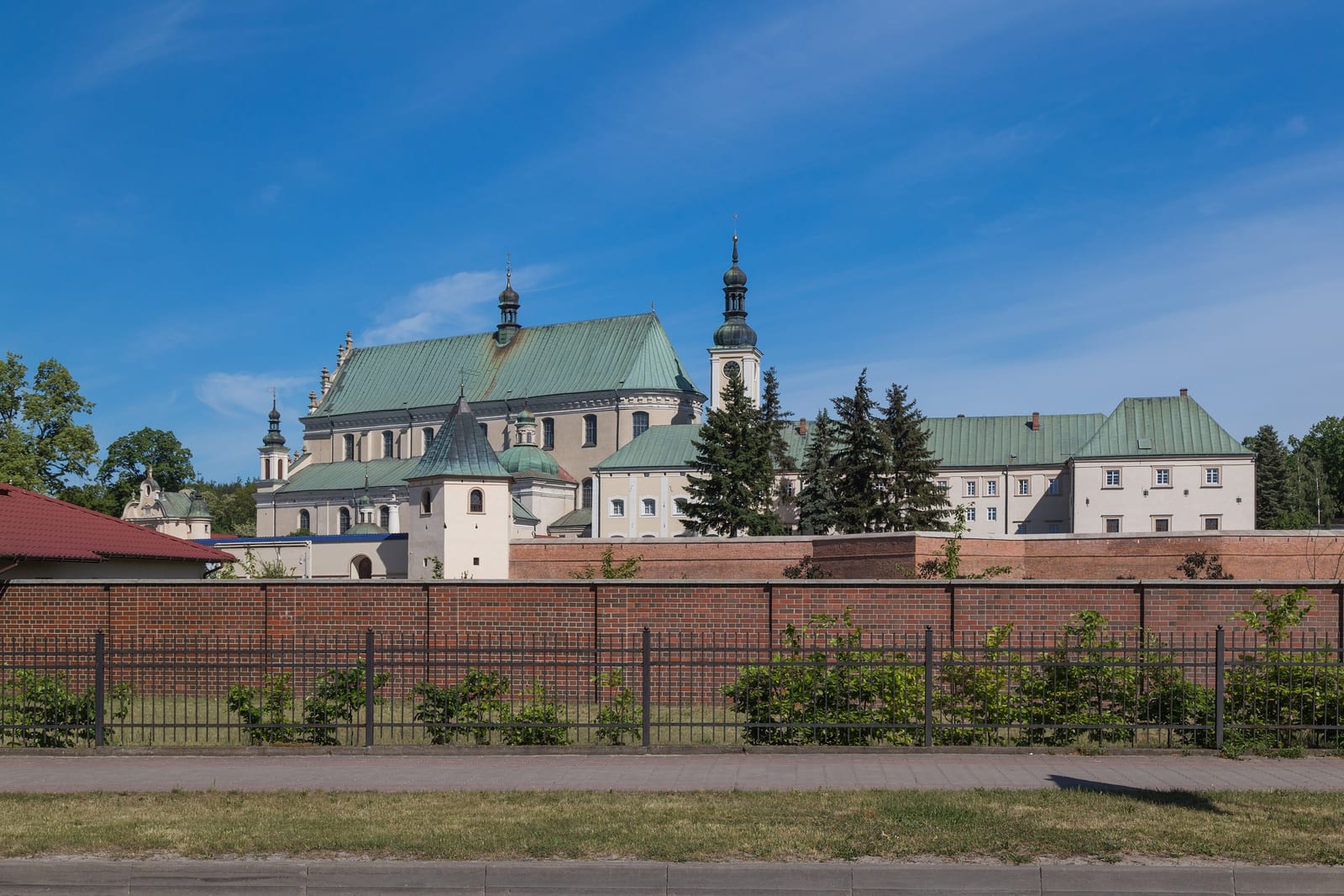
In 1578, in the forests near Leżajsk in south-eastern Poland (then the Kingdom of Poland-Lithuania), a poor peasant named Tomasz Michałek was crossing the woods when he saw the Blessed Virgin Mary standing in a clearing. She appeared three times in succession and asked, in the local Polish, that a church be built on the spot in her honour. Tomasz reported the visions to the local clergy; the bishop of Przemyśl opened a formal inquiry and, after careful examination of Tomasz's testimony and other witnesses to events at the site (lights, fragrance, healings), recognised the apparitions as authentic.
King Sigismund III Vasa supported the construction of a great Bernardine monastery and basilica on the clearing — the Basilica of the Annunciation at Leżajsk — completed in 1628. The monastery preserves a famous baroque organ (Stanisław Studziński, 1693) widely regarded as one of the finest in Europe, drawing organists and pilgrims alike. Leżajsk remains one of the principal Marian shrines of Poland.