
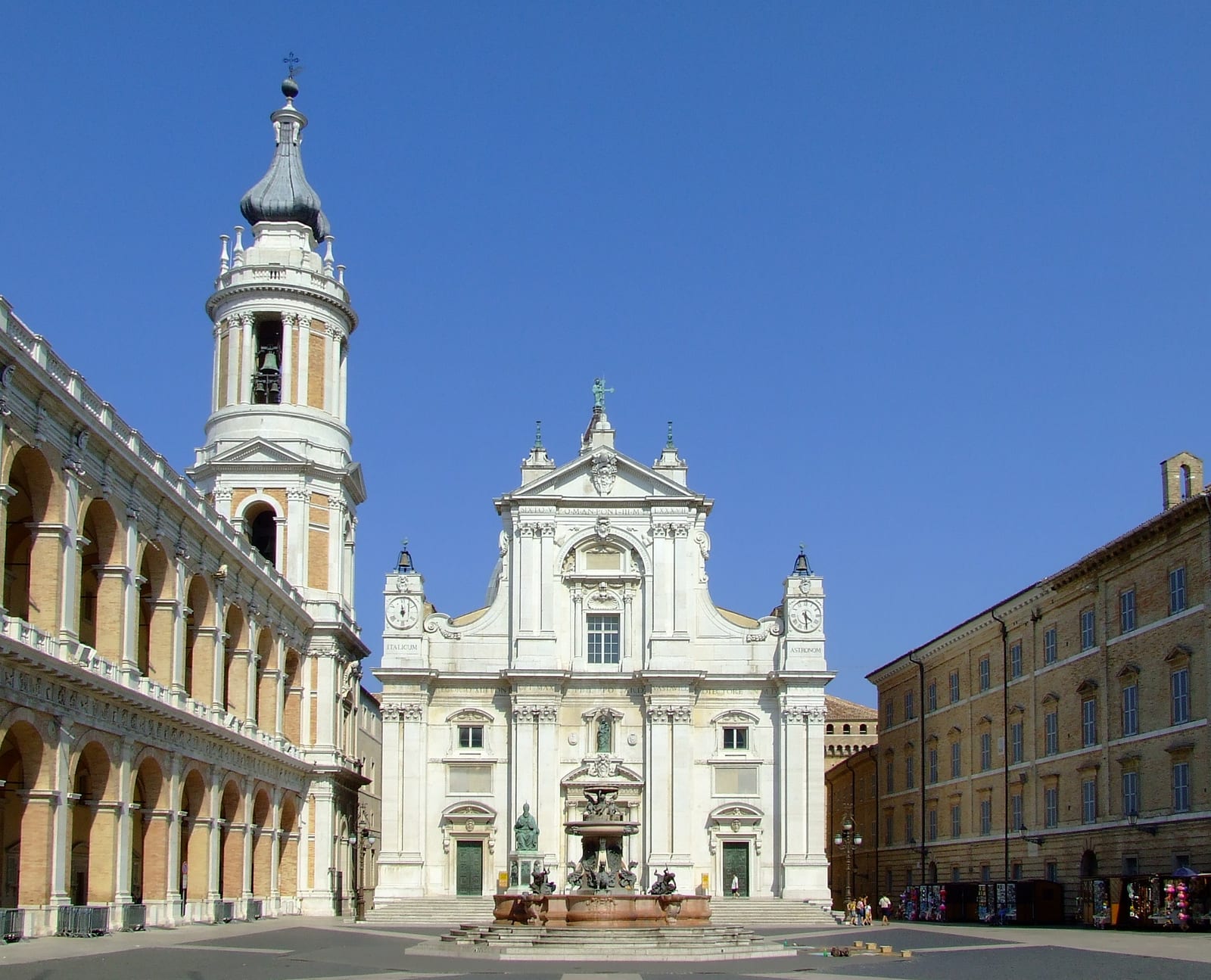
On the night of February 23, 1921, a defective electrical wire in the recently installed interior lighting of the Santa Casa — the small stone dwelling enshrined at the center of the basilica of Loreto — ignited the altar cloths. Custodians noticed the smoke and pulled the wooden statue of the Black Virgin from the flames, but by that point the fire had done its work: the medieval cedar statue, carved in the fourteenth century and blackened over centuries of lamp-smoke into the 'Black Madonna of Loreto', was too badly damaged to save.
The stone walls of the Casa itself — the three walls that Loreto tradition holds were miraculously transported from Nazareth in 1294 — were unharmed. Structural inspection after the fire confirmed that the ancient stones showed no cracking or fire-damage at any level.
Pope Benedict XV ordered an identical replacement statue carved from a cedar tree in the Vatican gardens. Sculpted by Enrico Quattrini to the exact dimensions and vestment-pattern of the original, the new statue was blessed by Pius XI on August 15, 1922 and installed inside the Santa Casa, where it remains today. Documented healings continue at Loreto; the annual pilgrimages of the Italian Alpine Corps and the Aeronautica Militare, whose patroness Our Lady of Loreto is, both preserve the tradition intact.