
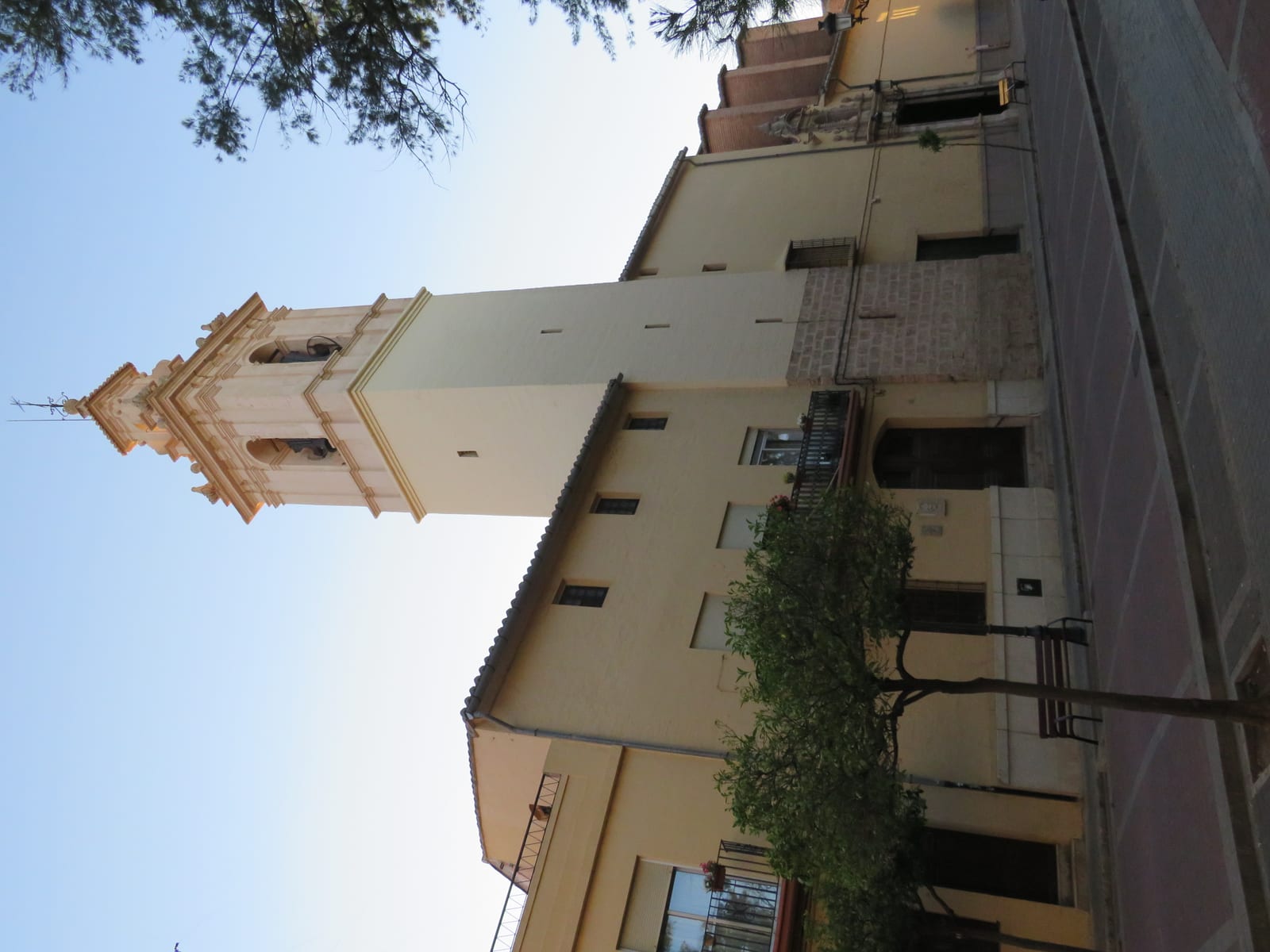
The miracle belongs to the confusion of the Western Schism. After the election of Urban VI on 18 April 1378, the French cardinals chose the antipope Clement VII on 20 September and withdrew to Avignon, and many priests in the Crown of Aragon came to doubt whether orders conferred by bishops of the rival line were valid. The Vatican exhibition panel names the parish priest of Moncada as Mosén Jaime Carrós (some Valencian accounts call him Jaime Pedrós), a man who feared at every Mass that he was handing the faithful unconsecrated bread. He prayed for a sign. On Christmas Day 1392 a noblewoman, Ángela Alpicat, attended Mass with her five-year-old daughter Inés. When Mass ended the child refused to leave, begging to stay and play with the beautiful little boy the priest had held in his hands at the consecration.
On 26 December mother and daughter returned, and at the elevation Inés again saw the Child in the priest's hands. Her mother told the priest, who questioned the girl and, not yet satisfied, asked her to come back the next day. He then took two hosts and consecrated only one. Holding up the consecrated Host he asked what she saw: 'I see the Child Jesus.' Raising the other: 'I see a little white disc.' The congregation rejoiced that their pastor's orders had been confirmed from heaven. The panel cites Odorico Raynaldi's Annales Ecclesiastici and documents in the Moncada municipal archive; the episode is also preserved in the Valencian tradition that Inés, after hearing St Vincent Ferrer preach, fled an arranged marriage to live near the Carthusian monastery of Porta Coeli and spent her last twenty years as a hermit in the cave called El Rodeno.
The monks are said to have found her dead in an attitude of prayer and to have buried her among themselves without a marked grave, so that Moncada today has no relics or body, only a devotion that has persisted for six centuries. The archdiocese of Valencia keeps it alive: Christmas Day is observed in the parish as the miracle's Jubilee Day, and on 5 July 2021 Cardinal Antonio Cañizares announced the opening of the historical process toward the beatification of 'the Venerable Inés', with a signed pilgrim route from the church to her cave. The Church has issued no formal judgment on the apparition itself, and the exhibition panel's title 'St. Inés' anticipates a canonization that has not taken place; the site records it as a strongly rooted local tradition.