
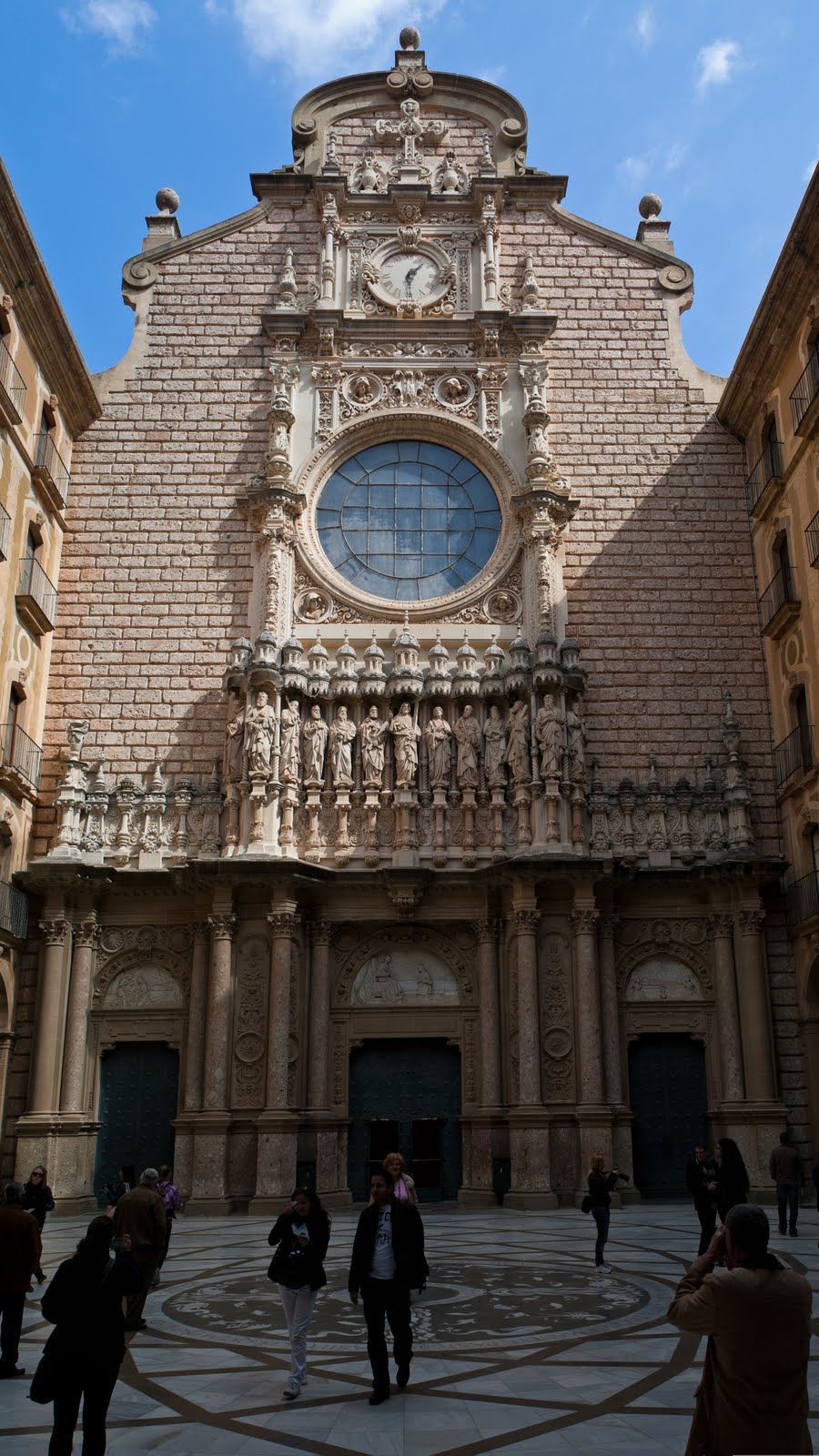
The Vatican exhibition panel presents this as a miracle about the power of the Mass for the souls in purgatory rather than a prodigy in the Host itself. In 1657 Fray Bernardo de Ontiveros, General of the Benedictine Congregation of Valladolid (attested in that office in 1654 and later a bishop), was at Montserrat with the abbot, Millán de Miranda, who the Catalan abbatial lists show governing the monastery from 1653 to 1657. During one of their meetings a woman arrived with her small daughter. The child insisted that the abbot celebrate three Masses for her dead father, convinced that they would free his soul from purgatory. Moved by her tears, the abbot began the first Mass the next morning with mother and child present.
At the consecration the girl began to say that she saw her father bowed on the step of the high altar, surrounded by dreadful flames. The Father General, doubting the vision, told her to hold a handkerchief toward the fire that only she could see; the monks watched the cloth burst into bright flames. At the second Mass she said her father stood beside the deacon in vividly coloured clothing; at the third he appeared dressed white as snow, and when the celebration ended she cried, 'Now my father is going up to heaven!' and thanked the community on his behalf, as he had asked her to do. The panel lists the Father General, the Bishop of Astorga and townspeople among the witnesses.
The only source the exhibition cites is the Benedictine Francesc de Paula Crusellas, whose 'Nueva historia del santuario y monasterio de Nuestra Señora de Montserrat' was printed in Barcelona in 1896, more than two centuries after the event; no contemporary act of the abbey or of the bishop has been published, and the Church has made no pronouncement. The site therefore presents it as a devotional tradition, valued because it dramatizes the Catholic teaching, affirmed at Trent, that the sacrifice of the Mass may be offered for the dead.