
In the late 16th or early 17th century, a Guaraní Indian named José Plá, recently baptized by the Franciscan friars of Tobatí, was traveling through the forest when he was surprised by a band of Mbayá raiders — a hostile tribe still resisting the Spanish and the missions. José fled and, finding nowhere else to hide, climbed into the hollow trunk of a great yvyra'ro tree (the Paraguayan rosewood) and pressed himself against the wood inside.
While hiding, José prayed and vowed to the Blessed Virgin that if she would save him from his pursuers he would carve from the very wood of the tree two images: one for the chapel at Tobatí and a smaller one for himself to keep. The raiders passed without finding him. He kept his vow.
From the trunk of the same tree José carved two images of the Virgin Mary. The larger remained at Tobatí; the smaller was kept by José in his hut. Eventually that smaller image was enshrined at a chapel in the village of Caacupé (in Guaraní, 'behind the hill'), where it began to draw pilgrims. Devotion grew throughout colonial Paraguay; the image survived political upheaval, civil war, and even the Triple Alliance War (1864–1870) when the country lost more than half its male population.
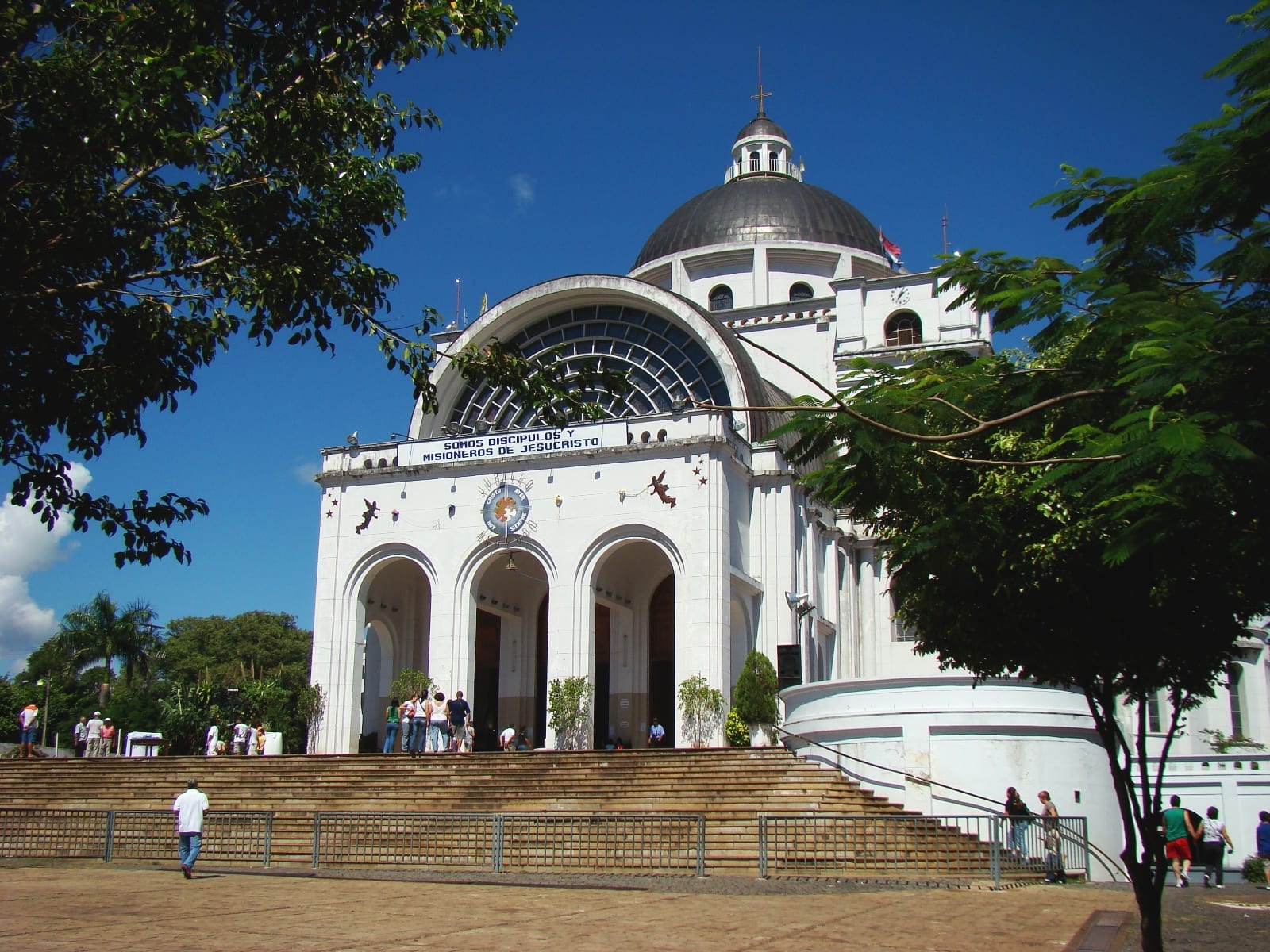
The Basilica of Our Lady of Caacupé was built and dedicated as a national shrine; Pius XI declared her Patroness of Paraguay in 1942; John Paul II canonically crowned the image on his visit in 1988. The annual pilgrimage of December 8 (the Solemnity of the Immaculate Conception) is the largest religious event in Paraguay; hundreds of thousands walk the 54 kilometers from Asunción through the night to reach the basilica by dawn.