
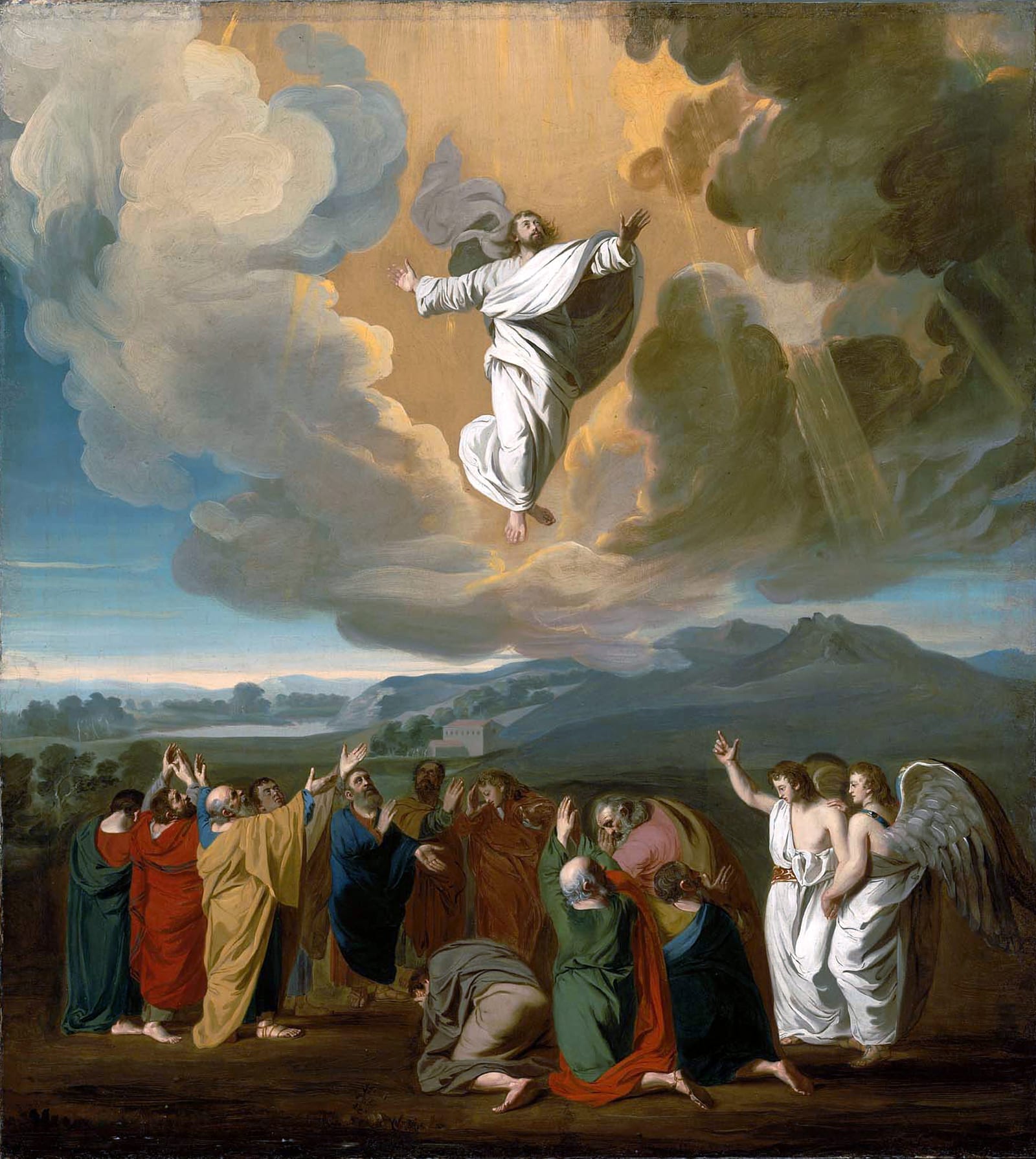
Two Old Testament summits stand behind the Ascension. Psalm 68 (Douay-Rheims Psalm 67): 'THOU HAST ASCENDED ON HIGH, thou hast led captivity captive; thou hast received gifts in men' (68:18) — which Paul applies directly: 'Ascending on high, he led captivity captive; he gave gifts to men... he that descended is the same also that ascended above all the heavens' (Ephesians 4:8–10). And Daniel's night vision: 'lo, ONE LIKE THE SON OF MAN came WITH THE CLOUDS of heaven... And he gave him power, and glory, and a kingdom: and all peoples, tribes and tongues shall serve him: his power is an everlasting power' (Daniel 7:13–14).
'Son of man' was Jesus' own most constant self-title, and at His trial He fused Daniel 7 with Psalm 110 to the high priest's face: 'Hereafter you shall see the Son of man sitting on the right hand of the power of God, and COMING IN THE CLOUDS of heaven' (Matthew 26:64) — the sentence that drew the charge of blasphemy. Forty days after the Resurrection the cloud came: 'while they looked on, he was raised up: and A CLOUD RECEIVED HIM out of their sight' (Acts 1:9). Daniel's scene is heaven's side of the same event — the Son of Man arriving on the clouds to be enthroned.
The Church keeps the fulfillment as the feast of the Ascension, and the catalogue's own entry on the Ascension of the Lord tells the event in full; this entry marks what the psalmist and the seer had seen of it centuries in advance. The small Chapel of the Ascension on this summit, ringed by the footprint tradition, has drawn pilgrims since the fourth century.