
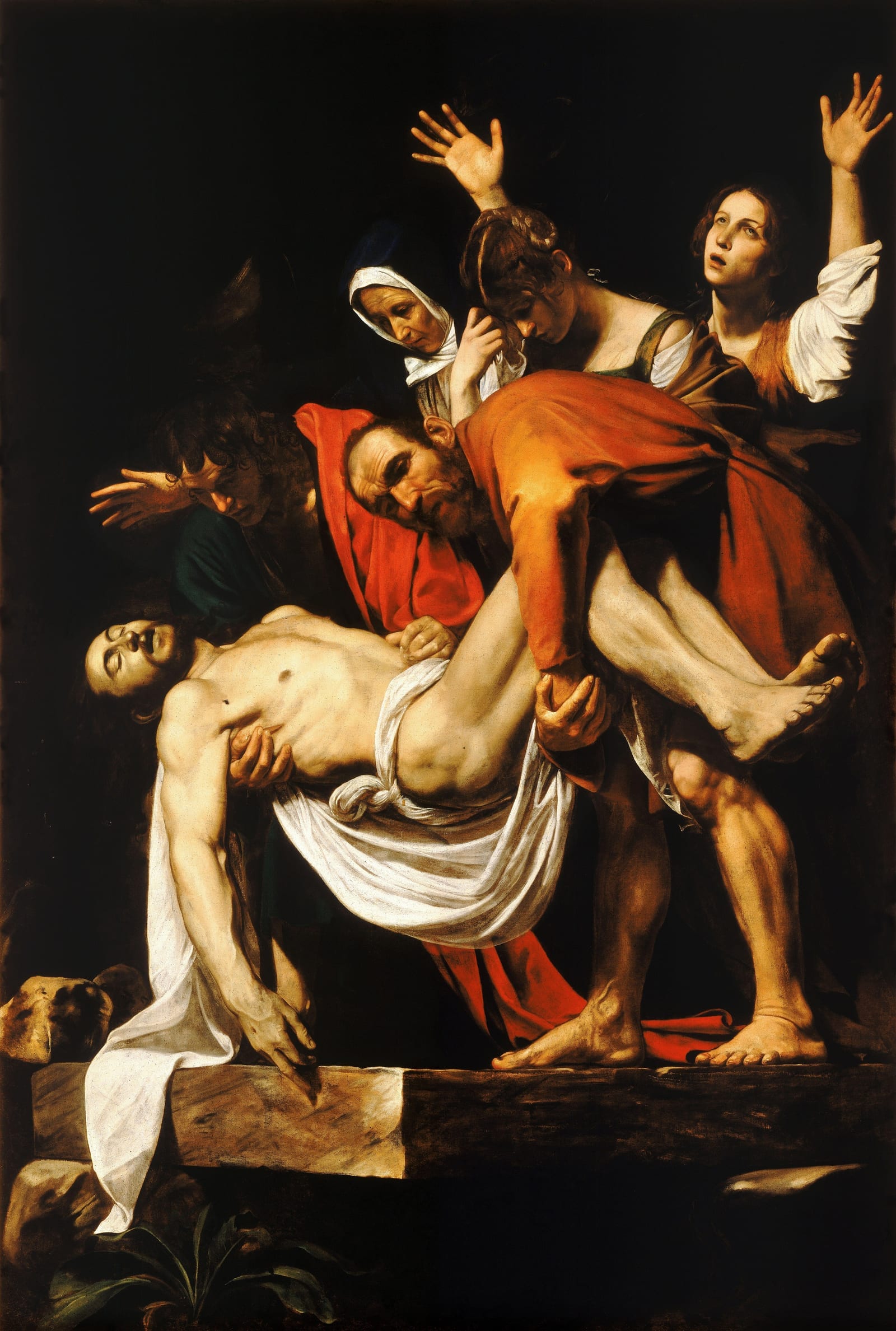
One verse of the Servant Song makes a prediction so specific it reads like an anomaly: 'And he shall give the ungodly [the wicked] for his burial, and THE RICH for his death; because he hath done no iniquity, neither was there deceit in his mouth' (Isaiah 53:9) — death among criminals, burial among the rich. In the normal course of Roman justice the two never met: the crucified were denied honorable burial.
The Gospels record the anomaly happening: 'when it was evening, there came a certain RICH MAN of Arimathea, named Joseph, who also himself was a disciple of Jesus. He went to Pilate and asked the body of Jesus... And Joseph taking the body wrapt it up in a clean linen cloth, and laid it in his own NEW MONUMENT, which he had hewed out in a rock' (Matthew 27:57–60) — Matthew alone of the evangelists calls Joseph rich, the precise word the prophecy required. Nicodemus brought a hundred pounds of myrrh and aloes, a royal quantity (John 19:39).
Executed between two robbers, buried in a rich councillor's unused rock-cut tomb in a garden — the two halves of Isaiah's verse, closed in a single afternoon by men acting under time pressure before the Sabbath. The tomb's traditional site lies under the rotunda of the Church of the Holy Sepulchre, a few dozen meters from Calvary.