
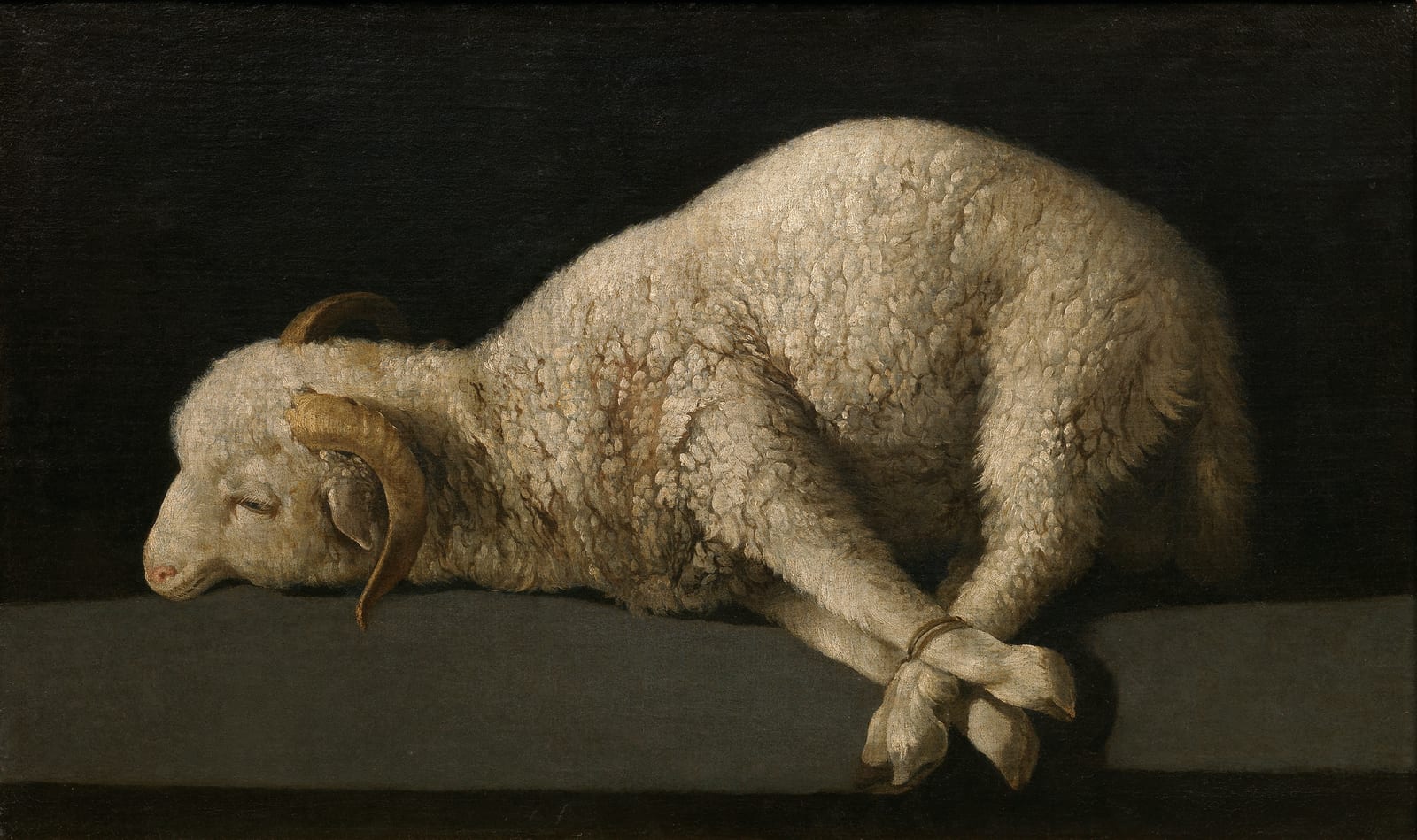
The ordinance of the first Passover was specific about the lamb whose blood saved Israel: 'In one house shall it be eaten... NEITHER SHALL YOU BREAK A BONE THEREOF' (Exodus 12:46; repeated Numbers 9:12). The psalter carried the same promise over the righteous man: 'The Lord keepeth all their bones, NOT ONE OF THEM SHALL BE BROKEN' (Psalm 34:20; Douay-Rheims Psalm 33:21).
On the eve of the great Sabbath the soldiers came to hasten the deaths by crurifragium — breaking the legs. 'They broke the legs of the first, and of the other that was crucified with him. But after they were come to Jesus, when they saw that he was already dead, they did not break his legs' (John 19:32–33). John, claiming eyewitness authority in the same breath ('he that saw it hath given testimony'), cites the scripture: 'For these things were done that the scripture might be fulfilled: You shall NOT BREAK A BONE OF HIM' (19:35–36).
The identification had been announced from the first — 'Behold the Lamb of God' (John 1:29) — and Paul states it as settled fact within twenty-five years: 'Christ our pasch [Passover lamb] is sacrificed' (1 Corinthians 5:7). John's chronology presses the point: Jesus died as the Passover lambs were being slain in the Temple below.