
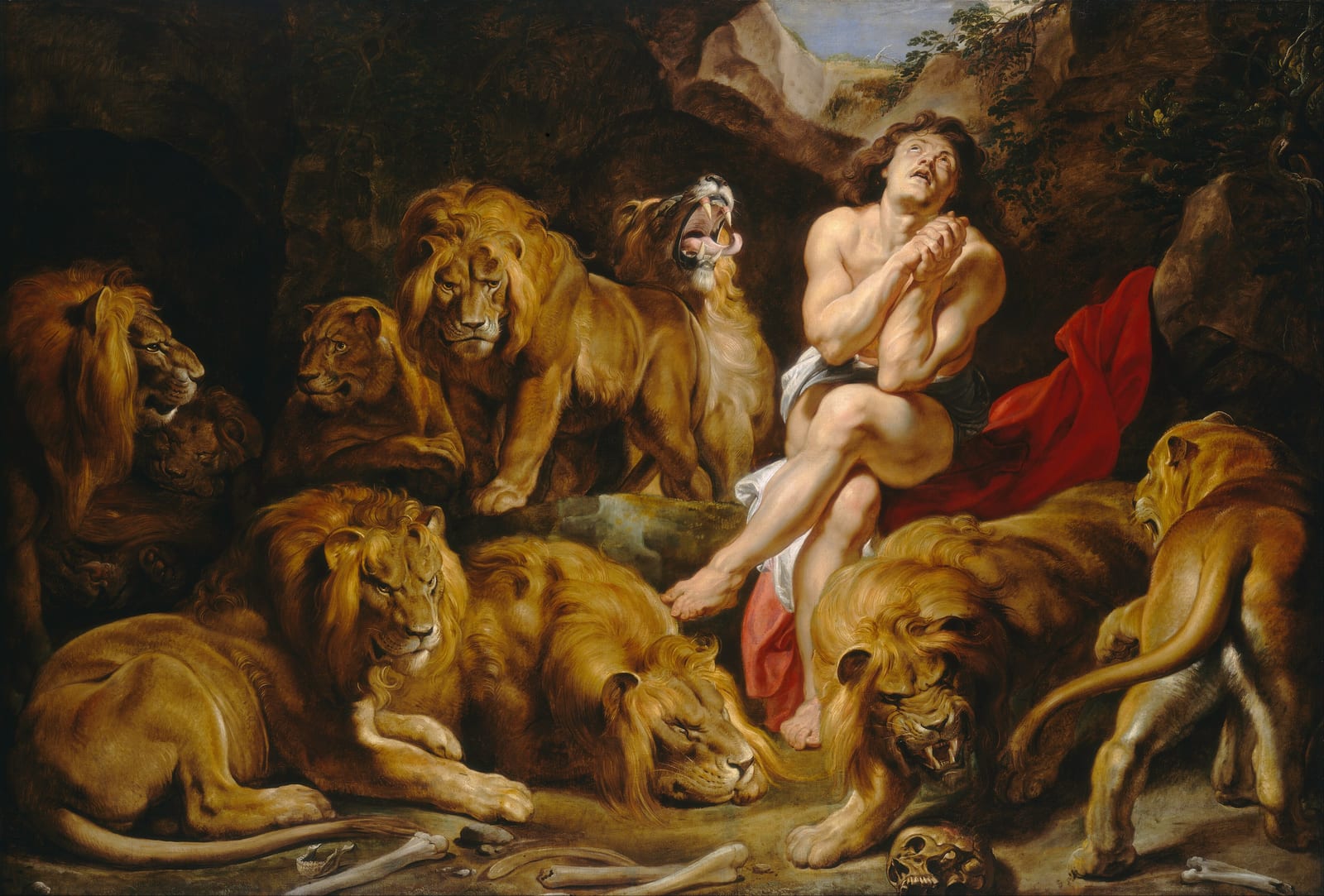
While Daniel prayed over Jeremiah's seventy years of exile, the archangel Gabriel brought a larger arithmetic: 'SEVENTY WEEKS are shortened upon thy people... that transgression may be finished, and sin may have an end, and iniquity may be abolished; and everlasting justice may be brought... Know thou therefore, and take notice: that from the going forth of the word, to build up Jerusalem again, unto CHRIST THE PRINCE, there shall be seven weeks, and sixty-two weeks... And after sixty-two weeks CHRIST SHALL BE SLAIN... and the people with the leader that shall come, shall destroy the city and the sanctuary' (Daniel 9:24–26). Weeks of years — 490 in all — with an Anointed One appearing, being 'cut off,' and the city and Temple destroyed afterward.
Counted from the decree of Artaxerxes to restore Jerusalem (457 BC, Ezra 7 — the reckoning most used since antiquity), sixty-nine weeks of years reach the AD 20s–30s: precisely the generation of Jesus' ministry and death. The sequence Daniel gives — Messiah comes, Messiah is slain, THEN the sanctuary is destroyed — was closed irrevocably in AD 70, when Titus burned the Temple. Whatever else the numbers mean, the oracle requires the Messiah to have come and died before that fire; Jewish and Christian readers alike have felt the weight of it, and Jesus pointed to 'the abomination of desolation, which was spoken of by Daniel the prophet' in His own Temple prophecy (Matthew 24:15).
Interpretive honesty, per the source policy: the seventy weeks are among the most variously computed texts in Scripture — starting points (605, 586, 538, 457, 445 BC), calendar assumptions, and the final week's meaning all differ among sober commentators, and critical scholarship reads the passage against the crisis under Antiochus IV in the 160s BC. The traditional Christian case does not rest on decimal precision but on the convergence: an anointed prince, arriving within a bounded era after the restoration decree, slain, followed by the destruction of city and sanctuary — a shape of history that fits the years AD 30–70 and nothing since, for the Temple has never been rebuilt.