
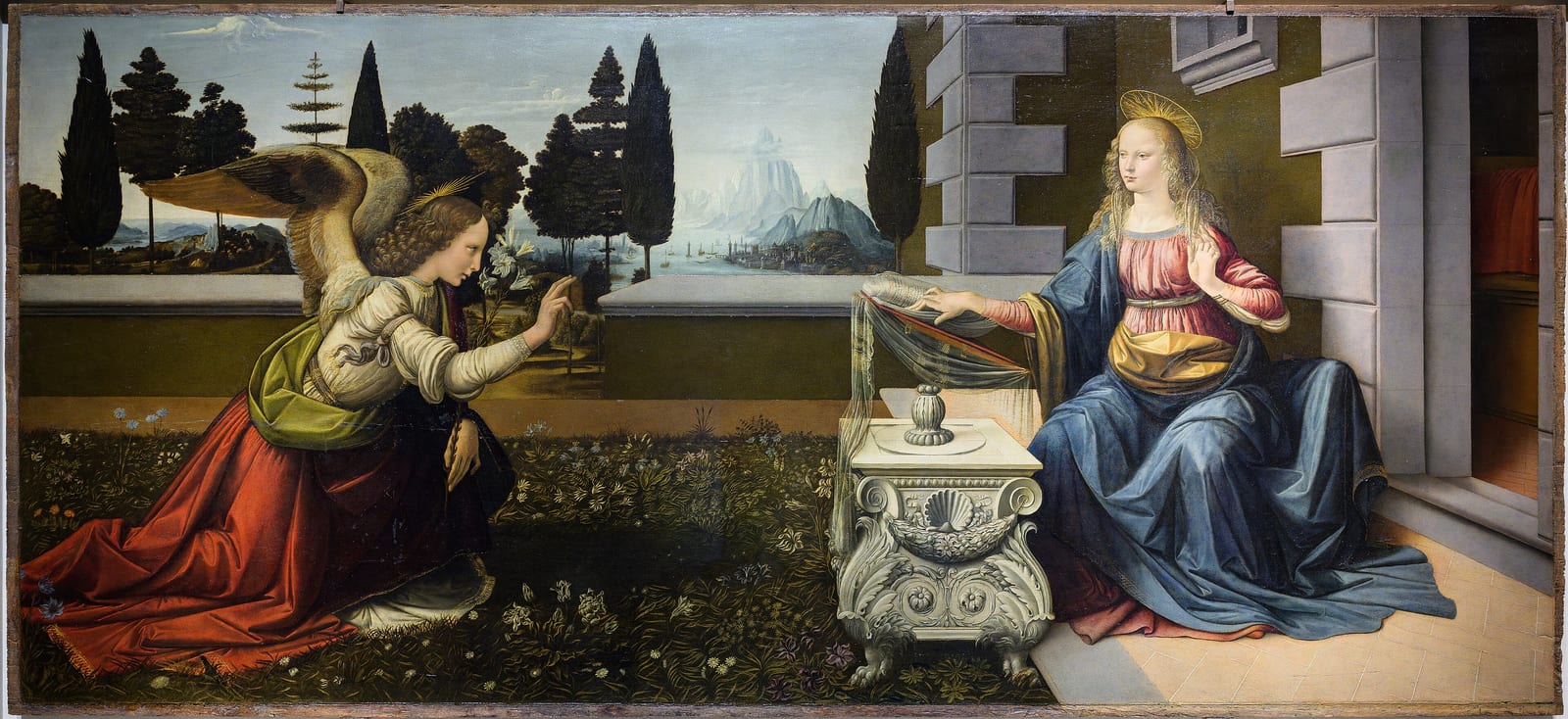
In the days of King Achaz, with Jerusalem threatened by two armies, Isaiah offered the frightened king any sign he wished. Achaz refused; Isaiah answered that the Lord Himself would give one: 'Behold a VIRGIN shall conceive, and bear a son, and his name shall be called EMMANUEL' — God with us (Isaiah 7:14).
St. Matthew, narrating the conception of Jesus by the Holy Spirit in the womb of the Virgin Mary, cites the verse as the first of his fulfillment formulas: 'Now all this was done that it might be fulfilled which the Lord spoke by the prophet' (Matthew 1:22–23). The Church has read Isaiah 7:14 this way since the apostolic age.
The textual question is shown honestly, per the source policy: the Hebrew word is almah, 'young woman of marriageable age,' not the technical term for virgin (betulah). But two centuries before Christ, the Jewish translators of the Septuagint themselves rendered almah here with the unambiguous Greek parthenos, 'virgin' — the reading Matthew inherited. Catholic exegesis also notes the verse's near horizon (a child born in Achaz's own days) and reads the prophecy at two depths: a sign to Achaz then, and its full sense — a conception that is itself the sign — in Mary.
The name is the theology: Emmanuel, 'God with us,' is what the Incarnation is. The last words of Matthew's Gospel deliberately close the arc: 'behold I am with you all days, even to the consummation of the world' (Matthew 28:20).