
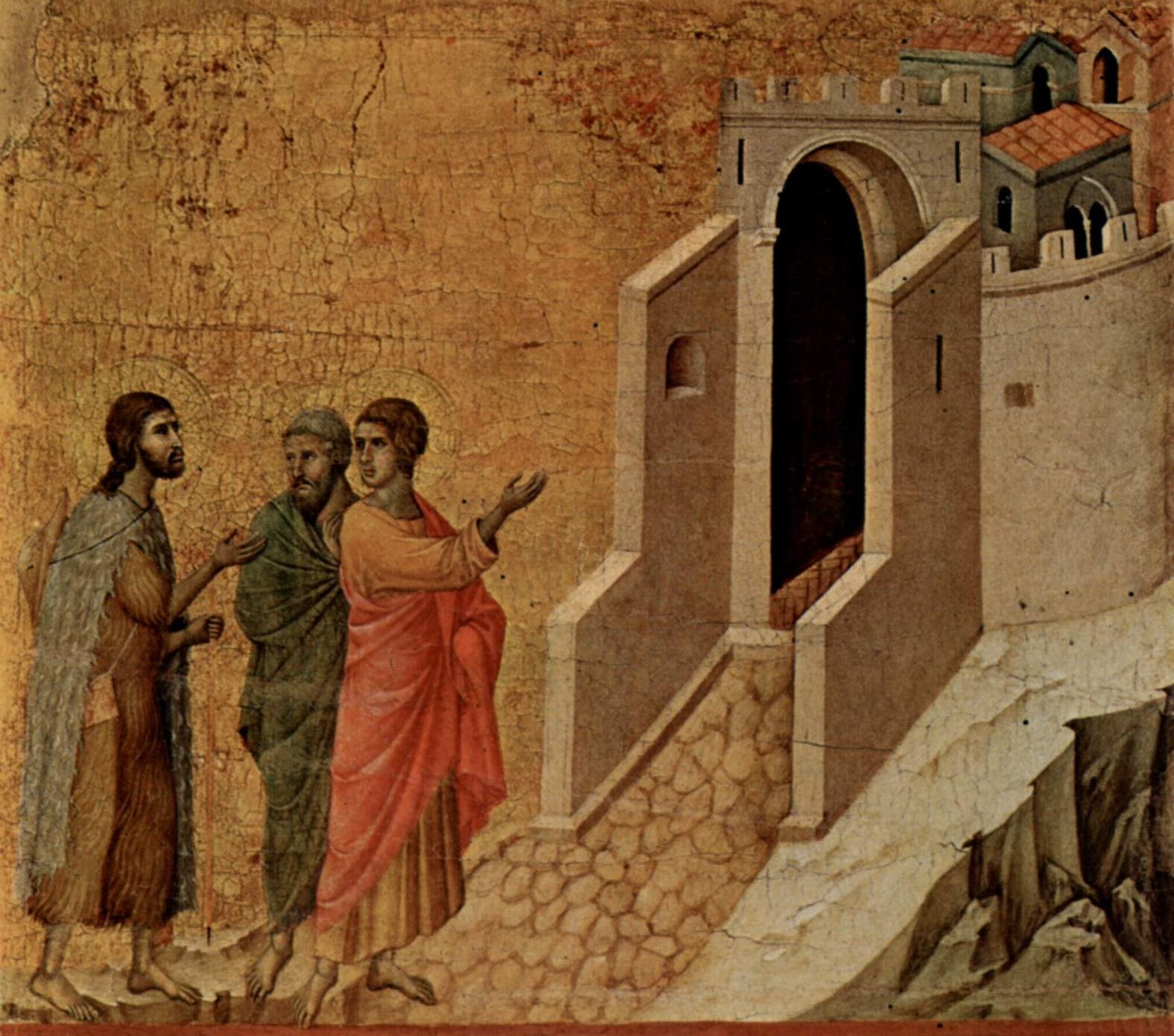
St. Luke alone preserves this appearance in full (24:13–35), one of the most beloved passages in all of Scripture. On the afternoon of the first Easter Sunday, two disciples were walking the seven miles westward from Jerusalem to a village called Emmaus, talking together of all the things that had happened. Jesus Himself drew near and went with them, 'but their eyes were held, that they should not know him.'
He asked what they were discussing. They were astonished: 'Art thou only a stranger in Jerusalem, and hast not known the things that have been done there in these days?' They told Him of Jesus of Nazareth, mighty in deed and word, condemned and crucified — 'But we hoped, that it was he that should have redeemed Israel: and now besides all this, today is the third day since these things were done.' Some women had reported a vision of angels — but the Lord they had not seen.
Christ replied: 'O foolish and slow of heart to believe in all things which the prophets have spoken! Ought not Christ to have suffered these things, and so to enter into his glory?' Beginning at Moses and all the Prophets, He expounded to them in all the Scriptures the things concerning Himself. As they drew near the village He made as though He would go further; they constrained Him: 'Stay with us, because it is towards evening, and the day is now far spent.' He went in to stay with them. And at table, He took bread, blessed, broke it, and gave it to them. 'And their eyes were opened, and they knew him: and he vanished out of their sight.' They returned that same hour to Jerusalem to find the Eleven, who said: 'The Lord is risen indeed, and hath appeared to Simon.'