
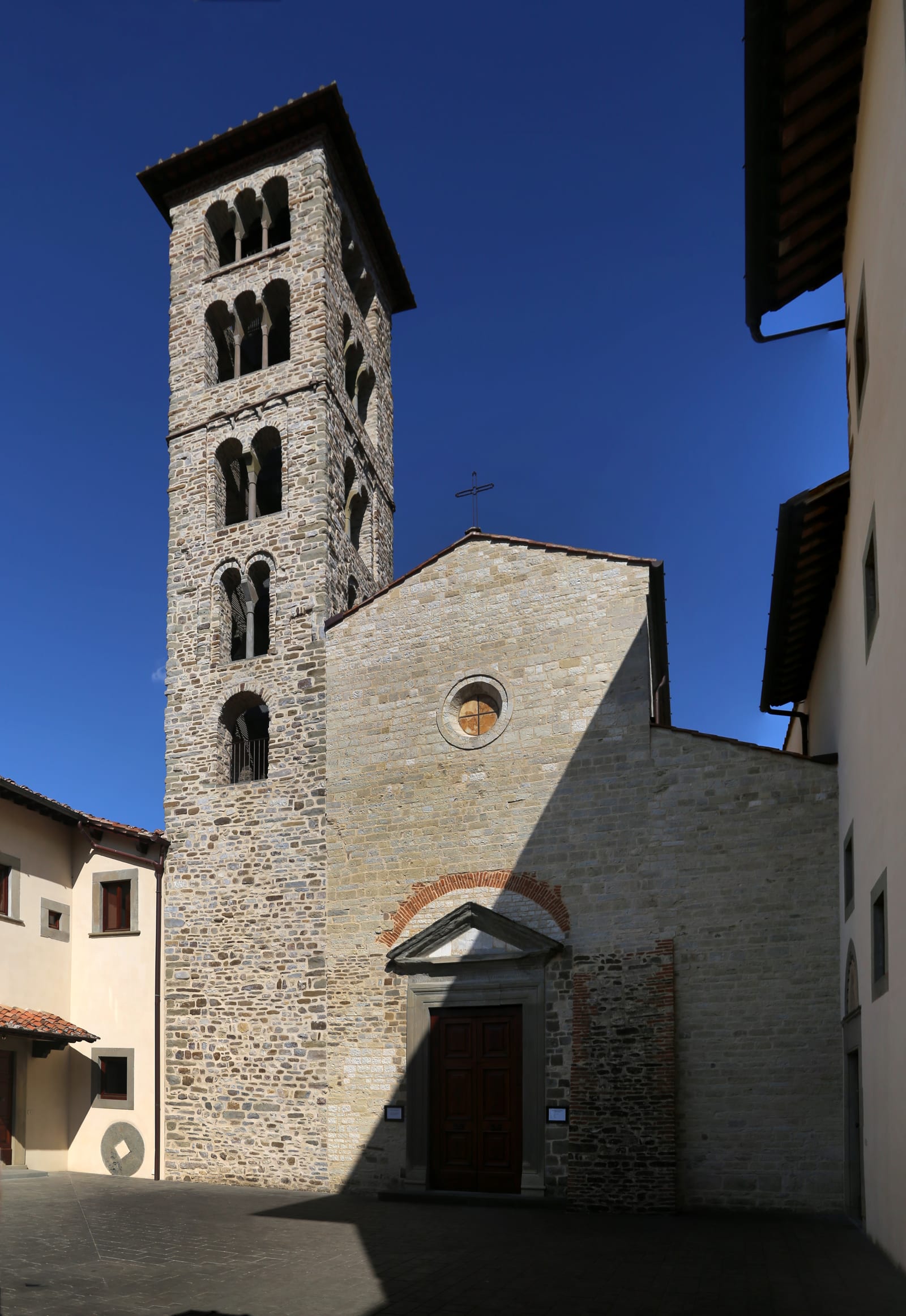
The Abbey of Santa Maria at Rosano, in the hills above the Arno east of Florence, was founded in 780 and is the oldest monastery in Tuscany still inhabited by its original community, Benedictine nuns. In 1948 a benefactor gave the abbey a life-size statue of the Sacred Heart of Jesus in fulfilment of a promise made during the Second World War; it shows Christ with the Heart on his breast encircled by thorns. On the evening of 4 April 1948, the first Sunday after Easter, while the nuns were chanting Vespers, those in the church noticed drops like blood falling from the statue's eyes. In June of the same year came what the bishop later called a 'stunning and unexpected' development: an actual flow of blood from the statue. The phenomena recurred repeatedly between 1948 and 1950.
The witnesses included the whole community under its abbess, Mother Ildegarde Cabitza, and many priests, preachers and visitors, among them Monsignor Angelo Scapecchi, later auxiliary bishop of Arezzo. The abbey archive preserves their sworn depositions, medical analyses of the blood, and finger towels and purificators soaked with it. The bishop of Fiesole, Giovanni Giorgis, forwarded everything to the Holy Office, which sent the Dominican Father Luigi Romoli as visitor; he questioned every nun and bound the community to strict secrecy. On 14 November 1950 the Holy Office ordered the statue removed to an undisclosed place, and it was returned to Rosano only in 1952. Through all this the nuns, the chronicles note, kept to their ordinary round of Ora et Labora.
No formal decree on the events was ever published, and the Church's reticence should be stated plainly. Yet the diocese has not been silent. Bishop Giorgis saw in Rosano an appeal 'to fidelity, reparation and prayer', and his successor Luciano Giovannetti, in a letter marking the fiftieth anniversary in 1998, invited the faithful to look back on the events 'as signs of the Lord's benevolence and love' and to renew their devotion to the Sacred Heart. Strictly speaking this is a prodigy of a statue rather than of the Host, but the Vatican International Exhibition includes it among the Italian Eucharistic miracles because of the monastic and Eucharistic life from which it sprang. The statue is venerated in the abbey church today.