
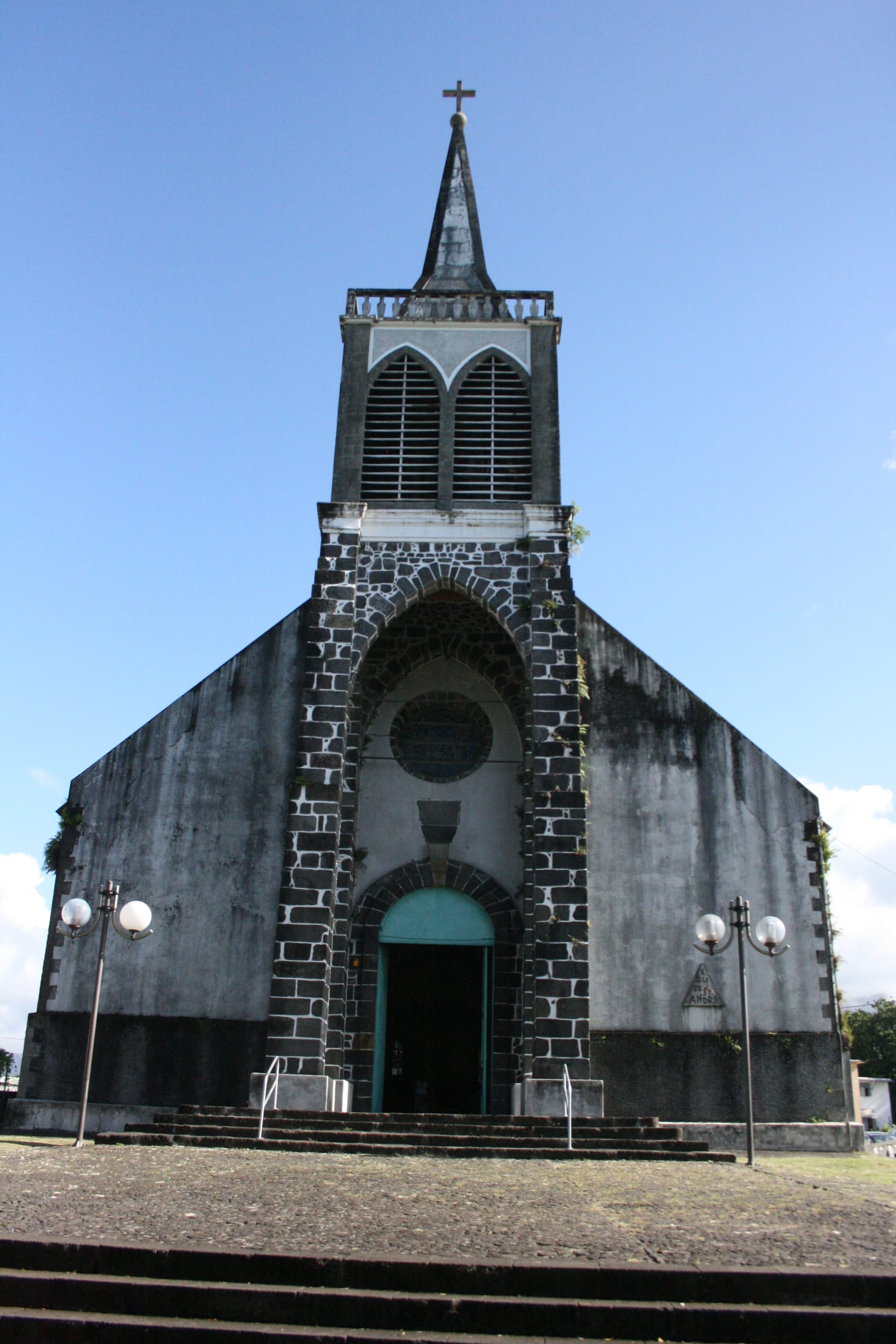
On Sunday 26 January 1902 the parish of Saint-André, on the north-east coast of the Indian Ocean island of Réunion, was keeping the Forty Hours of perpetual adoration. Its pastor, Abbé Henry Lacombe, was celebrating Mass before the exposed Blessed Sacrament. At the Our Father, he later testified, he raised his eyes to the monstrance and saw a bright halo about its rays. Later, as he distributed Communion, he saw within the Host a human face with lowered eyes, a crown of thorns on the brow and an expression of deep sorrow. The older choir boys, questioned afterwards, said that they too had seen the head of a man in the Host, and a sixteen-year-old student, Adam de Villiers, confirmed the same.
Word spread and, slowly at first, the whole town came to the church to see; journalists and curious visitors arrived from the capital, Saint-Denis. Over the following hours the face in the Host appeared to come alive, the crown of thorns vanished, and finally a crucifix appeared stretching from the top of the Host to the bottom. A young artist among the visitors drew the face as he saw it. The vision ended only after the Tantum ergo and the Eucharistic blessing, when the Host was reposed.
Abbé Lacombe recounted what he had seen before thousands at the Eucharistic Congress of Angoulême in 1904, and again to the priests gathered for a retreat at Périgueux. The evidence consists of his sworn narrative and the testimony of the townspeople; no ecclesiastical judgment on the event is known, and the site presents it honestly as a well-witnessed but unadjudicated prodigy. The church of Saint-André, built in 1817 to 1821 on the site of a 1752 chapel, still stands in the centre of the town; the statue of Joan of Arc outside was erected by Lacombe himself in 1899, three years before the events of that January Sunday.