
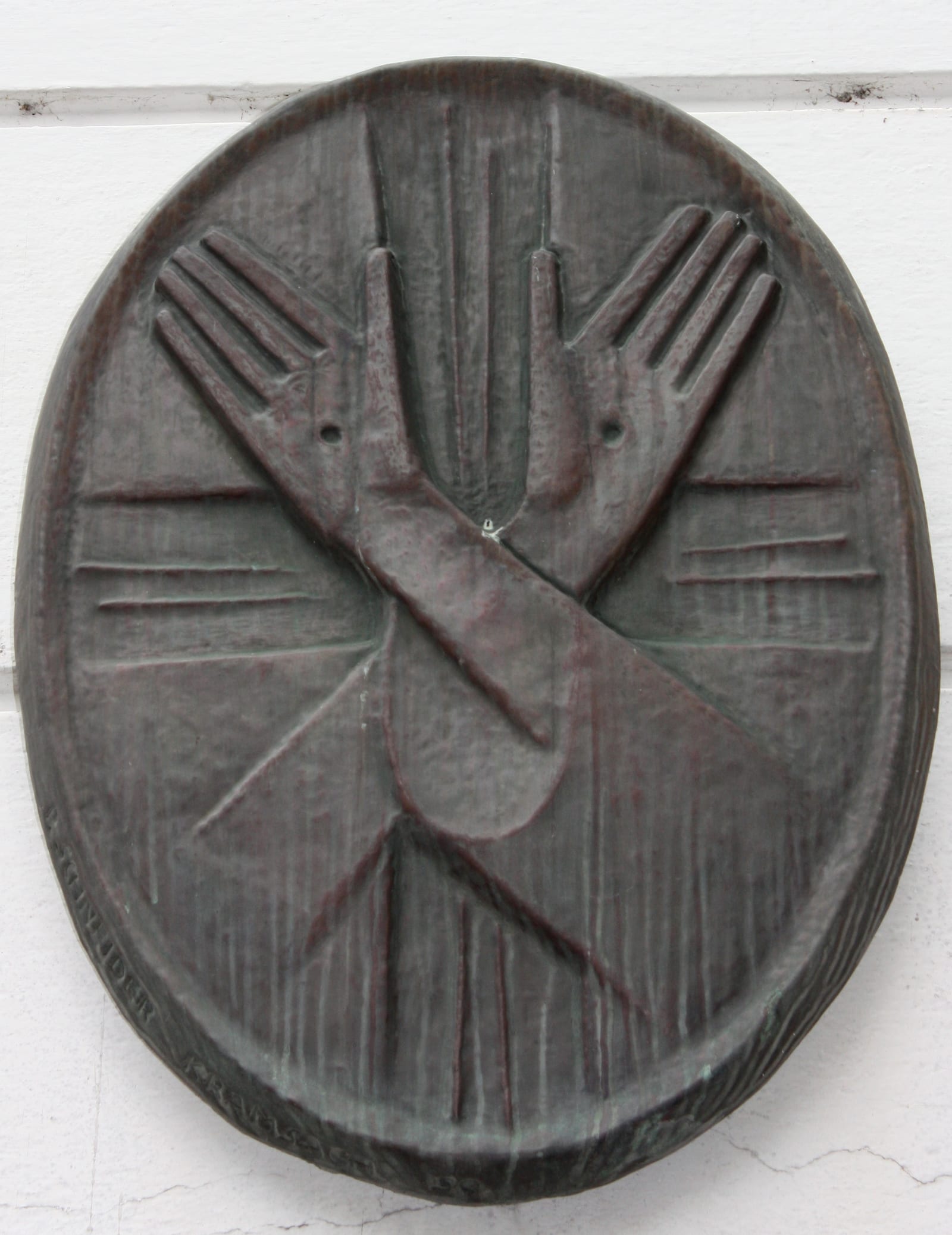
In September 1224, two years before his death, St. Francis of Assisi withdrew to the remote mountain of La Verna, given to him by Count Orlando of Chiusi as a place of solitary prayer. He fasted for forty days in preparation for the feast of the Exaltation of the Holy Cross.
On or about September 14, while praying at dawn on a high ridge of the mountain, he saw a vision of a six-winged seraph crucified. As the vision faded, Francis realised that the wounds of the seraph had imprinted themselves on his own body: nail-marks in his hands and feet, and a lance-wound in his side that bled.
This is the first recorded case of the stigmata in the history of the Church. Francis bore the wounds for the remaining two years of his life, attempting to hide them but witnessed by his closest companions and physician. The episode is attested in the earliest biographies (Thomas of Celano, Bonaventure) and depicted in the great fresco cycles of Giotto and Pietro Lorenzetti.